


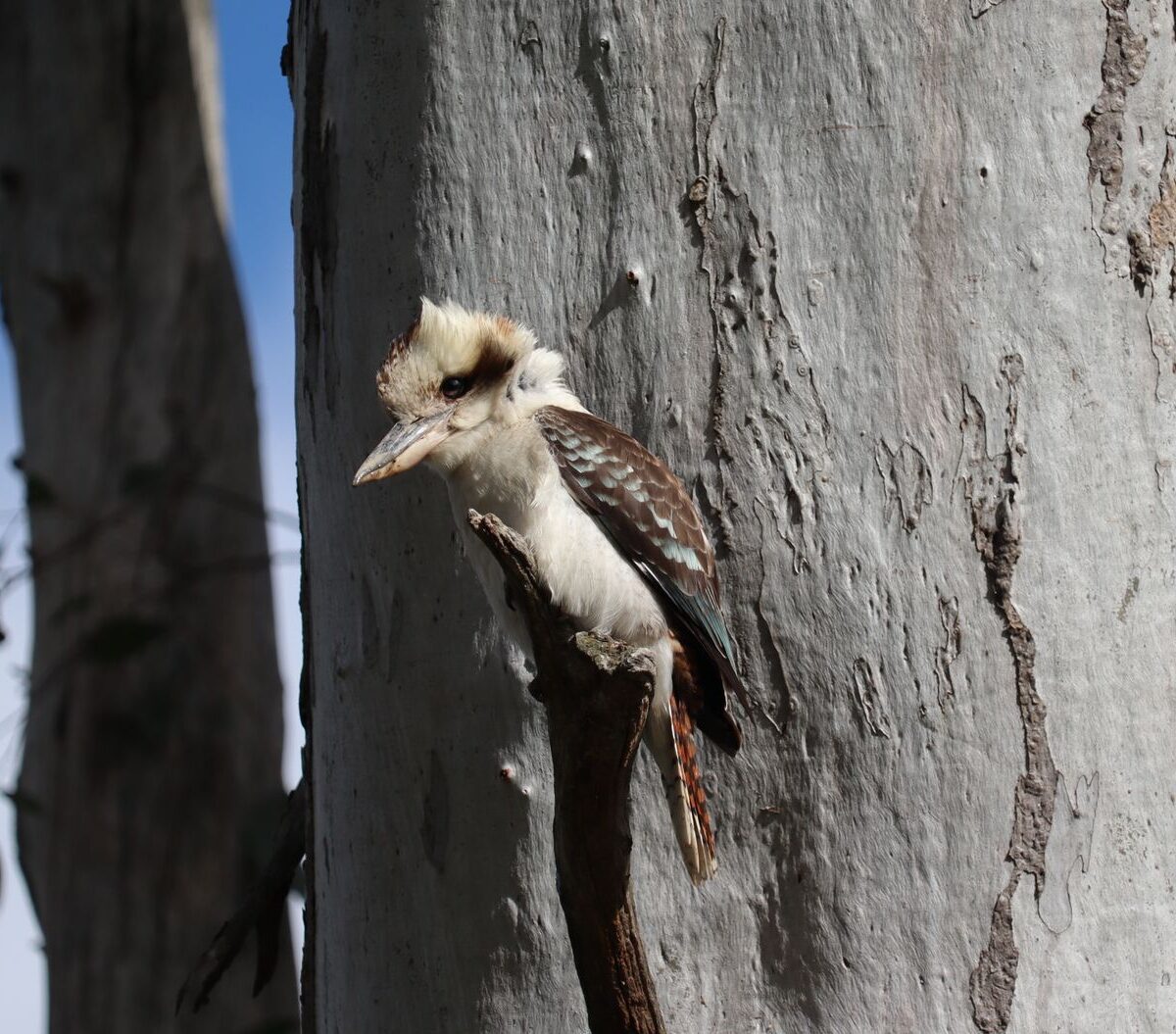
KOOKABURRA
DESCRIPTION
Also called the Laughing Kookaburra, Kookaburra is a large kingfisher native to Australia and New Guinea. It is easily recognized by its distinctive call, which sounds like laughter, and its robust body with a large head and long, pointed bill. Kookaburras are often seen perched on tree branches, where they hunt for prey and are known for their social behavior, often found in pairs or small groups.
FUN FACTS
- Kookaburras are known for their unique call, which can be heard echoing through the Australian bush, often mistaken for human laughter
- They play a significant role in Aboriginal culture and are often featured in stories and songs, symbolizing the spirit of the land.|These birds are not only skilled hunters but also exhibit fascinating social behaviors, such as cooperative breeding, where younger siblings help care for the new chicks
- This behavior enhances the survival rate of the offspring and strengthens family bonds
QUICK INFO
Lifespan10-15 years in the wild, up to 20 in captivity
Average Weight0.3-0.4 kg
Average Length40-45 cm
Diet TypeCarnivore
Social Structurepair or group, often found in family units
Activity PatternDiurnal
Breeding SeasonSpring (August-December)
- Habitat
- Kookaburras inhabit a variety of environments, including woodlands, forests, and suburban areas. They prefer areas with tall trees for perching and nesting.
- Biomes
- Temperate Forest, Savanna
- Native Range
- Kookaburras are native to Australia and New Guinea, with the Laughing Kookaburra being the most widespread species.
- Continent
- Australia, Oceania
- Countries
- Australia, New Guinea
- Diet
- Kookaburras primarily feed on small mammals, reptiles, and insects, using their sharp beaks to catch and kill their prey. They are known to hunt from a perch, swooping down to capture their food.
- Diet Type
- Carnivore
- Favorite Food
- small mammals, reptiles, insects
- Social Structure
- pair or group, often found in family units
- Activity Pattern
- Diurnal
- Group Size
- 2-6
- Territorial
- 1
 LC
LC
 VU
VU
 LC
LC
0.3-0.4 kg
Weight
40-45 cm
Length
- Coloration
- brown and white plumage with a distinctive blue patch on the wings
- Sexual Dimorphism
- males and females are similar in appearance
- Lifespan
- 10-15 years in the wild, up to 20 in captivity
- Offspring per Birth
- 2-4
- Sexual Maturity
- 1-2 years
- Breeding Season
- Spring (August-December)
LC
Least Concern
IUCN Red List Status
- Population Status
- The population of Kookaburras is currently stable, and they are commonly found in their native range.
- Wild Population Estimate
- Not specifically estimated, but considered common
- Population Trend
- Stable
- Endangered
- 0
- Threats
- Kookaburras face threats from habitat loss and changes in land use, but they are not currently considered endangered. They are adaptable and thrive in human-altered environments.
- Predators
- Snakes, large birds of prey, and domestic cats can pose threats to Kookaburra chicks and eggs.
- Defense Mechanisms
- Kookaburras will defend their territory aggressively and can be quite vocal in warning off intruders.
- Compatible Animals
- other birds of similar size, small mammals
- Found in Zoos
- Common