


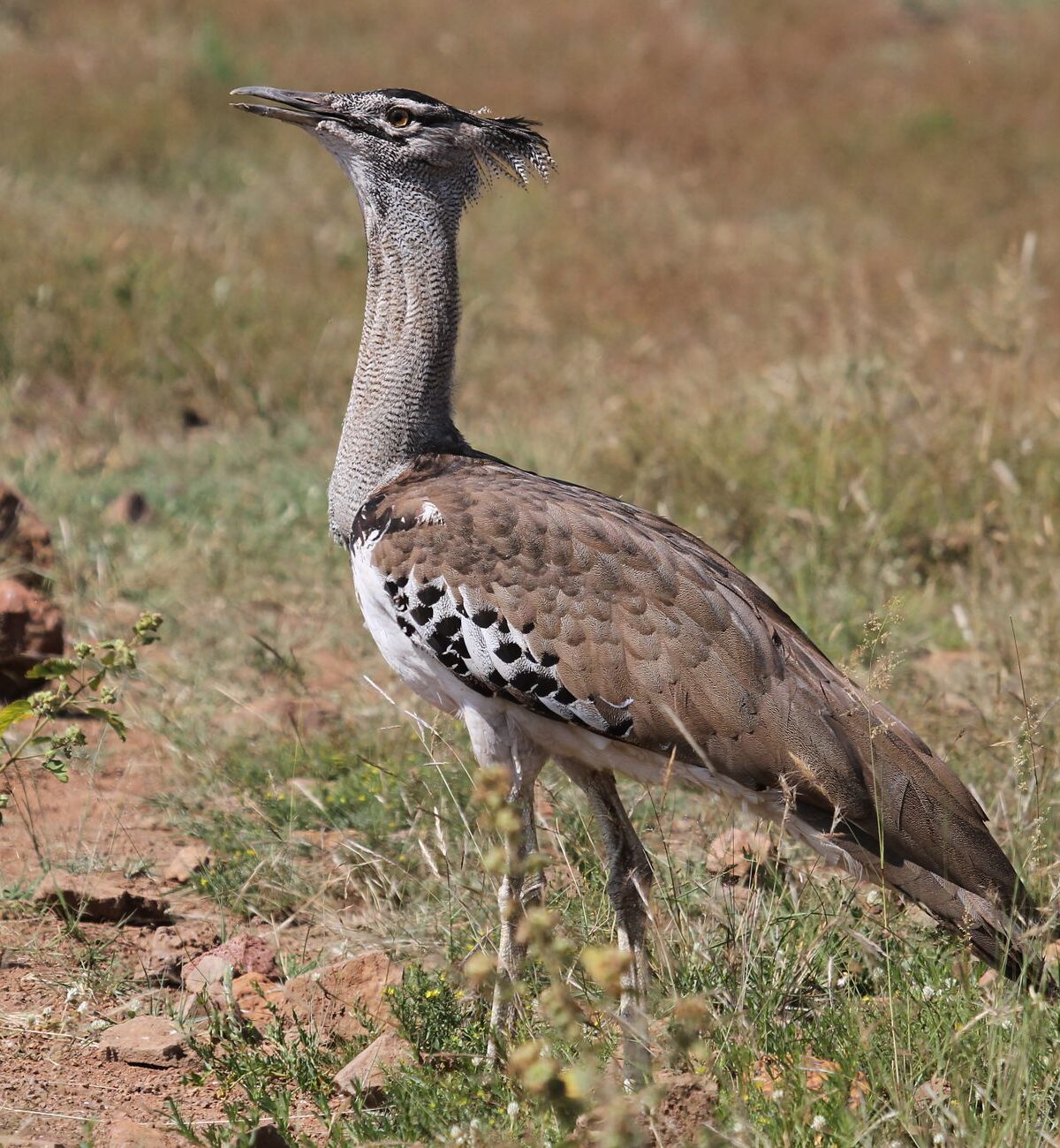
KORI BUSTARD
DESCRIPTION
Also called the African Bustard, Kori Bustard is one of the heaviest flying birds, with males weighing up to 18 kg. They have a distinctive appearance, characterized by their long necks, large bodies, and broad wings, which they use to soar gracefully in the air. Kori Bustards are known for their elaborate courtship displays, where males puff up their chests and perform a series of vocalizations to attract females.
FUN FACTS
- Kori Bustards are known for their impressive courtship displays, where males can inflate their throat pouches and make booming calls that can be heard over long distances
- This display not only attracts females but also establishes dominance among competing males
- | Despite their large size, Kori Bustards are capable of flight and can soar to great heights, using thermal updrafts to conserve energy while traveling long distances in search of food
QUICK INFO
Lifespan10-15 years in the wild, up to 20 years in captivi
Average Weight8-18 kg
Average Length0.9-1.2 m
Diet TypeOmnivore
Social Structuresolitary or pairs, with males often displaying alone during the breeding season
Activity PatternDiurnal
Breeding SeasonSpring to early summer
- Habitat
- Kori Bustards inhabit open grasslands, savannas, and scrublands where they can find ample food and space to display their courtship behaviors. They prefer areas with scattered trees and shrubs for nesting and shelter.
- Biomes
- Savanna, Grassland
- Native Range
- Kori Bustards are native to sub-Saharan Africa, primarily found in countries such as Botswana, Namibia, and South Africa.
- Continent
- Africa
- Countries
- Botswana, Namibia, South Africa, Zimbabwe, Angola
- Diet
- Kori Bustards primarily feed on a variety of plant materials, seeds, and insects. They are known to forage on the ground, using their long legs to walk through grasslands and savannas.
- Diet Type
- Omnivore
- Favorite Food
- seeds, insects, and green vegetation
- Social Structure
- solitary or pairs, with males often displaying alone during the breeding season
- Activity Pattern
- Diurnal
- Group Size
- 1-2
- Territorial
- 1
 LC
LC
 LC
LC
8-18 kg
Weight
0.9-1.2 m
Length
- Coloration
- The plumage is predominantly brown and gray with white markings, providing excellent camouflage in their natural habitat.
- Sexual Dimorphism
- Males are larger and more colorful than females, with more pronounced markings.
- Lifespan
- 10-15 years in the wild, up to 20 years in captivi
- Offspring per Birth
- 1-3
- Sexual Maturity
- 2-3 years
- Breeding Season
- Spring to early summer
VU
Vulnerable
IUCN Red List Status
- Population Status
- The population of Kori Bustards is currently declining due to habitat loss and hunting.
- Wild Population Estimate
- 10,000-20,000
- Population Trend
- Decreasing
- Endangered
- 1
- Threats
- Main threats include habitat destruction due to agriculture and urbanization, as well as hunting. These factors have led to a significant decline in their population across their range.
- Conservation Program
- Various local conservation efforts are in place to protect their habitats and raise awareness about their status.
- Predators
- Lions, hyenas, and large birds of prey such as eagles.
- Defense Mechanisms
- Kori Bustards rely on their camouflage to avoid detection by predators, often remaining still until the threat passes.
- Found in Zoos
- Uncommon