


KREFFT'S RIVER TURTLE
Emydura krefftii
DESCRIPTION
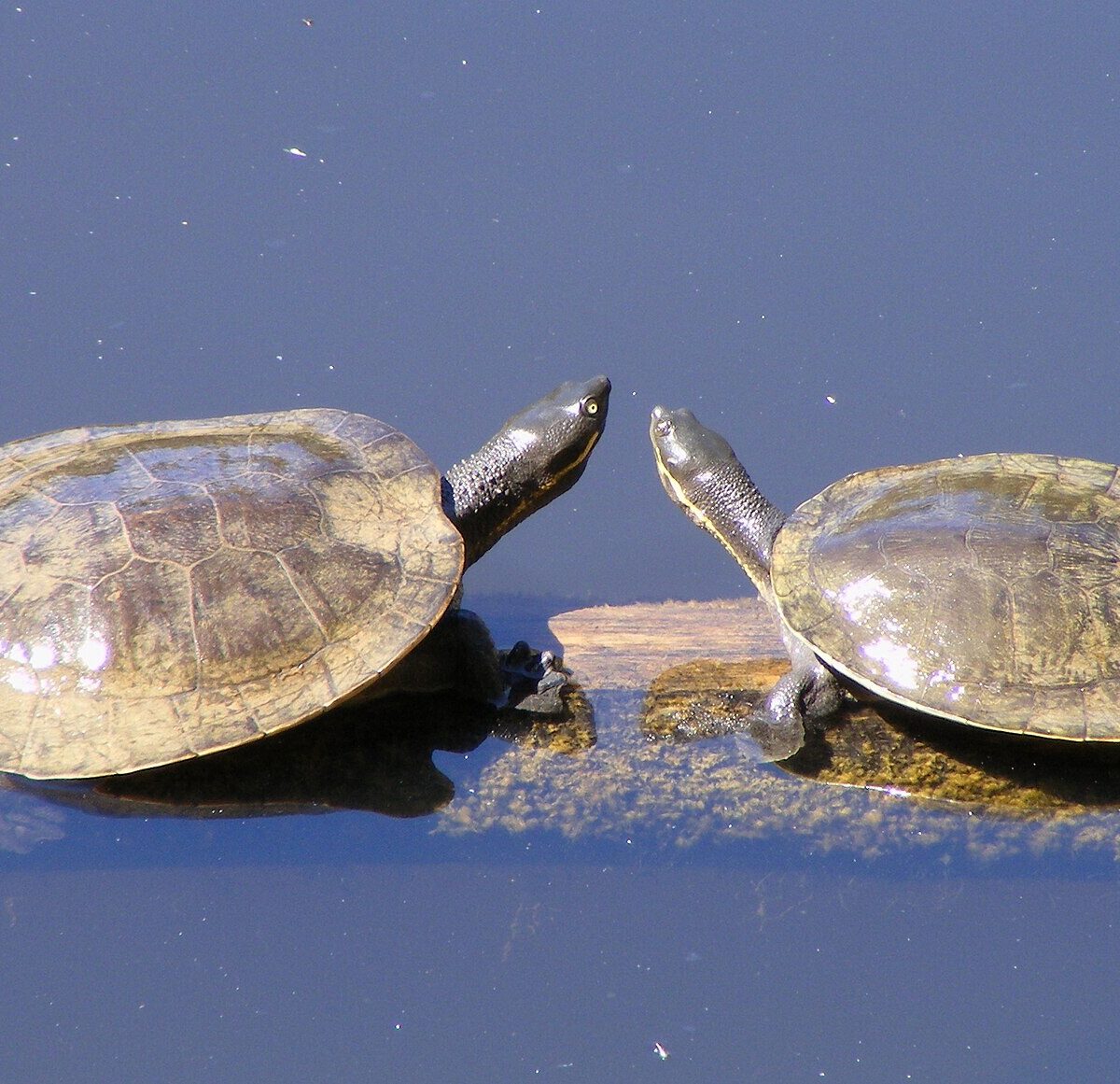
Krefft's River Turtle (Emydura krefftii) is a freshwater turtle native to Australia, characterized by its distinctive flattened shell and vibrant coloration. The carapace is typically dark brown to olive with striking yellow or orange markings, which can vary among individuals. This species is known for its semi-aquatic lifestyle, often basking on riverbanks and foraging in the water, showcasing a calm demeanor when undisturbed.
FUN FACTS
- Krefft's River Turtle is named after the German naturalist Wilhelm Krefft, who contributed significantly to the study of Australian reptiles
- This species is also known for its unique ability to absorb oxygen through its cloaca, allowing it to stay submerged for extended periods without surfacing for air.|These turtles are often used in educational programs due to their docile nature and striking appearance, making them a favorite among visitors in zoos
- Their adaptability to various aquatic environments showcases the resilience of freshwater species in changing ecosystems
QUICK INFO
Lifespan20-30 years in the wild
Average Weight1-3 kg
Average Length20-30 cm
Diet TypeOmnivore
Social Structuregroup — they are often found in small groups, especially during basking.
Activity PatternDiurnal
Breeding SeasonSpring (September-November)
- Habitat
- This turtle inhabits freshwater rivers, streams, and billabongs, often favoring areas with abundant vegetation. It prefers slow-moving waters where it can easily find food and bask in the sun.
- Biomes
- Freshwater, Wetlands
- Native Range
- Krefft's River Turtle is found in the eastern regions of Australia, particularly in Queensland and New South Wales.
- Continent
- Australia
- Countries
- Australia
- Diet
- Krefft's River Turtle primarily feeds on aquatic vegetation, insects, and small fish. Its diet reflects its omnivorous nature, allowing it to adapt to various food sources in its habitat.
- Diet Type
- Omnivore
- Favorite Food
- aquatic plants, insects, small fish
- Social Structure
- group — they are often found in small groups, especially during basking.
- Activity Pattern
- Diurnal
- Group Size
- 2-10
- Territorial
- 0
 VU
VU
 LC
LC
 EX
EX
1-3 kg
Weight
20-30 cm
Length
- Coloration
- dark brown to olive with yellow or orange markings
- Sexual Dimorphism
- males are generally smaller than females and have a more elongated tail.
- Lifespan
- 20-30 years in the wild
- Offspring per Birth
- 1-10
- Sexual Maturity
- 3-5 years
- Breeding Season
- Spring (September-November)
LC
Least Concern
IUCN Red List Status
- Population Status
- The population is currently stable, but habitat loss poses a potential threat.
- Wild Population Estimate
- unknown
- Population Trend
- Stable
- Endangered
- 0
- Threats
- Main threats include habitat destruction due to urban development and pollution in waterways. Additionally, climate change impacts on water levels and quality can affect their habitats.
- Predators
- Birds of prey, large fish, and introduced species such as foxes may prey on eggs and juveniles.
- Defense Mechanisms
- Krefft's River Turtle can retract its head and limbs into its shell for protection against predators.
- Compatible Animals
- other freshwater turtles, fish
- Found in Zoos
- Uncommon