


KWEICHOW CROCODILE NEWT
Cynops orientalis
DESCRIPTION
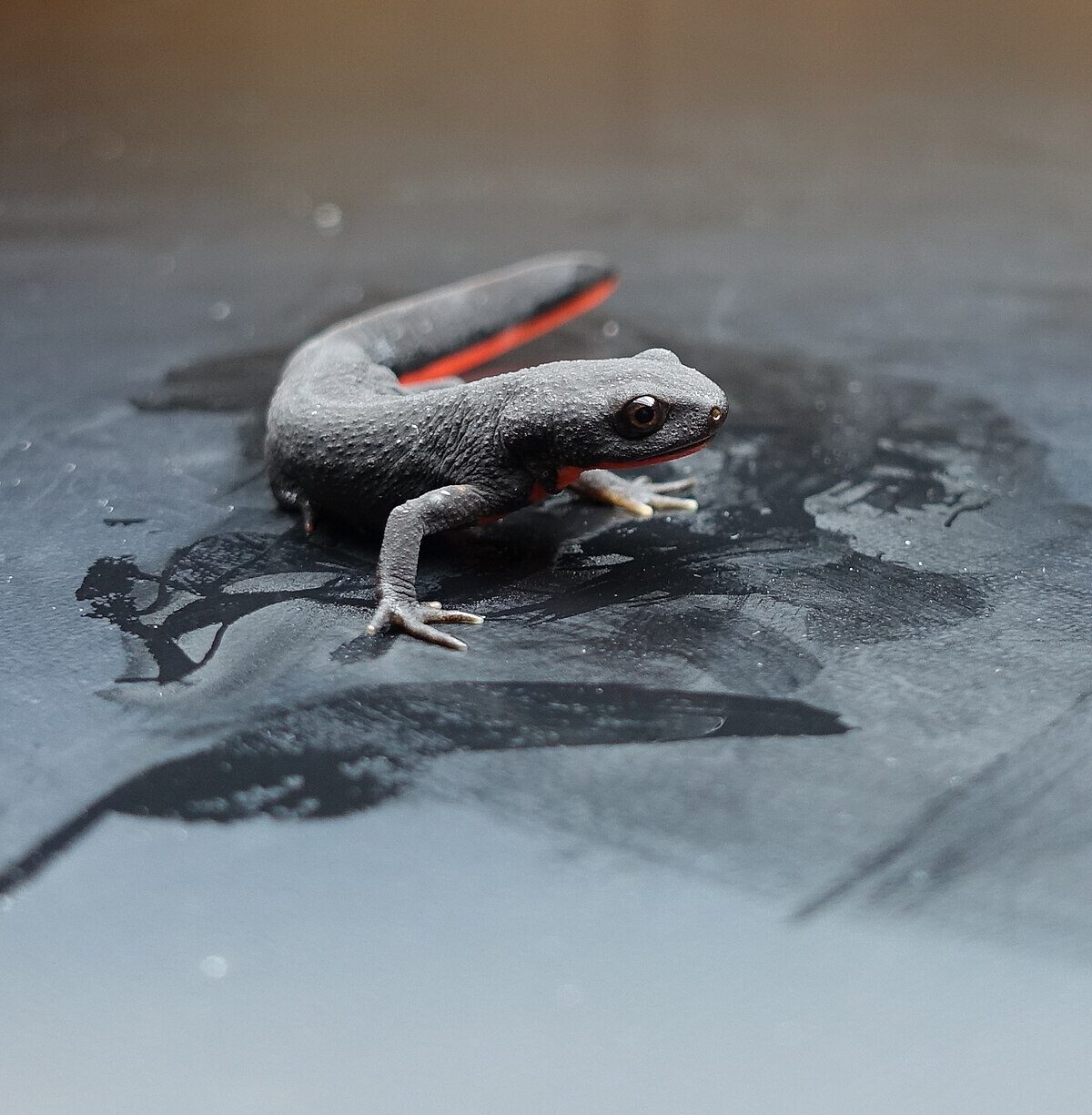
Kweichow Crocodile Newt (Cynops orientalis) is also known as the Oriental Newt and the Chinese Crocodile Newt. This species is characterized by its striking coloration, featuring a dark brown to black body with bright orange or yellow spots, which serve as a warning to potential predators. They are primarily aquatic but can also be found in moist terrestrial environments, displaying a range of behaviors from swimming to climbing.
FUN FACTS
- Kweichow Crocodile Newts are known for their unique ability to regenerate lost limbs, a trait they share with other amphibians
- This regeneration capability is a subject of scientific research, as understanding the mechanisms behind it could have implications for regenerative medicine in humans
- | These newts have a fascinating courtship ritual where males perform elaborate displays to attract females, including tail waving and body posturing
- This behavior not only showcases their health and vitality but also plays a crucial role in mate selection
QUICK INFO
Lifespan10-15 years in the wild, up to 20 years in captivi
Average Length10-15 cm
Diet TypeCarnivore
Social Structuresolitary, though they may be found in small groups during breeding season
Activity PatternNocturnal
Breeding SeasonSpring (March-May)
- Habitat
- These newts inhabit freshwater bodies such as ponds, streams, and marshes, often preferring areas with abundant vegetation. They require moist environments for breeding and development.
- Biomes
- Freshwater, Temperate Forest
- Native Range
- The Kweichow Crocodile Newt is native to southern China, particularly in the Kweichow province.
- Continent
- Asia
- Countries
- China
- Diet
- Kweichow Crocodile Newts are carnivorous, primarily feeding on small invertebrates and aquatic organisms. Their diet consists mainly of insects, worms, and small crustaceans.
- Diet Type
- Carnivore
- Favorite Food
- small invertebrates, insects
- Social Structure
- solitary, though they may be found in small groups during breeding season
- Activity Pattern
- Nocturnal
- Group Size
- 1-5
- Territorial
- 0
 VU
VU
 LC
LC
10-15 cm
Length
- Coloration
- dark brown to black body with bright orange or yellow spots
- Sexual Dimorphism
- males are generally smaller and have more vibrant coloration than females
- Lifespan
- 10-15 years in the wild, up to 20 years in captivi
- Offspring per Birth
- 20-50 eggs
- Sexual Maturity
- 2-3 years
- Breeding Season
- Spring (March-May)
LC
Least Concern
IUCN Red List Status
- Population Status
- The population of Kweichow Crocodile Newts is currently stable, but habitat loss poses a potential threat.
- Wild Population Estimate
- unknown
- Population Trend
- Stable
- Endangered
- 0
- Threats
- Main threats include habitat destruction due to urbanization and pollution of water bodies. Additionally, they are sometimes collected for the pet trade.
- Predators
- birds, snakes, larger fish
- Defense Mechanisms
- They possess toxic skin secretions that deter predators.
- Found in Zoos
- Uncommon