


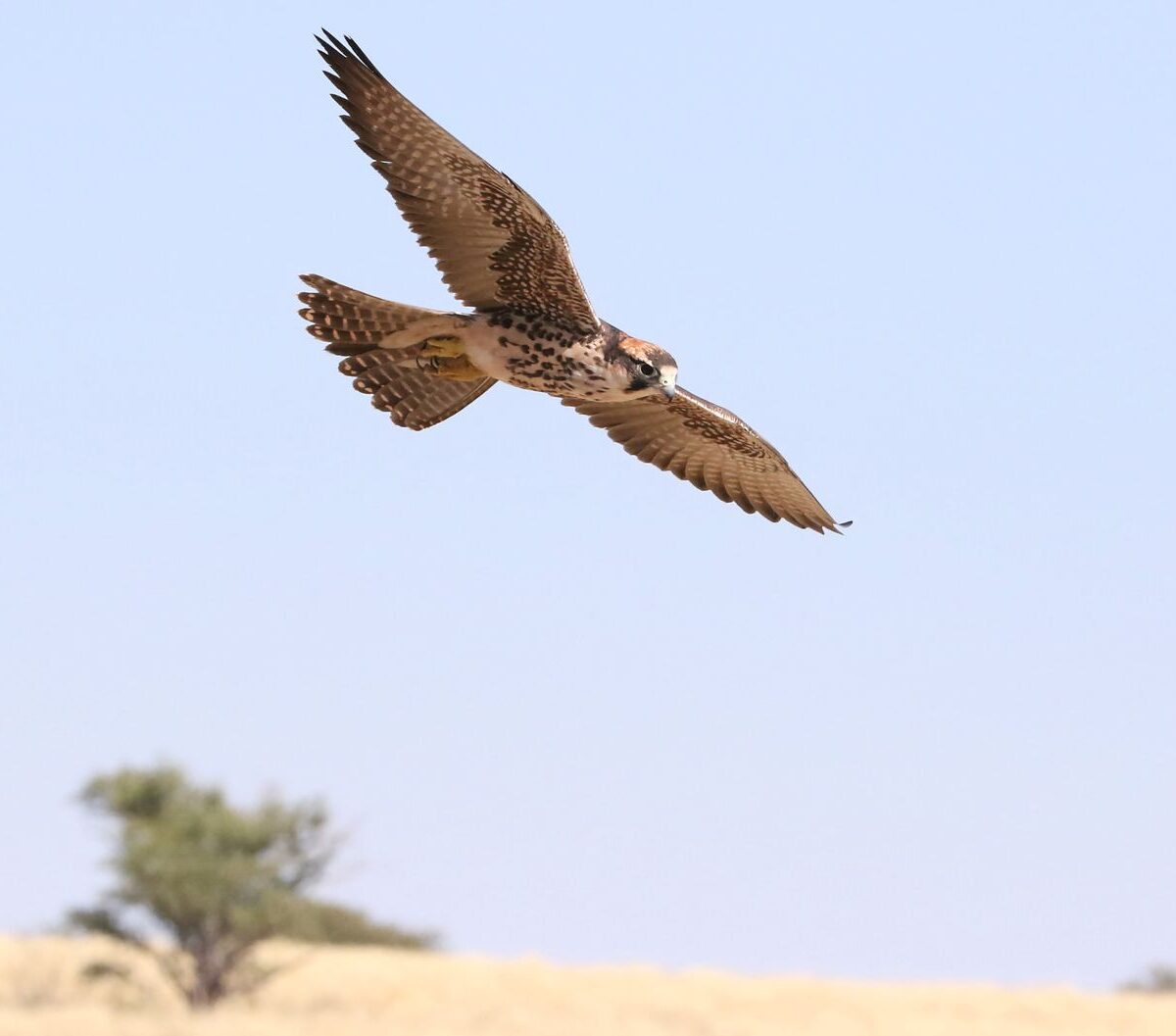
LANNER FALCON
Falco biarmicus
DESCRIPTION
Lanner Falcon (Falco biarmicus) is a medium-sized bird of prey known for its striking appearance and impressive hunting skills. It features a distinctive plumage with a combination of slate-blue wings, a pale underbelly, and a characteristic dark 'moustache' marking on its face. This species is highly agile in flight, often seen soaring or diving at high speeds to catch its prey, which includes small birds and mammals.
FUN FACTS
- Lanner Falcons are known for their incredible speed, capable of reaching speeds of up to 60 miles per hour during a dive, making them one of the fastest birds in the world
- They have been used in falconry for centuries due to their impressive hunting abilities and trainable nature.|These falcons are also known for their unique hunting technique called 'stooping,' where they dive from great heights to catch their prey off guard
- This method showcases their remarkable eyesight and precision, allowing them to spot potential meals from far away
QUICK INFO
Lifespan10-15 years in the wild, up to 20 years in captivi
Average Weight600-1,000 g
Average Length38-50 cm
Diet TypeCarnivore
Social Structuresolitary or pair, often seen alone or in breeding pairs
Activity PatternDiurnal
Breeding SeasonSpring (March-May)
- Habitat
- Lanner Falcons inhabit a variety of open and semi-open landscapes, including grasslands, savannas, and rocky terrains. They prefer areas with ample perches for hunting and nesting.
- Biomes
- Grassland, Savanna, Rocky areas
- Native Range
- Lanner Falcons are found across parts of Europe, Africa, and Asia, particularly in regions with suitable open habitats.
- Continent
- Africa, Europe, Asia
- Countries
- Algeria, Morocco, South Africa, Spain, Italy, Turkey, India
- Diet
- Lanner Falcons primarily feed on small birds and mammals, utilizing their speed and agility to catch them in mid-air or on the ground. They are known to hunt in open areas where they can spot their prey from a distance.
- Diet Type
- Carnivore
- Favorite Food
- small birds, small mammals
- Social Structure
- solitary or pair, often seen alone or in breeding pairs
- Activity Pattern
- Diurnal
- Group Size
- 1-2
- Territorial
- 1
 LC
LC
600-1,000 g
Weight
38-50 cm
Length
- Coloration
- Slate-blue wings, pale underbelly, dark facial markings
- Sexual Dimorphism
- Females are generally larger than males.
- Lifespan
- 10-15 years in the wild, up to 20 years in captivi
- Offspring per Birth
- 2-5
- Sexual Maturity
- 1-2 years
- Breeding Season
- Spring (March-May)
LC
Least Concern
IUCN Red List Status
- Population Status
- The population of Lanner Falcons is currently stable, though local declines may occur due to habitat loss.
- Wild Population Estimate
- 50,000-100,000
- Population Trend
- Stable
- Endangered
- 0
- Threats
- Main threats include habitat destruction and human encroachment, which can reduce their hunting grounds and nesting sites. Additionally, they may face risks from pesticide use and hunting.
- Predators
- Eagles, larger birds of prey, and humans can pose threats to Lanner Falcons, particularly to their eggs and young.
- Defense Mechanisms
- Lanner Falcons use their speed and agility to evade predators, and they may also engage in aggressive displays to defend their territory.
- Found in Zoos
- Uncommon