


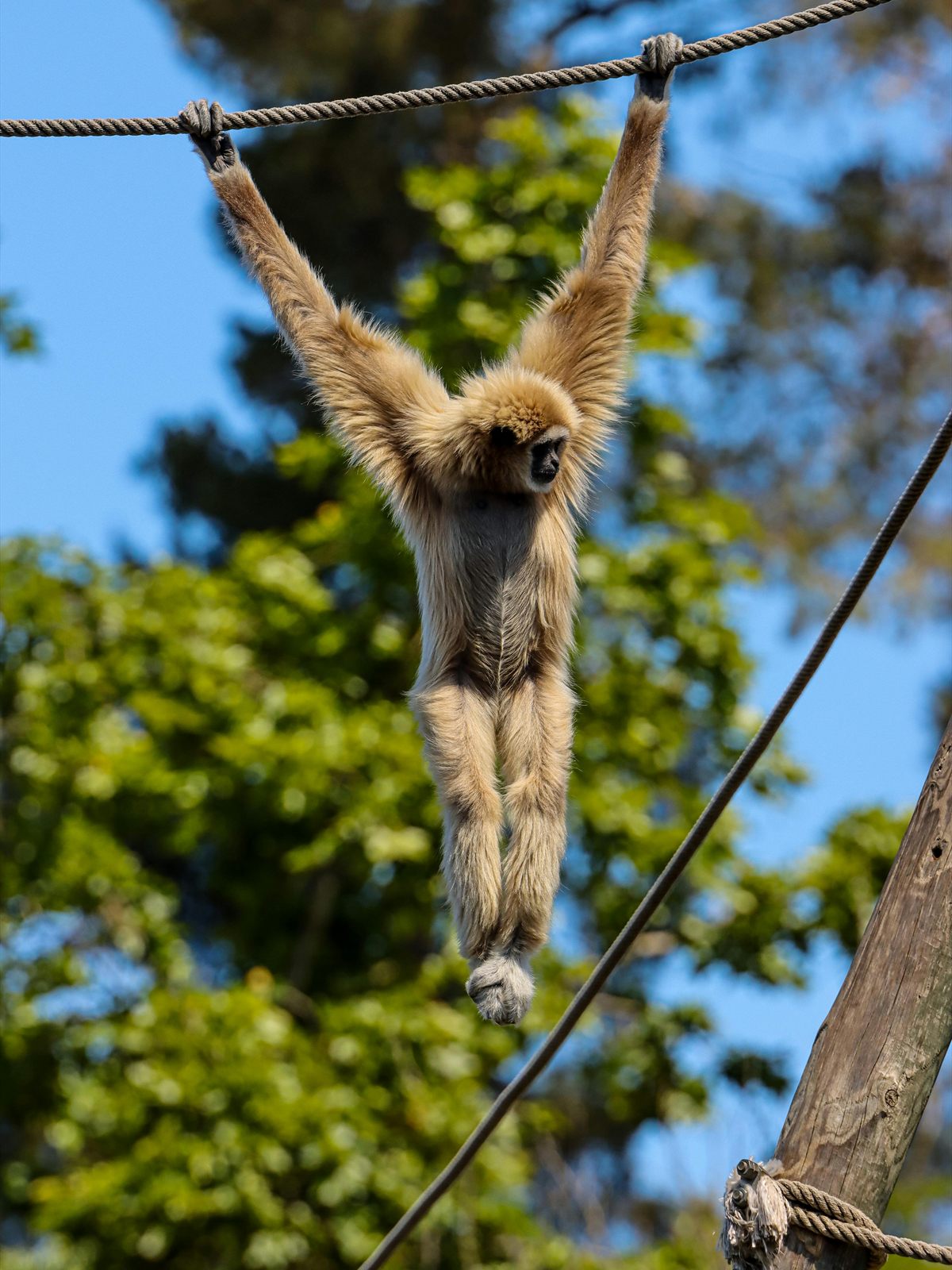
LAR GIBBON
Hylobates lar
DESCRIPTION
Lar Gibbon, also known as the White-handed Gibbon, is a small ape characterized by its long arms and a distinctive coat that varies from black to light brown, with lighter-colored hands and feet. These agile primates are known for their remarkable brachiation skills, swinging gracefully through the trees of their forest habitats. Socially, they are monogamous and often form strong pair bonds, engaging in vocal duets that resonate through their tropical rainforest homes.
FUN FACTS
- Lar Gibbons are known for their incredible vocal abilities, producing a variety of calls that can be heard over long distances, which they use to communicate with their mates and establish territory
- Additionally, they are one of the few primate species that exhibit true brachiation, swinging from branch to branch with their long arms, allowing them to move swiftly through their forest homes
QUICK INFO
Lifespan25-30 years in the wild, up to 40 in captivity
Average Weight5-7 kg
Average Length0.5-0.9 m
Diet TypeHerbivore
Social StructureLar Gibbons typically live in small family groups consisting of a mated pair and their offspring, demonstrating strong social bonds.
Activity PatternDiurnal
Breeding SeasonYear-round
- Habitat
- Lar Gibbons inhabit tropical and subtropical forests, often residing in the canopy layer where they can easily navigate through the trees. They prefer areas with abundant fruiting trees, which are crucial for their diet.
- Biomes
- Tropical Rainforest
- Native Range
- Lar Gibbons are native to the forests of Southeast Asia, particularly found in countries like Indonesia, Malaysia, and Thailand.
- Continent
- Asia
- Countries
- Indonesia, Malaysia, Thailand
- Diet
- Lar Gibbons primarily consume fruits, leaves, and flowers, showcasing a preference for ripe fruits when available.
- Diet Type
- Herbivore
- Favorite Food
- Fruits, leaves
- Social Structure
- Lar Gibbons typically live in small family groups consisting of a mated pair and their offspring, demonstrating strong social bonds.
- Activity Pattern
- Diurnal
- Group Size
- 2-6
- Territorial
- 1
 LC
LC
5-7 kg
Weight
0.5-0.9 m
Length
- Coloration
- Their coloration ranges from black to light brown, with distinctive white or light-colored hands and feet.
- Sexual Dimorphism
- Males and females are similar in size, but males typically have darker fur than females.
- Lifespan
- 25-30 years in the wild, up to 40 in captivity
- Gestation Period
- 210 days
- Offspring per Birth
- 1
- Sexual Maturity
- 4-5 years
- Breeding Season
- Year-round
EN
Endangered
IUCN Red List Status
- Population Status
- The population of Lar Gibbons is currently declining due to habitat loss and hunting.
- Wild Population Estimate
- Less than 10,000
- Population Trend
- Decreasing
- Endangered
- 1
- Threats
- Main threats to Lar Gibbons include deforestation for agriculture and logging, as well as hunting for the pet trade. These factors have significantly reduced their natural habitat and population numbers.
- Conservation Program
- Various conservation programs are in place, including habitat protection and rehabilitation efforts.
- Predators
- Main predators include large birds of prey and snakes, although adult gibbons have few natural predators due to their arboreal lifestyle.
- Defense Mechanisms
- Lar Gibbons use their agility and speed to escape from predators, often fleeing into the treetops where they are less vulnerable.
- Compatible Animals
- Other small primates, such as macaques, in controlled environments like zoos.
- Found in Zoos
- Common