


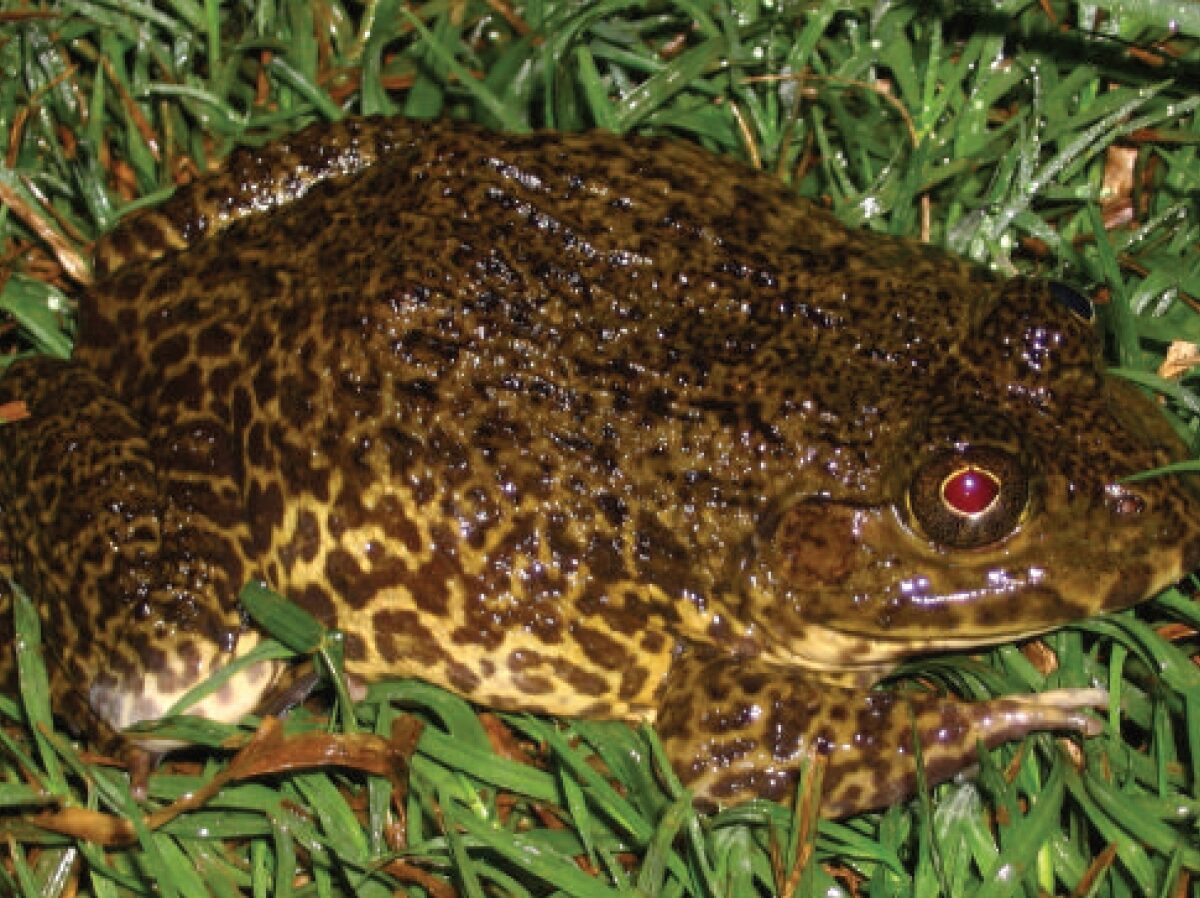
LARGE STINK FROG
Hoplobatrachus rugulosus
DESCRIPTION
Large Stink Frog (Hoplobatrachus rugulosus) is also known as the Rugged Frog and Rice Paddy Frog. This species is characterized by its robust body, long limbs, and a distinctive rough texture on its skin, which can vary in color from brown to greenish hues. They are often found in agricultural areas, particularly rice paddies, where they exhibit a semi-aquatic lifestyle, spending time both in water and on land.
FUN FACTS
- Large Stink Frogs are known for their strong odor, which can deter predators and is a characteristic feature of the species
- They play a crucial role in their ecosystem by controlling insect populations and serving as prey for various larger animals
QUICK INFO
Lifespan5-10 years in the wild, up to 15 years in captivit
Average Weight200-300 g
Average Length10-15 cm
Diet TypeCarnivore
Social Structuresolitary, though males may gather in groups during the breeding season to call for mates.
Activity PatternNocturnal
Breeding SeasonMonsoon season (June-September)
- Habitat
- This species thrives in freshwater habitats such as rice fields, ponds, and marshes. They prefer areas with abundant vegetation that provide cover and breeding sites.
- Biomes
- Freshwater, Agricultural
- Native Range
- Hoplobatrachus rugulosus is native to Southeast Asia, particularly found in countries like India, Bangladesh, and Myanmar.
- Continent
- Asia
- Countries
- India, Bangladesh, Myanmar, Thailand, Vietnam
- Diet
- Large Stink Frogs are primarily carnivorous, feeding on a variety of invertebrates and small vertebrates. Their diet includes insects, worms, and occasionally small fish.
- Diet Type
- Carnivore
- Favorite Food
- insects, worms
- Social Structure
- solitary, though males may gather in groups during the breeding season to call for mates.
- Activity Pattern
- Nocturnal
- Group Size
- 1-5
- Territorial
- 1
 VU
VU
 LC
LC
200-300 g
Weight
10-15 cm
Length
- Coloration
- Typically brown or green with darker mottling, providing camouflage in their natural habitat.
- Sexual Dimorphism
- Males are generally smaller than females and have more pronounced vocal sacs.
- Lifespan
- 5-10 years in the wild, up to 15 years in captivit
- Offspring per Birth
- 100-200 eggs
- Sexual Maturity
- 1-2 years
- Breeding Season
- Monsoon season (June-September)
LC
Least Concern
IUCN Red List Status
- Population Status
- The population of Large Stink Frogs is currently stable, but they face threats from habitat loss.
- Wild Population Estimate
- Unknown
- Population Trend
- Stable
- Endangered
- 0
- Threats
- Main threats include habitat destruction due to agricultural expansion and pollution of water bodies. Additionally, they are sometimes collected for food and traditional medicine.
- Predators
- Birds, snakes, and larger amphibians are known predators of the Large Stink Frog.
- Defense Mechanisms
- They can secrete a foul-smelling substance from their skin as a defense mechanism against predators.
- Found in Zoos
- Uncommon