


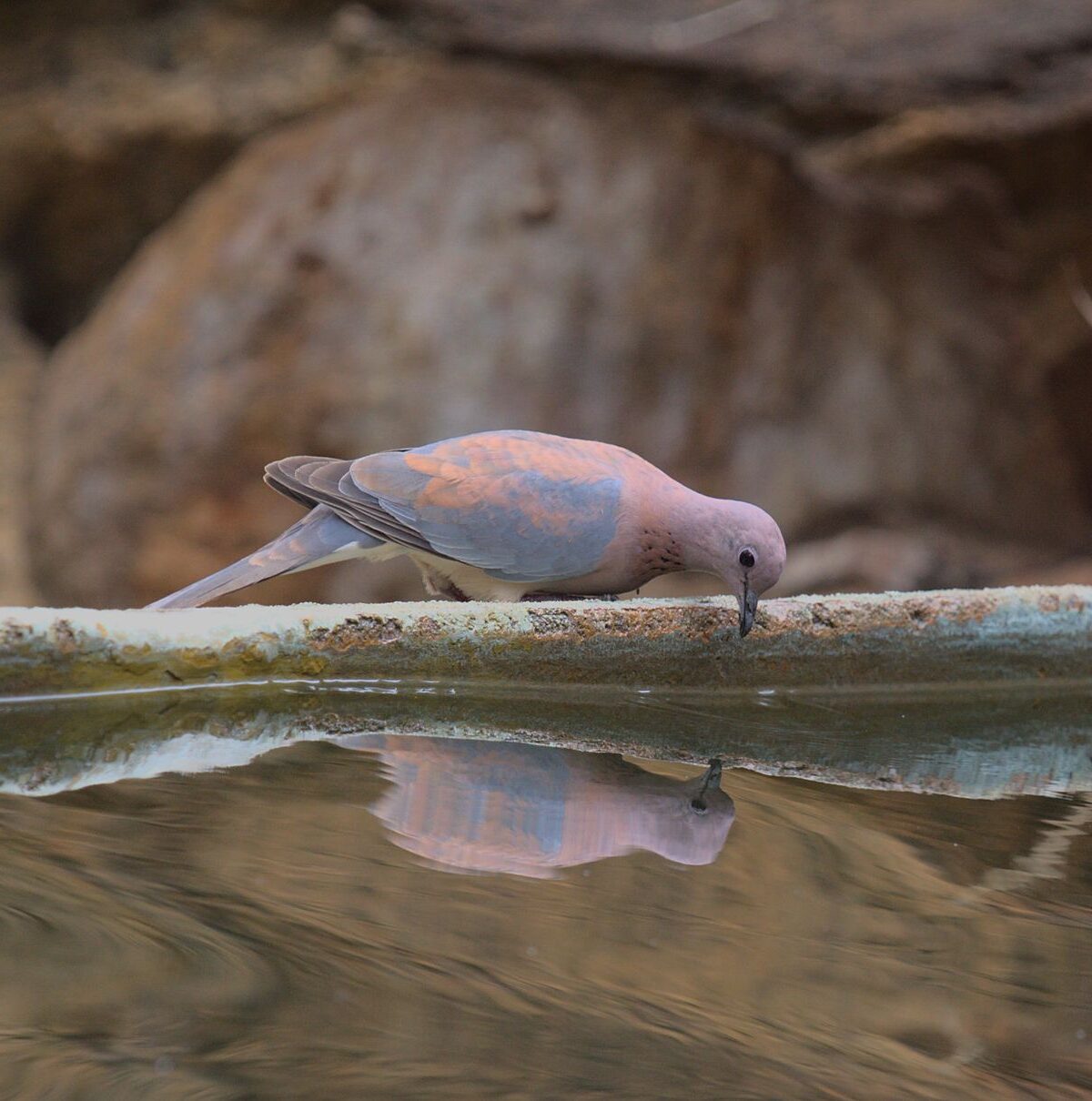
LAUGHING DOVE
Spilopelia senegalensis
DESCRIPTION
Laughing Dove (Spilopelia senegalensis) is commonly known as the African Dove and Peaceful Dove. This small, slender dove features a distinctive reddish-brown coloration with a long, pointed tail and a unique, soft cooing call that resembles laughter, which is how it got its name. It is often found in urban areas, grasslands, and open woodlands, where it forages for seeds and grains, displaying a calm and sociable demeanor.
FUN FACTS
- Laughing Doves are known for their unique vocalizations, which sound like laughter and can be heard during courtship displays
- They are also highly adaptable birds, often seen in urban settings where they have learned to forage for food scraps left by humans.| In some cultures, Laughing Doves are considered symbols of peace and love, often associated with romantic themes in literature and art
- Their gentle nature and soft cooing make them popular among bird watchers and pet owners alike
QUICK INFO
Lifespan5-10 years in the wild
Average Weight100-150 g
Average Length28-32 cm
Diet TypeGranivore
Social Structurepair or group, often seen in small flocks
Activity PatternDiurnal
Breeding SeasonYear-round in suitable climates, with peaks during the rainy season
- Habitat
- Laughing Doves inhabit a variety of environments, including urban areas, savannas, and open woodlands. They prefer areas with scattered trees and shrubs for nesting and roosting.
- Biomes
- Savanna, Grassland, Urban
- Native Range
- The native range of the Laughing Dove extends across parts of Africa, the Middle East, and into South Asia.
- Continent
- Africa, Asia
- Countries
- Egypt, South Africa, India, Saudi Arabia, Kenya
- Diet
- Laughing Doves primarily feed on seeds, grains, and fruits, often foraging on the ground. They are known to be opportunistic feeders, adapting their diet based on the availability of food sources.
- Diet Type
- Granivore
- Favorite Food
- seeds and grains
- Social Structure
- pair or group, often seen in small flocks
- Activity Pattern
- Diurnal
- Group Size
- 2-20
- Territorial
- 0
 CR
CR
100-150 g
Weight
28-32 cm
Length
- Coloration
- reddish-brown with a pale blue-grey face and a black crescent on the neck
- Sexual Dimorphism
- males and females are similar in appearance, but males may have slightly brighter coloration
- Lifespan
- 5-10 years in the wild
- Offspring per Birth
- 1-2
- Sexual Maturity
- 6-12 months
- Breeding Season
- Year-round in suitable climates, with peaks during the rainy season
LC
Least Concern
IUCN Red List Status
- Population Status
- The Laughing Dove has a stable population and is not currently considered threatened.
- Wild Population Estimate
- Not specifically estimated, but considered common in many areas
- Population Trend
- Stable
- Endangered
- 0
- Threats
- The main threats to Laughing Doves include habitat loss due to urbanization and agricultural expansion. However, they are adaptable and can thrive in human-altered environments.
- Predators
- Cats, hawks, and snakes are known predators of Laughing Doves.
- Defense Mechanisms
- They rely on their ability to fly quickly and their camouflage to evade predators.
- Compatible Animals
- other doves, finches, canaries
- Found in Zoos
- Common