


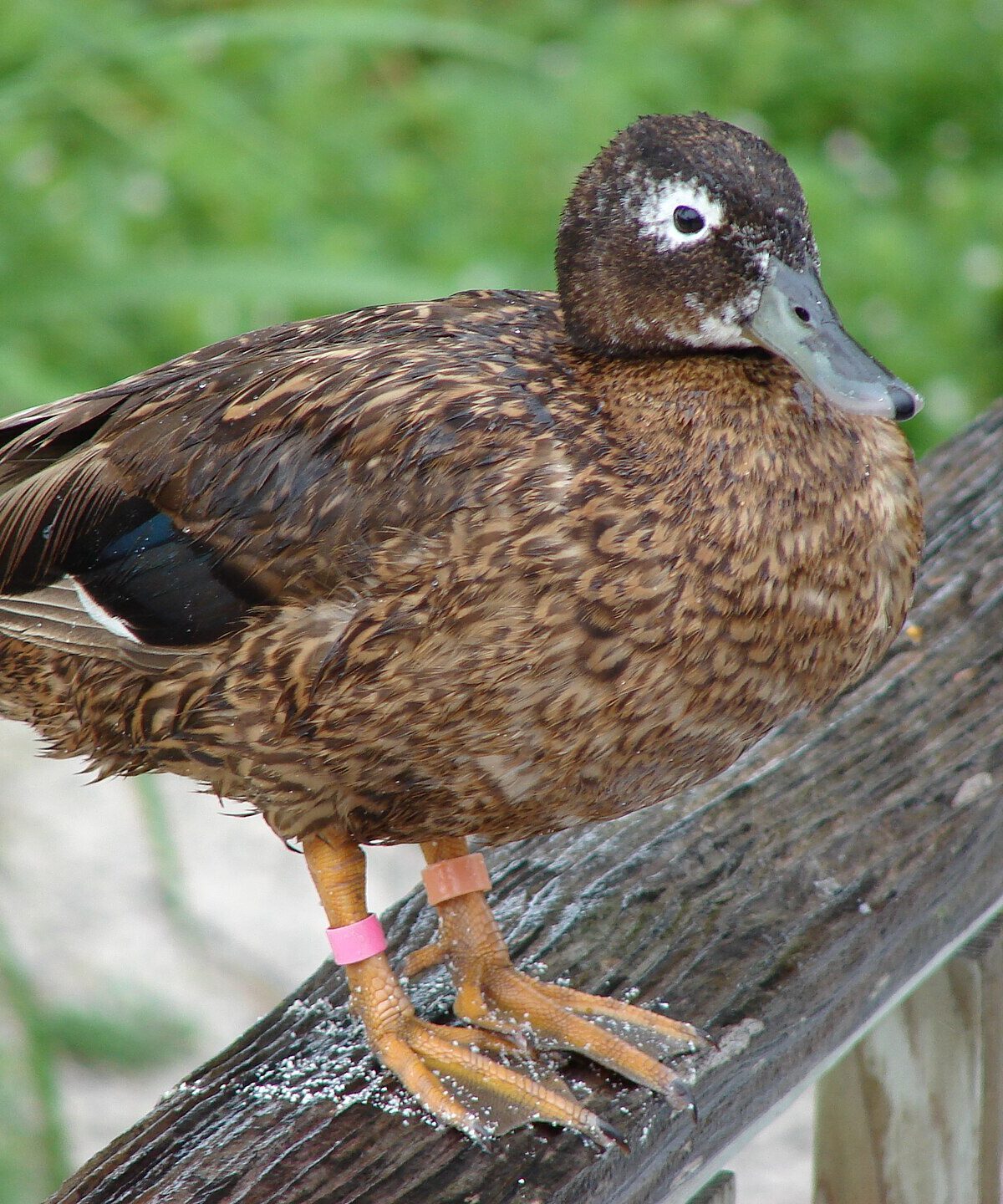
LAYSAN TEAL DUCK
DESCRIPTION
Also called the Laysan Duck, the Laysan Teal Duck is a small, dabbling duck endemic to the Hawaiian Islands, particularly Laysan Island. It has a distinctive appearance with a brownish body, a pale face, and a greenish speculum on its wings. This species is known for its shy behavior and often prefers to stay hidden in dense vegetation near freshwater sources.
FUN FACTS
- Laysan Teal Ducks are one of the rarest duck species in the world, with a population that has been recovering due to conservation efforts
- They are unique to the Hawaiian Islands and have adapted to their specific island habitats, making them a symbol of Hawaiian wildlife conservation
- | The Laysan Teal Duck was once thought to be extinct in the early 20th century, but a small population was discovered on Laysan Island, leading to intensive conservation efforts that have helped stabilize their numbers
QUICK INFO
Lifespan5-10 years in the wild
Average Weight0.5-0.7 kg
Average Length30-35 cm
Diet TypeOmnivore
Social Structurepair, often seen in small groups during foraging
Activity PatternDiurnal
Breeding SeasonSpring (March-May)
- Habitat
- Laysan Teal Ducks inhabit freshwater marshes, wetlands, and coastal areas, often favoring dense vegetation for cover. They are particularly associated with areas that provide ample food resources and nesting sites.
- Biomes
- Wetlands, Coastal
- Native Range
- The Laysan Teal Duck is native to the Hawaiian Islands, specifically found on Laysan Island and occasionally on other nearby islands.
- Continent
- Oceania
- Countries
- United States (Hawaii)
- Diet
- Laysan Teal Ducks primarily feed on seeds, aquatic plants, and invertebrates found in their wetland habitats. They forage by dabbling in the water and grazing on land.
- Diet Type
- Omnivore
- Favorite Food
- seeds, aquatic plants
- Social Structure
- pair, often seen in small groups during foraging
- Activity Pattern
- Diurnal
- Group Size
- 2-10
- Territorial
- 0
 LC
LC

0.5-0.7 kg
Weight
30-35 cm
Length
- Coloration
- brownish body with a pale face and greenish wing speculum
- Lifespan
- 5-10 years in the wild
- Offspring per Birth
- 5-10
- Sexual Maturity
- 1 year
- Breeding Season
- Spring (March-May)
EN
Endangered
IUCN Red List Status
- Population Status
- The population of Laysan Teal Ducks is currently limited and vulnerable due to habitat loss and predation.
- Wild Population Estimate
- approximately 1,000
- Population Trend
- Increasing
- Endangered
- 1
- Threats
- Main threats to the Laysan Teal Duck include habitat destruction, invasive species, and predation by introduced mammals such as rats and cats. Conservation efforts are ongoing to protect their habitat and manage predator populations.
- Conservation Program
- The U.S. Fish and Wildlife Service has implemented recovery plans and habitat restoration projects for the Laysan Teal Duck.
- Predators
- rats, cats, mongooses
- Defense Mechanisms
- Laysan Teal Ducks rely on their cryptic coloration and dense vegetation for camouflage to evade predators.
- Found in Zoos
- Rare