


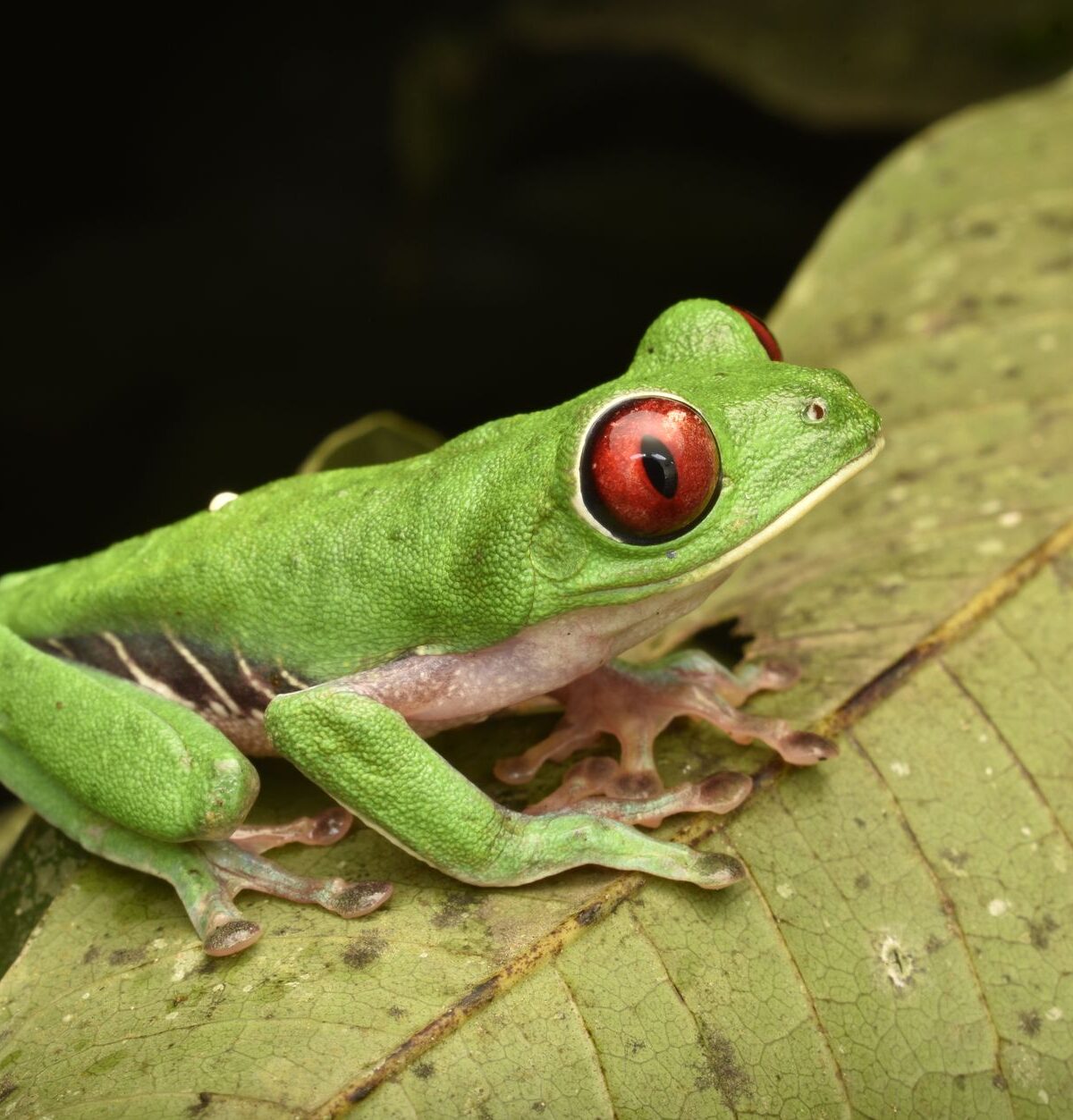
LEAF FROG
DESCRIPTION
Leaf Frog, also known as the Red-eyed Leaf Frog, is a striking amphibian characterized by its vibrant green body and large, red eyes. This species is primarily arboreal, spending much of its time in the trees of tropical rainforests, where it blends seamlessly with the foliage. Its unique coloration serves as both camouflage and a warning to potential predators, as it can also display bright blue and yellow markings on its limbs when threatened.
FUN FACTS
- Leaf Frogs are known for their remarkable ability to change color slightly based on their environment, enhancing their camouflage
- Additionally, their vibrant red eyes are not just for show; they help them see better in low-light conditions, making them effective nocturnal hunters
QUICK INFO
Lifespan5-10 years in the wild, up to 15 years in captivit
Average Weight10-20 g
Average Length5-7 cm
Diet TypeInsectivore
Social Structuresolitary, typically found alone except during mating
Activity PatternNocturnal
Breeding SeasonWet season (May-October)
- Habitat
- Leaf Frogs inhabit humid tropical rainforests, often found near ponds or streams where they can breed. They prefer areas with dense vegetation that provides cover and hunting grounds.
- Biomes
- Tropical Rainforest
- Native Range
- Leaf Frogs are native to Central America, particularly found in countries like Costa Rica, Nicaragua, and Panama.
- Continent
- North America, Central America
- Countries
- Costa Rica, Nicaragua, Panama
- Diet
- Leaf Frogs primarily consume insects, including crickets and moths, which they catch using their long, sticky tongues. They are nocturnal hunters, actively foraging at night when their prey is most abundant.
- Diet Type
- Insectivore
- Favorite Food
- insects
- Social Structure
- solitary, typically found alone except during mating
- Activity Pattern
- Nocturnal
- Group Size
- 1-2
- Territorial
- 0
 LC
LC
 VU
VU
10-20 g
Weight
5-7 cm
Length
- Coloration
- vibrant green with red eyes and blue and yellow markings on limbs
- Sexual Dimorphism
- males are smaller and have more pronounced vocal sacs than females
- Lifespan
- 5-10 years in the wild, up to 15 years in captivit
- Offspring per Birth
- 20-50 eggs
- Sexual Maturity
- 1-2 years
- Breeding Season
- Wet season (May-October)
LC
Least Concern
IUCN Red List Status
- Population Status
- The population of Leaf Frogs is currently stable, but they face threats from habitat loss.
- Wild Population Estimate
- unknown
- Population Trend
- Stable
- Endangered
- 0
- Threats
- Main threats include habitat destruction due to deforestation and climate change, which impact their breeding sites and food availability. Additionally, pollution can affect their health and reproductive success.
- Predators
- snakes, birds, and larger amphibians
- Defense Mechanisms
- Leaf Frogs can exhibit aposematic coloration, displaying their bright colors to deter predators. They also have the ability to remain motionless to avoid detection.
- Found in Zoos
- Common