


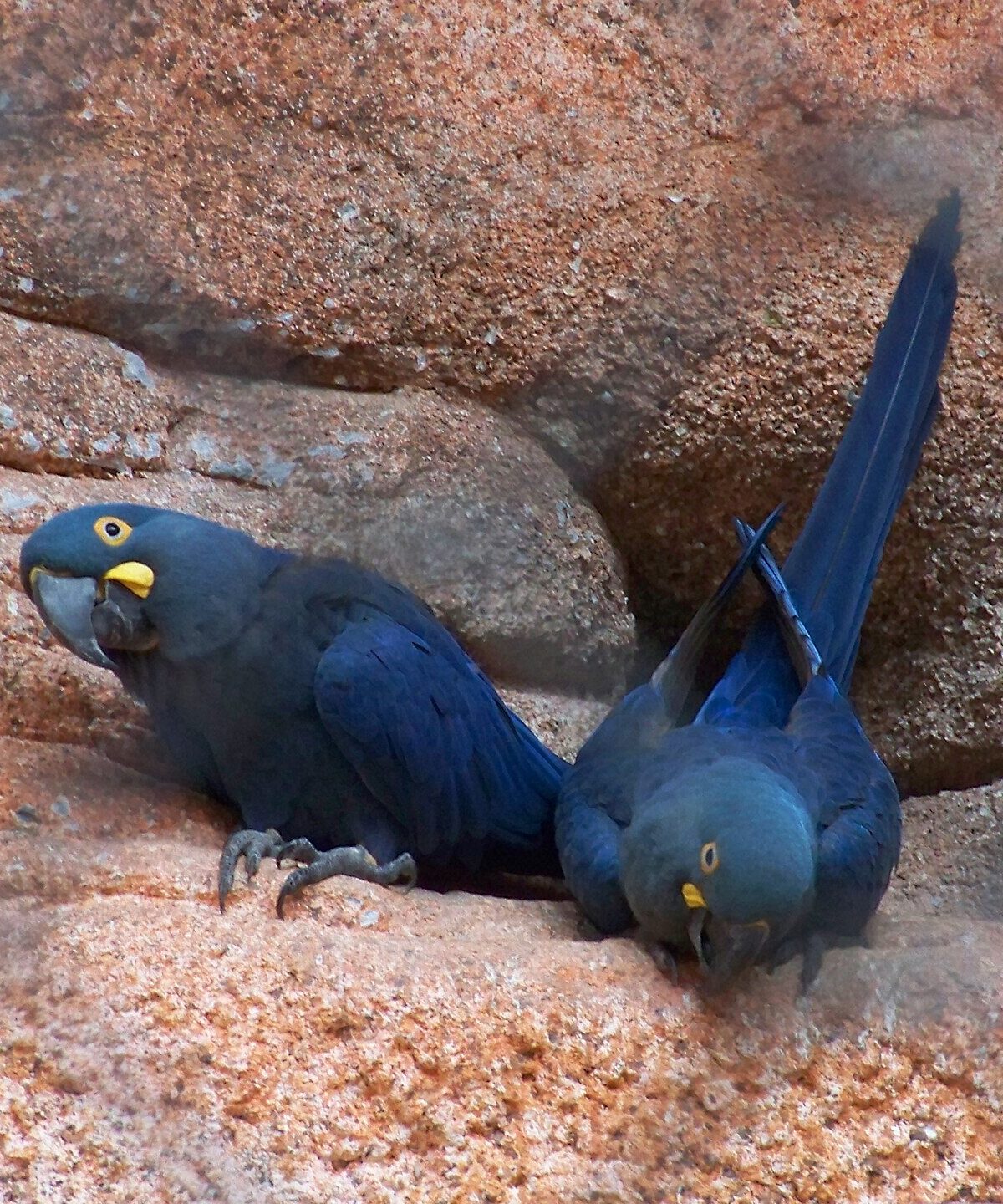
LEAR'S MACAW
Anodorhynchus leari
DESCRIPTION
Lear's Macaw (Anodorhynchus leari), also known as the Indigo Macaw, is a strikingly beautiful bird characterized by its vibrant blue plumage and distinctive yellow markings on the face. This species is known for its strong, curved beak, which is well-adapted for cracking open hard seeds and nuts. Lear's Macaw is primarily found in the Brazilian rainforest, where it plays a crucial role in seed dispersal, contributing to the health of its ecosystem.
FUN FACTS
- Lear's Macaw is named after the British ornithologist Edward Lear, who was one of the first to describe the species in the 19th century
- This macaw is also known for its intelligence and ability to mimic human speech, making it a popular choice among bird enthusiasts and in aviculture
QUICK INFO
Lifespan20-30 years in the wild, up to 50 in captivity
Average Weight700-1,000 g
Average Length70-80 cm
Diet TypeHerbivore
Social StructureLear's Macaw typically forms monogamous pairs, and they are often seen foraging and nesting together.
Activity PatternDiurnal
Breeding SeasonSpring (September-November)
- Habitat
- Lear's Macaw inhabits tropical and subtropical forests, particularly areas with abundant palm trees. It prefers regions with a mix of open and dense vegetation.
- Biomes
- Tropical Rainforest
- Native Range
- This species is native to a small region in Brazil, specifically the Bahia state.
- Continent
- South America
- Countries
- Brazil
- Diet
- Lear's Macaw primarily feeds on seeds, fruits, and nuts, particularly from the licuri palm.
- Diet Type
- Herbivore
- Favorite Food
- licuri palm seeds
- Social Structure
- Lear's Macaw typically forms monogamous pairs, and they are often seen foraging and nesting together.
- Activity Pattern
- Diurnal
- Group Size
- 2-10
- Territorial
- 1
 LC
LC
700-1,000 g
Weight
70-80 cm
Length
- Coloration
- The plumage is predominantly bright blue with yellow accents on the face and a greenish-yellow patch on the wings.
- Lifespan
- 20-30 years in the wild, up to 50 in captivity
- Offspring per Birth
- 1-2
- Sexual Maturity
- 3-4 years
- Breeding Season
- Spring (September-November)
CR
Critically Endangered
IUCN Red List Status
- Population Status
- Lear's Macaw is considered critically endangered due to habitat loss and illegal trapping.
- Wild Population Estimate
- 1,000-2,500
- Population Trend
- Decreasing
- Endangered
- 1
- Threats
- The main threats to Lear's Macaw include habitat destruction due to deforestation and illegal trapping for the pet trade. Conservation efforts are ongoing to protect their natural habitat and reduce poaching.
- Conservation Program
- Conservation programs in Brazil focus on habitat restoration and legal protection of the species.
- Predators
- Natural predators include large birds of prey and snakes, although specific predators are not well-documented.
- Defense Mechanisms
- Lear's Macaw uses its strong beak for defense and can also be quite vocal to warn off potential threats.
- Compatible Animals
- Other macaw species, large parrots
- Found in Zoos
- Uncommon