


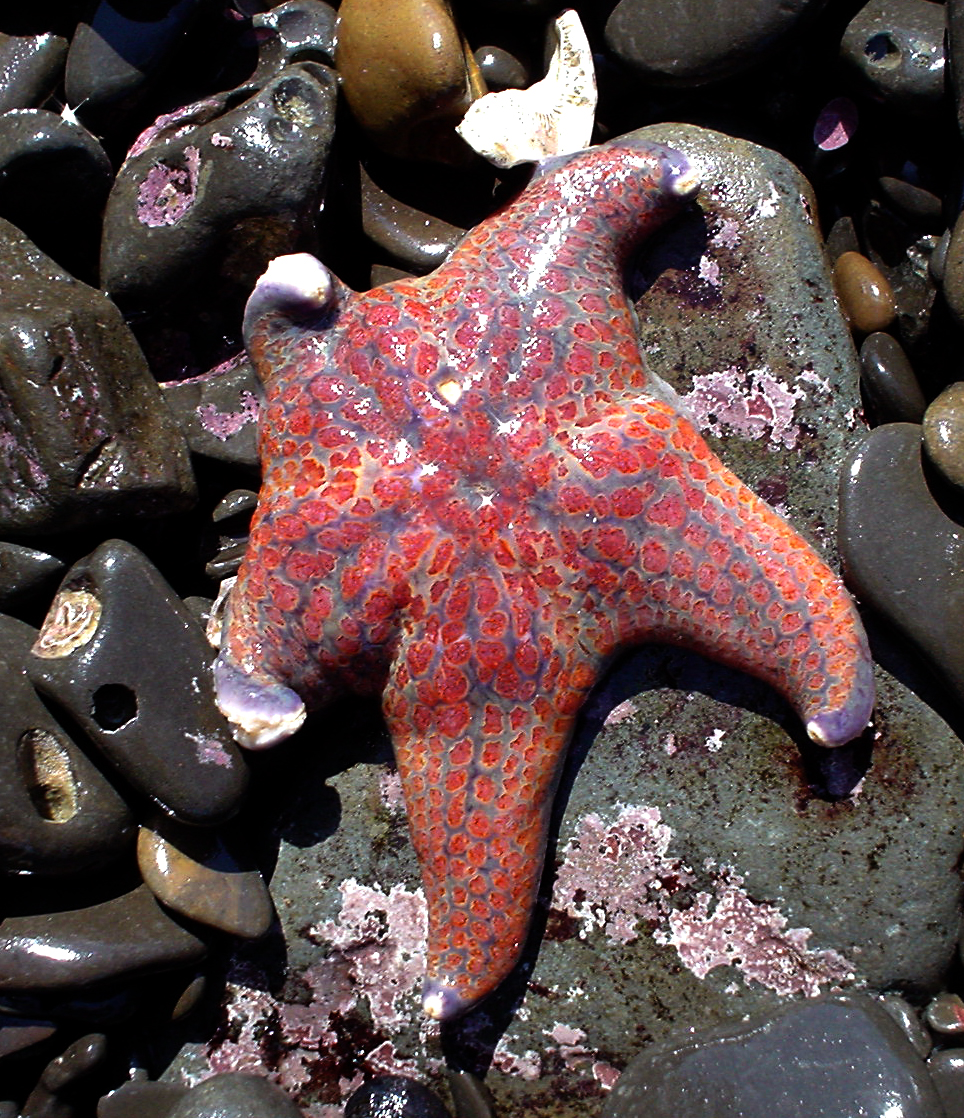
LEATHER STAR
DESCRIPTION
Leather Star is a species of sea star known for its distinctive leathery texture and vibrant coloration, which can range from orange to purple. It typically has five arms that are broad and flattened, giving it a unique appearance among echinoderms. This species is often found in intertidal zones and rocky substrates, where it exhibits a behavior of clinging tightly to surfaces to avoid being swept away by waves.
FUN FACTS
- Leather Stars have a unique ability to regenerate lost limbs, which can take several months to fully regrow
- This regeneration process is not only vital for survival but also allows them to adapt to their environment by replacing damaged or lost arms
- | Unlike many other sea stars, Leather Stars have a more flexible body structure, which allows them to squeeze into tight spaces and crevices, making them adept at avoiding predators and finding food
QUICK INFO
Lifespanup to 10 years in the wild
Average Weight0.5-1 kg
Average Length20-30 cm
Diet TypeCarnivore
Social Structuresolitary, typically found alone or in small groups
Activity PatternNocturnal
Breeding SeasonSpring to early summer
- Habitat
- Leather Stars inhabit rocky shores and tidal pools, often found in shallow waters where they can easily access their prey. They prefer areas with plenty of crevices and hiding spots to protect themselves from predators.
- Biomes
- Marine, Coastal
- Native Range
- Leather Stars are native to the Pacific coast of North America, ranging from Alaska to California.
- Continent
- North America
- Countries
- United States, Canada
- Diet
- Leather Stars primarily feed on a variety of invertebrates, including mollusks and small crustaceans. They use their tube feet to pry open the shells of their prey and can evert their stomachs to digest food externally.
- Diet Type
- Carnivore
- Favorite Food
- mollusks, small crustaceans
- Social Structure
- solitary, typically found alone or in small groups
- Activity Pattern
- Nocturnal
- Group Size
- 1-5
- Territorial
- 0
 EN
EN
 LC
LC
0.5-1 kg
Weight
20-30 cm
Length
- Coloration
- vibrant orange to purple with a leathery texture
- Lifespan
- up to 10 years in the wild
- Offspring per Birth
- hundreds to thousands of larvae
- Sexual Maturity
- 2-3 years
- Breeding Season
- Spring to early summer
LC
Least Concern
IUCN Red List Status
- Population Status
- The population of Leather Stars is currently stable, with no significant declines reported.
- Wild Population Estimate
- unknown
- Population Trend
- Stable
- Endangered
- 0
- Threats
- Leather Stars face threats from habitat destruction and climate change, which can affect their intertidal habitats. Additionally, they may be impacted by pollution and overfishing of their prey species.
- Predators
- sea otters, crabs, and various fish species
- Defense Mechanisms
- Leather Stars can regenerate lost arms, which helps them escape predation. They also have a tough, leathery skin that provides some protection against predators.
- Compatible Animals
- none
- Found in Zoos
- Rare