


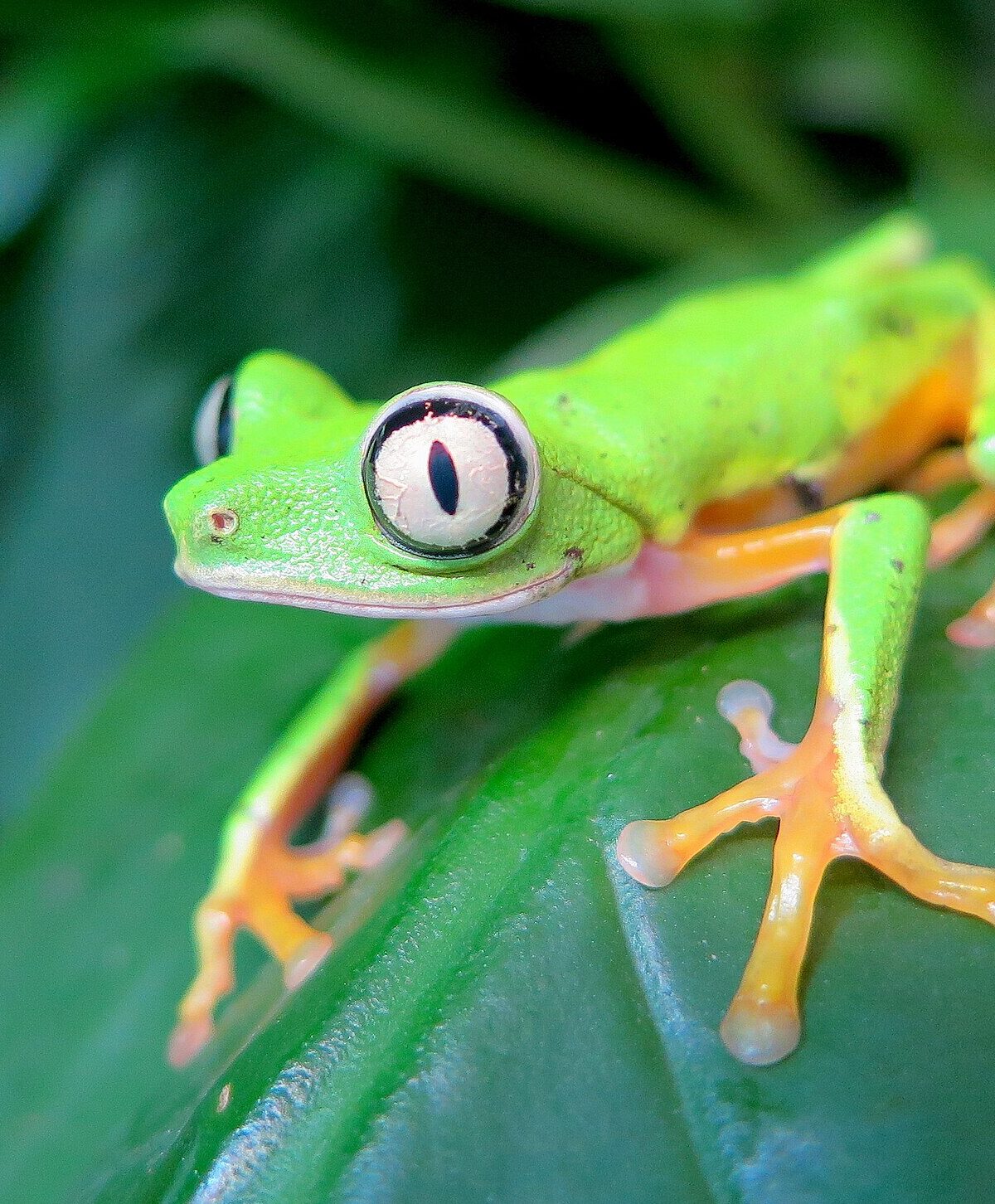
LEMUR LEAF FROG
Hylomantis lemur
DESCRIPTION
Lemur Leaf Frog (Hylomantis lemur) is a strikingly colorful amphibian known for its vibrant green body and distinctive yellow and black markings. This species is primarily arboreal, spending much of its time in the trees of tropical rainforests, where it blends seamlessly with the foliage. Its nocturnal behavior allows it to avoid predators while hunting for insects, which are its primary food source.
FUN FACTS
- Lemur Leaf Frogs are named for their unique coloration, which resembles the fur of a lemur, providing them with excellent camouflage in their leafy habitats
- Additionally, they are known for their vocalizations, which can be quite loud and are used to communicate with potential mates during the breeding season
QUICK INFO
Lifespan5-10 years in the wild
Average Length3-5 cm
Diet TypeInsectivore
Social Structuresolitary, with males and females coming together only for breeding
Activity PatternNocturnal
Breeding SeasonSpring to early summer
- Habitat
- These frogs inhabit humid tropical rainforests, often found near streams and ponds where they can breed. They prefer areas with dense vegetation that provides cover from predators.
- Biomes
- Tropical Rainforest
- Native Range
- Lemur Leaf Frogs are native to the lowland rainforests of Central America, specifically found in countries like Costa Rica and Panama.
- Continent
- North America, Central America
- Countries
- Costa Rica, Panama
- Diet
- Lemur Leaf Frogs primarily consume a diet of insects, including crickets and moths. They are adept at catching their prey using their long, sticky tongues.
- Diet Type
- Insectivore
- Favorite Food
- insects
- Social Structure
- solitary, with males and females coming together only for breeding
- Activity Pattern
- Nocturnal
- Group Size
- 1-2
- Territorial
- 0
 LC
LC
 VU
VU
3-5 cm
Length
- Coloration
- vibrant green with yellow and black markings
- Sexual Dimorphism
- males are generally smaller than females
- Lifespan
- 5-10 years in the wild
- Offspring per Birth
- 10-30 eggs
- Sexual Maturity
- 1-2 years
- Breeding Season
- Spring to early summer
EN
Endangered
IUCN Red List Status
- Population Status
- The population of Lemur Leaf Frogs is currently declining due to habitat loss and disease.
- Wild Population Estimate
- unknown
- Population Trend
- Decreasing
- Endangered
- 1
- Threats
- Main threats include habitat destruction due to deforestation and the spread of chytridiomycosis, a fungal disease that affects amphibians. Climate change also poses a significant risk to their habitat.
- Conservation Program
- Conservation efforts include habitat protection and captive breeding programs to help stabilize populations.
- Predators
- snakes, birds, and larger amphibians
- Defense Mechanisms
- They can exhibit cryptic coloration to blend in with their surroundings, making it difficult for predators to spot them.
- Found in Zoos
- Uncommon