


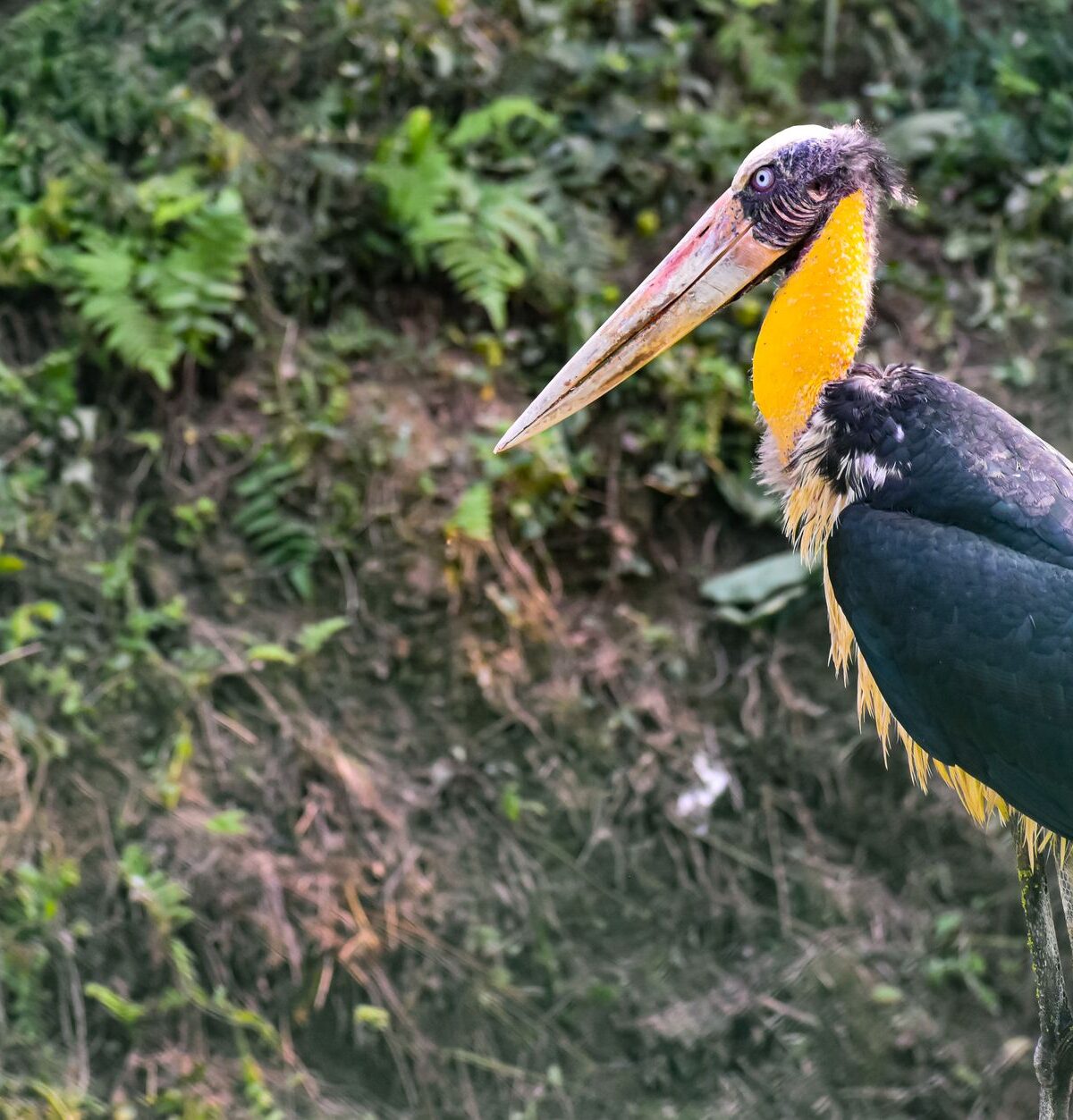
LESSER ADJUTANT STORK
Leptoptilos javanicus
DESCRIPTION
Lesser Adjutant Stork (Leptoptilos javanicus) is commonly known as the Asian Adjutant and is characterized by its long legs and large wingspan. This stork has a distinctive appearance with a bare neck and head, which are often a pale yellow or gray color, contrasting with its dark plumage. It is typically found in wetlands and is known for its scavenging behavior, often seen foraging in mudflats and near human settlements.
FUN FACTS
- Lesser Adjutant Storks are known for their impressive wingspan, which can reach up to 2.5 meters, allowing them to soar gracefully over wetlands
- They play a crucial ecological role as scavengers, helping to clean up dead animals and maintain the health of their ecosystems.|These storks are often seen in urban areas, where they scavenge for food scraps, showcasing their adaptability to human environments
- Their unique appearance and behavior make them a fascinating subject for birdwatchers and wildlife enthusiasts
QUICK INFO
Lifespan15-20 years in the wild
Average Weight3-4 kg
Average Length0.8-1.0 m
Diet TypeCarnivore
Social Structuresolitary or small groups, often seen foraging alone or in pairs
Activity PatternDiurnal
Breeding SeasonMonsoon season (June-September)
- Habitat
- This species inhabits wetlands, marshes, and areas near rivers and lakes. They are often found in both natural and human-altered environments.
- Biomes
- Wetlands, Grasslands
- Native Range
- Lesser Adjutant Storks are native to South and Southeast Asia, particularly in countries with extensive wetland habitats.
- Continent
- Asia
- Countries
- India, Bangladesh, Myanmar, Thailand, Cambodia, Vietnam, Indonesia
- Diet
- Lesser Adjutant Storks primarily feed on carrion, fish, and small invertebrates. They are opportunistic feeders and will scavenge for food in various habitats.
- Diet Type
- Carnivore
- Favorite Food
- carrion, fish, invertebrates
- Social Structure
- solitary or small groups, often seen foraging alone or in pairs
- Activity Pattern
- Diurnal
- Group Size
- 1-5
- Territorial
- 0
 VU
VU
 CR
CR
3-4 kg
Weight
0.8-1.0 m
Length
- Coloration
- dark plumage with a bare yellowish neck and head
- Sexual Dimorphism
- males and females are similar in appearance
- Lifespan
- 15-20 years in the wild
- Offspring per Birth
- 1-3
- Sexual Maturity
- 3-4 years
- Breeding Season
- Monsoon season (June-September)
VU
Vulnerable
IUCN Red List Status
- Population Status
- The population of Lesser Adjutant Storks is currently declining due to habitat loss and other threats.
- Wild Population Estimate
- 10,000-20,000
- Population Trend
- Decreasing
- Endangered
- 1
- Threats
- Main threats include habitat destruction due to urbanization and agricultural expansion, as well as hunting and pollution. These factors have significantly impacted their populations in recent years.
- Predators
- Large birds of prey, such as eagles and hawks, may prey on juvenile storks. Additionally, humans pose a threat through hunting.
- Defense Mechanisms
- Lesser Adjutant Storks rely on their size and ability to fly to escape predators, and they may also use their long beaks to defend themselves.
- Found in Zoos
- Uncommon