


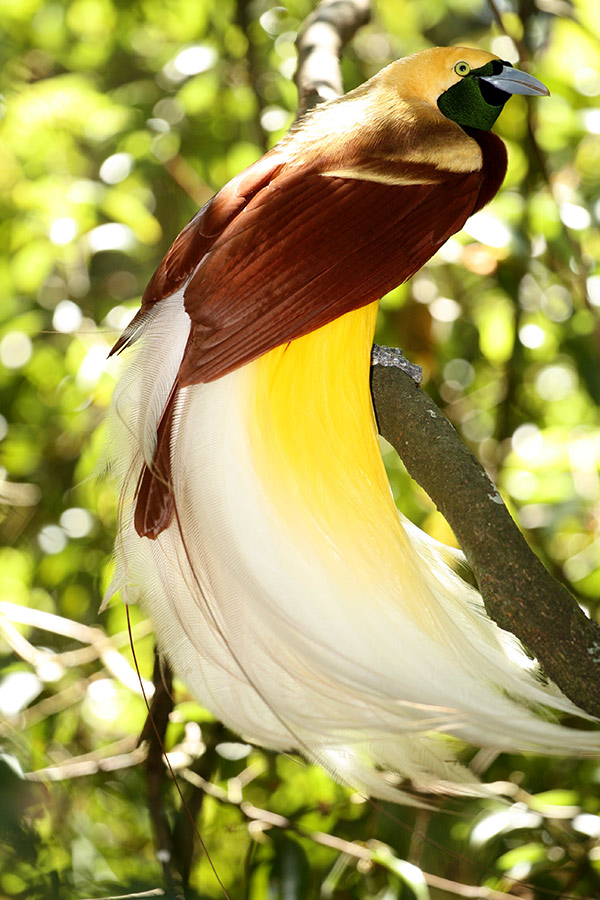
LESSER BIRD-OF-PARADISE
Paradisaea minor
DESCRIPTION
Lesser Bird-of-paradise (Paradisaea minor) is a strikingly beautiful bird known for its vibrant plumage and elaborate courtship displays. Males exhibit a stunning array of colors, including bright yellow and black, with long, flowing feathers that they use to attract females during mating rituals. This species is primarily found in the lowland rainforests of New Guinea and surrounding islands, where it plays a crucial role in the ecosystem as a pollinator and seed disperser.
FUN FACTS
- The courtship display of the Lesser Bird-of-paradise is one of the most elaborate in the animal kingdom, involving intricate dances and the use of their long feathers to create stunning visual effects
- Additionally, these birds have a unique vocalization that adds to their allure, making them a favorite among birdwatchers and nature enthusiasts
QUICK INFO
Lifespan10-15 years in the wild.
Average Length30-35 cm
Diet TypeOmnivore
Social Structuresolitary, with males establishing territories during the breeding season.
Activity PatternDiurnal
Breeding SeasonSpring (March-May)
- Habitat
- This species inhabits lowland rainforests, often favoring areas with dense vegetation and abundant flowering plants. It is typically found at elevations below 1,500 meters.
- Biomes
- Tropical Rainforest
- Native Range
- Endemic to New Guinea and nearby islands, including parts of Indonesia.
- Continent
- Oceania
- Countries
- Papua New Guinea, Indonesia
- Diet
- Lesser Bird-of-paradise primarily feeds on fruits, nectar, and insects. Its diet is essential for maintaining the health of its rainforest habitat.
- Diet Type
- Omnivore
- Favorite Food
- fruits, nectar, insects
- Social Structure
- solitary, with males establishing territories during the breeding season.
- Activity Pattern
- Diurnal
- Group Size
- 1-2
- Territorial
- 1
 LC
LC
 DD
DD
30-35 cm
Length
- Coloration
- Males are characterized by bright yellow and black plumage, while females are more subdued in color, typically brown and mottled.
- Sexual Dimorphism
- Males are more colorful and larger than females.
- Lifespan
- 10-15 years in the wild.
- Offspring per Birth
- 1-2
- Sexual Maturity
- 2-3 years
- Breeding Season
- Spring (March-May)
LC
Least Concern
IUCN Red List Status
- Population Status
- The population is currently stable, but habitat loss poses a potential threat.
- Wild Population Estimate
- unknown
- Population Trend
- Stable
- Endangered
- 0
- Threats
- Main threats include habitat destruction due to logging and agricultural expansion. Climate change also poses a long-term risk to their rainforest habitat.
- Predators
- Snakes, raptors, and larger mammals may prey on Lesser Bird-of-paradise, particularly during the nesting season.
- Defense Mechanisms
- They rely on camouflage and the dense foliage of their habitat to avoid predators.
- Found in Zoos
- Uncommon