


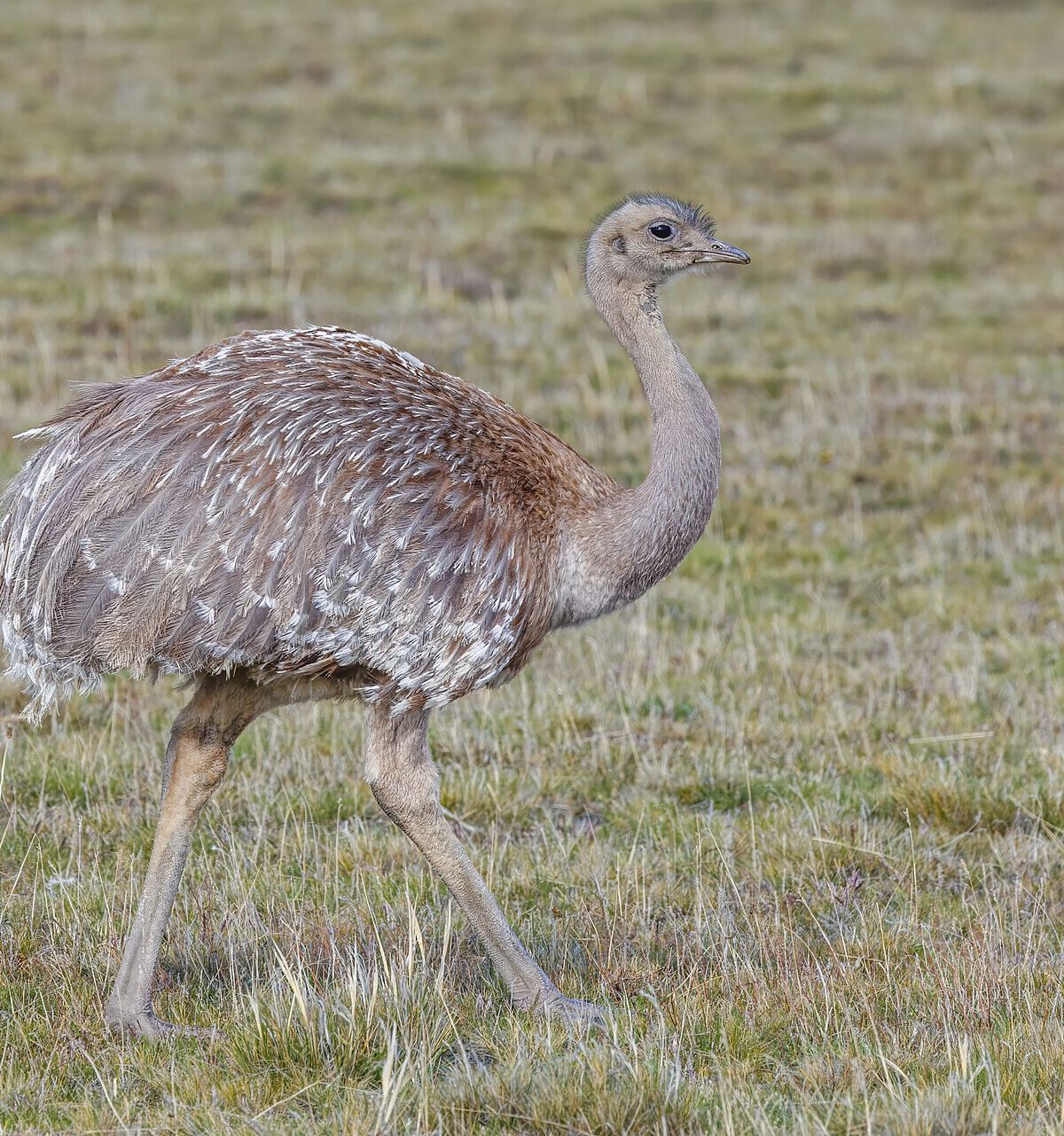
LESSER RHEA
Rhea pennata
DESCRIPTION
Lesser Rhea (Rhea pennata) is also known as the Puna Rhea, a large flightless bird native to South America. It has a long neck and legs, with a body covered in soft, brownish-gray feathers that provide excellent camouflage in its natural habitat. These birds are social creatures, often found in small groups, and are known for their curious and inquisitive nature.
FUN FACTS
- Lesser Rheas are known for their unique courtship displays, where males perform elaborate dances to attract females
- They are also capable of running at speeds up to 60 km/h, making them one of the fastest flightless birds in the world
QUICK INFO
Lifespan10-15 years in the wild, up to 20 years in captivi
Average Weight20-30 kg
Average Length1.2-1.5 m
Diet TypeHerbivore
Social StructureThey are typically found in small groups, often consisting of a few individuals, but can also be seen alone.
Activity PatternDiurnal
Breeding SeasonSpring (September-November)
- Habitat
- Lesser Rheas inhabit open grasslands, savannas, and scrublands, often in areas with sparse vegetation. They prefer regions with access to water sources and are commonly found at elevations ranging from sea level to high altitudes.
- Biomes
- Grassland, Savanna
- Native Range
- The native range of the Lesser Rhea includes parts of Argentina, Bolivia, Chile, and Peru.
- Continent
- South America
- Countries
- Argentina, Bolivia, Chile, Peru
- Diet
- Lesser Rheas are primarily herbivores, feeding on a variety of plant materials including grasses, seeds, and fruits. They may also consume insects and small invertebrates occasionally.
- Diet Type
- Herbivore
- Favorite Food
- grasses, seeds, fruits
- Social Structure
- They are typically found in small groups, often consisting of a few individuals, but can also be seen alone.
- Activity Pattern
- Diurnal
- Group Size
- 2-10
- Territorial
- 0

20-30 kg
Weight
1.2-1.5 m
Length
- Coloration
- Brownish-gray feathers with lighter underparts.
- Sexual Dimorphism
- Males are generally larger than females and have more pronounced plumage.
- Lifespan
- 10-15 years in the wild, up to 20 years in captivi
- Offspring per Birth
- 5-15
- Sexual Maturity
- 1-2 years
- Breeding Season
- Spring (September-November)
LC
Least Concern
IUCN Red List Status
- Population Status
- The population of Lesser Rheas is currently stable, but they face threats from habitat loss.
- Wild Population Estimate
- 50,000-100,000
- Population Trend
- Stable
- Endangered
- 0
- Threats
- Main threats include habitat destruction due to agriculture and livestock grazing, as well as hunting in some areas. Conservation efforts are needed to ensure their habitats are protected.
- Predators
- Foxes, pumas, and large birds of prey are known to prey on Lesser Rheas.
- Defense Mechanisms
- Lesser Rheas rely on their speed and agility to escape predators, often running at high speeds to evade capture.
- Found in Zoos
- Uncommon