


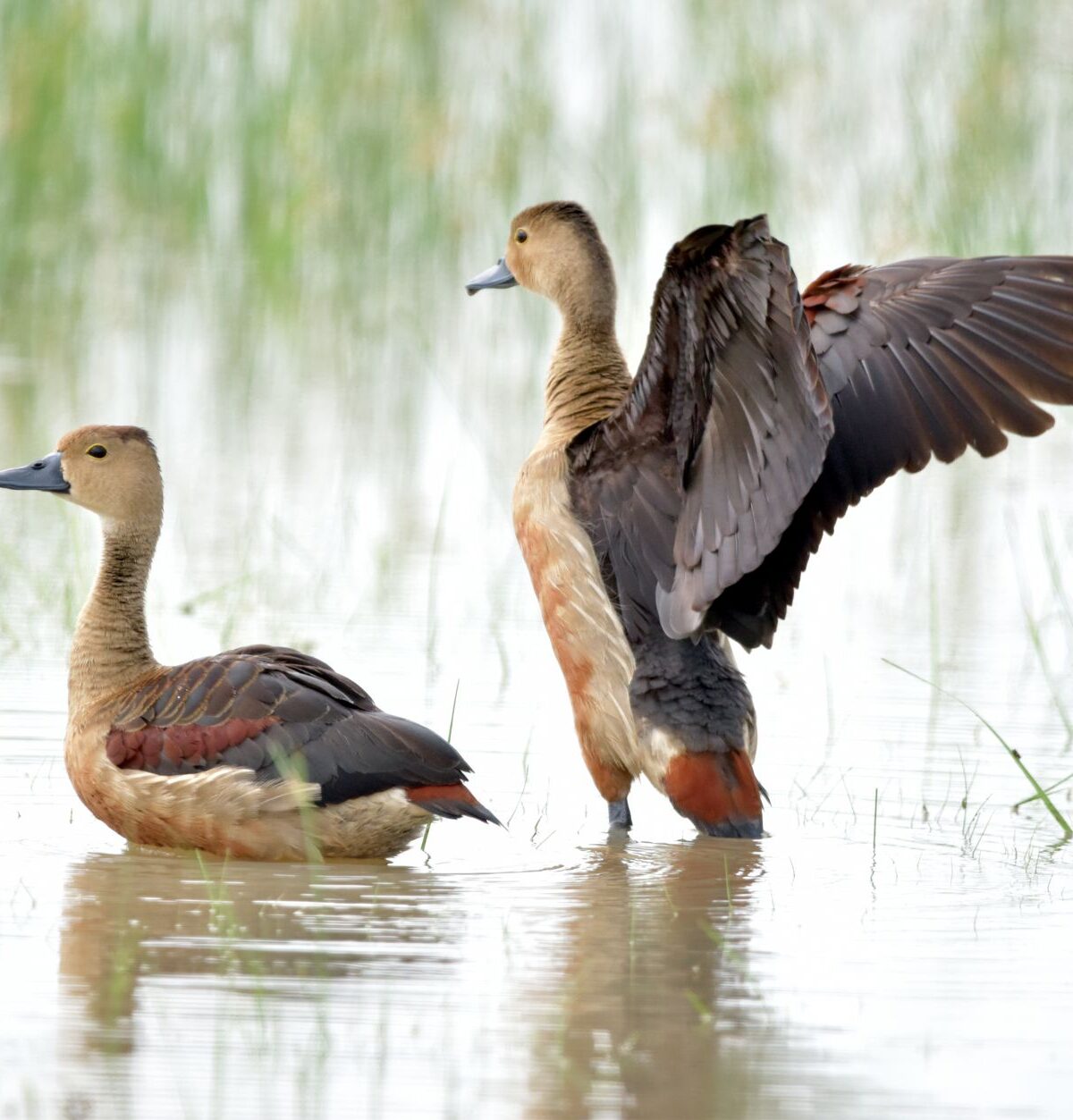
LESSER WHISTLING DUCK
Dendrocygna javanica
DESCRIPTION
Lesser Whistling Duck (Dendrocygna javanica) is commonly known as the Indian Whistling Duck and the Javanese Whistling Duck. This medium-sized waterfowl features a distinctive brown body with a lighter-colored face and neck, and its wings are marked with a striking white stripe. They are social birds often found in groups, exhibiting a range of vocalizations that include whistling calls, which contribute to their common name.
FUN FACTS
- Lesser Whistling Ducks are known for their unique whistling calls, which can be heard during their social interactions and are particularly prominent during the breeding season
- They are also highly adaptable birds, often seen in agricultural areas where they can find food in rice paddies and other cultivated wetlands.| These ducks are excellent swimmers and divers, using their webbed feet to navigate through water efficiently
- They are also capable of flying long distances, which aids in their migratory behavior during seasonal changes
QUICK INFO
Lifespan10-15 years in the wild
Average Weight0.7-1.2 kg
Average Length50-60 cm
Diet TypeHerbivore
Social StructureThey are typically found in pairs or small groups, often forming larger flocks during migration or in suitable feeding areas.
Activity PatternDiurnal
Breeding SeasonMonsoon season (June-September)
- Habitat
- These ducks inhabit freshwater wetlands, marshes, and rice fields, favoring areas with abundant vegetation. They are often found in shallow waters where they can easily access their food sources.
- Biomes
- Wetlands, Grasslands
- Native Range
- Lesser Whistling Ducks are native to South and Southeast Asia, with a range extending from India to Indonesia.
- Continent
- Asia
- Countries
- India, Bangladesh, Myanmar, Thailand, Vietnam, Indonesia
- Diet
- Lesser Whistling Ducks primarily feed on aquatic plants, seeds, and grasses. They forage in shallow waters and wetlands, often dabbling to reach food.
- Diet Type
- Herbivore
- Favorite Food
- aquatic plants, seeds, grasses
- Social Structure
- They are typically found in pairs or small groups, often forming larger flocks during migration or in suitable feeding areas.
- Activity Pattern
- Diurnal
- Group Size
- 5-30
- Territorial
- 0
 CR
LC
CR
LC
0.7-1.2 kg
Weight
50-60 cm
Length
- Coloration
- The plumage is predominantly brown with a lighter face and neck, and a distinctive white stripe on the wings.
- Sexual Dimorphism
- Males and females are similar in appearance, making it difficult to distinguish between the sexes.
- Lifespan
- 10-15 years in the wild
- Offspring per Birth
- 5-12
- Sexual Maturity
- 6-12 months
- Breeding Season
- Monsoon season (June-September)
LC
Least Concern
IUCN Red List Status
- Population Status
- The population of Lesser Whistling Ducks is currently stable, though they face habitat loss in some areas.
- Wild Population Estimate
- 100,000-1,000,000
- Population Trend
- Stable
- Endangered
- 0
- Threats
- Main threats include habitat destruction due to agricultural expansion and wetland drainage. Pollution and hunting also pose risks to their populations.
- Predators
- Predators include large birds of prey, such as eagles and hawks, as well as mammals like foxes and domestic dogs.
- Defense Mechanisms
- They rely on their ability to blend into their surroundings and often take to the water to escape threats.
- Compatible Animals
- Other waterfowl species, such as ducks and geese
- Found in Zoos
- Uncommon