


LESSER WHITE-FRONTED GOOSE
Anser erythropus
DESCRIPTION
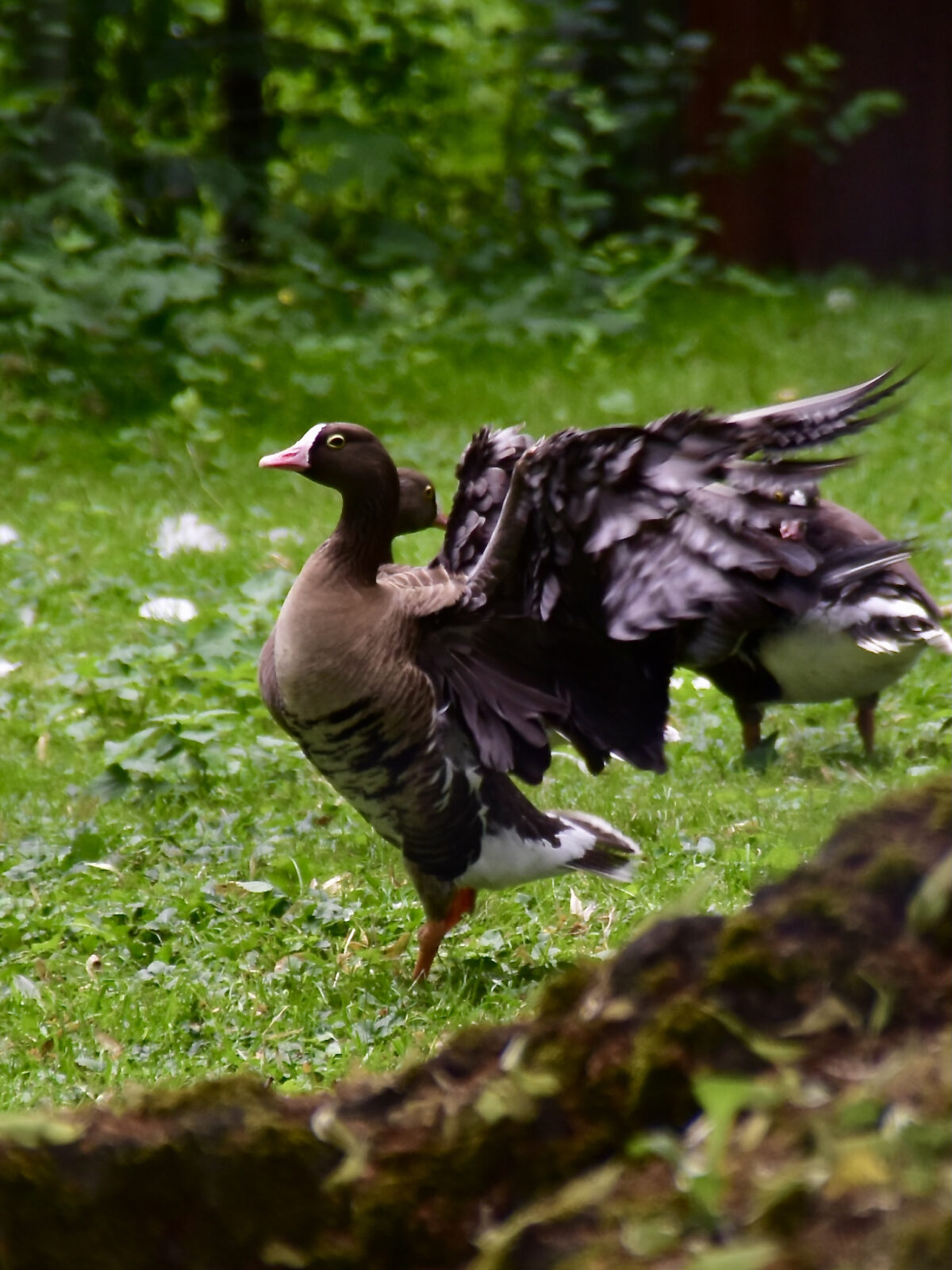
Lesser White-fronted Goose (Anser erythropus) is a small to medium-sized goose characterized by its distinctive white forehead and a dark crown. It has a grayish-brown body with a lighter belly and a relatively short neck. This species is known for its migratory behavior, often traveling in small flocks during migration and exhibiting strong site fidelity to breeding and wintering grounds.
FUN FACTS
- Lesser White-fronted Geese are known for their long migratory journeys, often traveling thousands of kilometers between their breeding and wintering grounds
- They are also one of the few goose species that exhibit a high degree of fidelity to their nesting sites, returning to the same locations year after year.|These geese have a unique social structure, often forming strong pair bonds that can last for many years
- During the breeding season, they are highly protective of their nests and will aggressively defend their territory from intruders
QUICK INFO
Lifespan10-15 years in the wild.
Average Weight1.5-2.5 kg
Average Length60-70 cm
Diet TypeHerbivore
Social StructureThey are typically found in pairs or small groups, often seen foraging together in suitable habitats.
Activity PatternDiurnal
Breeding SeasonSpring (April-June)
- Habitat
- This species prefers wetlands, tundra, and grasslands for breeding, while wintering in coastal areas and agricultural fields. They require open water sources for feeding and resting.
- Biomes
- Tundra, Wetlands, Grassland
- Native Range
- Lesser White-fronted Goose breeds in the Arctic tundra of northern Europe and Asia, migrating to southern Europe and parts of Asia for winter.
- Continent
- Europe, Asia
- Countries
- Norway, Sweden, Finland, Russia, Mongolia, China
- Diet
- Lesser White-fronted Geese primarily feed on grasses, sedges, and other herbaceous plants. They graze on agricultural fields and wetlands, often foraging in the early morning and late afternoon.
- Diet Type
- Herbivore
- Favorite Food
- grasses, sedges
- Social Structure
- They are typically found in pairs or small groups, often seen foraging together in suitable habitats.
- Activity Pattern
- Diurnal
- Group Size
- 2-20
- Territorial
- 0

 LC
LC
1.5-2.5 kg
Weight
60-70 cm
Length
- Coloration
- Grayish-brown body with a white forehead and dark crown.
- Sexual Dimorphism
- Males and females are similar in appearance, with no significant differences in coloration.
- Lifespan
- 10-15 years in the wild.
- Offspring per Birth
- 3-6
- Sexual Maturity
- 2-3 years
- Breeding Season
- Spring (April-June)
EN
Endangered
IUCN Red List Status
- Population Status
- The population of Lesser White-fronted Geese is currently declining due to habitat loss and hunting pressures.
- Wild Population Estimate
- 10,000-20,000
- Population Trend
- Decreasing
- Endangered
- 1
- Threats
- Main threats include habitat destruction due to agricultural expansion and climate change, as well as hunting in some regions. These factors have contributed to their declining population.
- Conservation Program
- Various conservation programs are in place to protect their breeding habitats and mitigate hunting pressures.
- Predators
- Foxes, eagles, and large birds of prey are known to prey on Lesser White-fronted Geese, especially during the nesting season.
- Defense Mechanisms
- They often rely on their ability to fly away quickly to escape predators, and they may also use vocalizations to alert others of danger.
- Found in Zoos
- Uncommon