


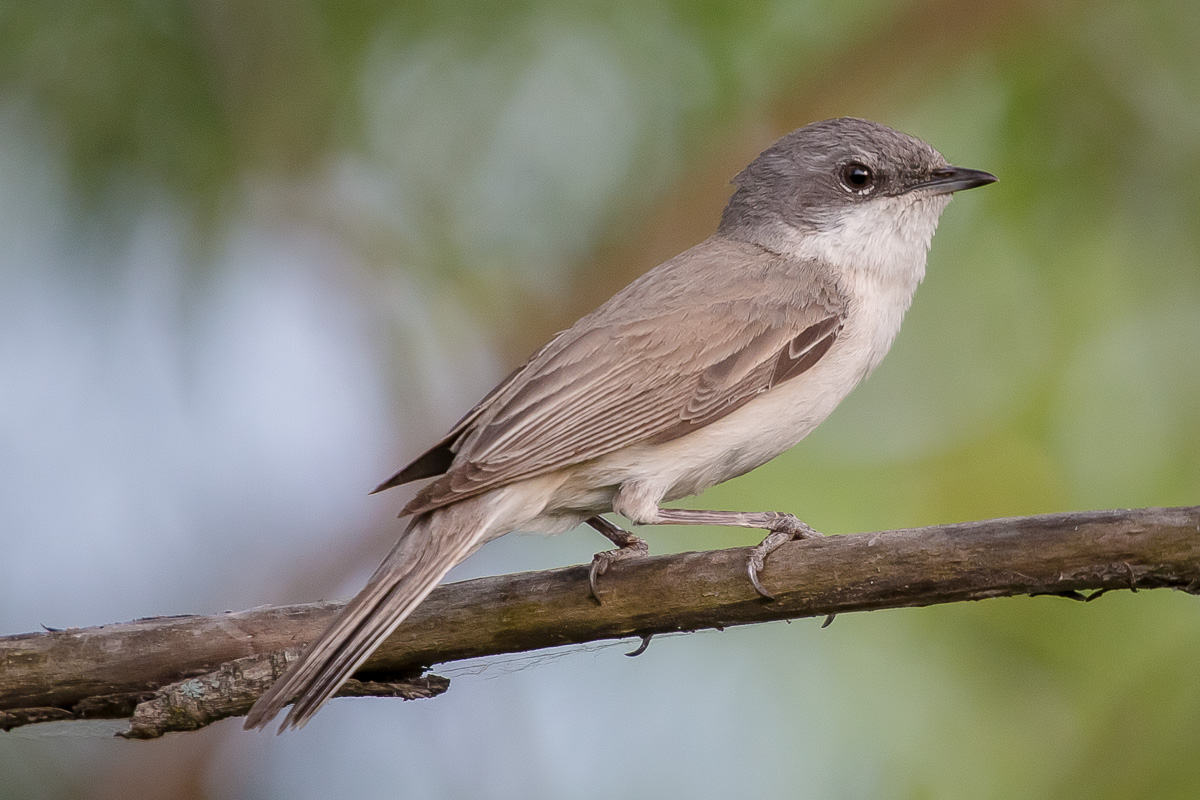
LESSER WHITETHROAT
Sylvia curruca
DESCRIPTION
Lesser Whitethroat (Sylvia curruca) is a small, migratory songbird known for its distinctive gray-brown plumage and white underparts. It has a characteristic dark cap on its head and a pale throat, which sets it apart from similar species. This bird is often found in dense shrubs and hedgerows, where it forages for insects and berries, exhibiting a secretive behavior that makes it challenging to spot.
FUN FACTS
- Lesser Whitethroats are known for their complex songs, which they use to communicate and establish territory
- Interestingly, they are also known to mimic the calls of other bird species, which can help them blend into their environment and avoid detection by predators.|During migration, Lesser Whitethroats can travel long distances, sometimes covering over 3,000 kilometers from their breeding grounds in Europe to wintering areas in Africa
- This remarkable journey showcases their adaptability and resilience in the face of changing environmental conditions
QUICK INFO
Lifespanup to 5 years in the wild
Average Weight10-15 g
Average Length12-14 cm
Diet TypeInsectivore
Social Structurepair, typically monogamous during the breeding season
Activity PatternDiurnal
Breeding SeasonSpring (April-June)
- Habitat
- This species prefers scrubby habitats, including hedgerows, gardens, and woodland edges. It thrives in areas with dense vegetation that provides cover and foraging opportunities.
- Biomes
- Temperate Forest, Grassland
- Native Range
- Lesser Whitethroat breeds across Europe and parts of Asia, migrating to Africa for the winter.
- Continent
- Europe, Asia, Africa
- Countries
- United Kingdom, Germany, Russia, Turkey, Egypt
- Diet
- Lesser Whitethroat primarily feeds on insects, but it also consumes berries and other fruits during the breeding season.
- Diet Type
- Insectivore
- Favorite Food
- insects, berries
- Social Structure
- pair, typically monogamous during the breeding season
- Activity Pattern
- Diurnal
- Group Size
- 1-2
- Territorial
- 1
 CR
CR
 LC
LC
 VU
VU
10-15 g
Weight
12-14 cm
Length
- Coloration
- gray-brown upperparts with white underparts and a dark cap
- Lifespan
- up to 5 years in the wild
- Offspring per Birth
- 3-5
- Sexual Maturity
- 1 year
- Breeding Season
- Spring (April-June)
LC
Least Concern
IUCN Red List Status
- Population Status
- The population of Lesser Whitethroat is currently stable, although it faces habitat loss in some areas.
- Wild Population Estimate
- 1,000,000-2,000,000
- Population Trend
- Stable
- Endangered
- 0
- Threats
- Main threats include habitat destruction due to agricultural expansion and urbanization. Climate change may also impact their migratory patterns and breeding success.
- Predators
- cats, hawks, snakes, and other birds of prey
- Defense Mechanisms
- Lesser Whitethroat relies on its cryptic coloration and secretive behavior to avoid predators.
- Found in Zoos
- Rare