


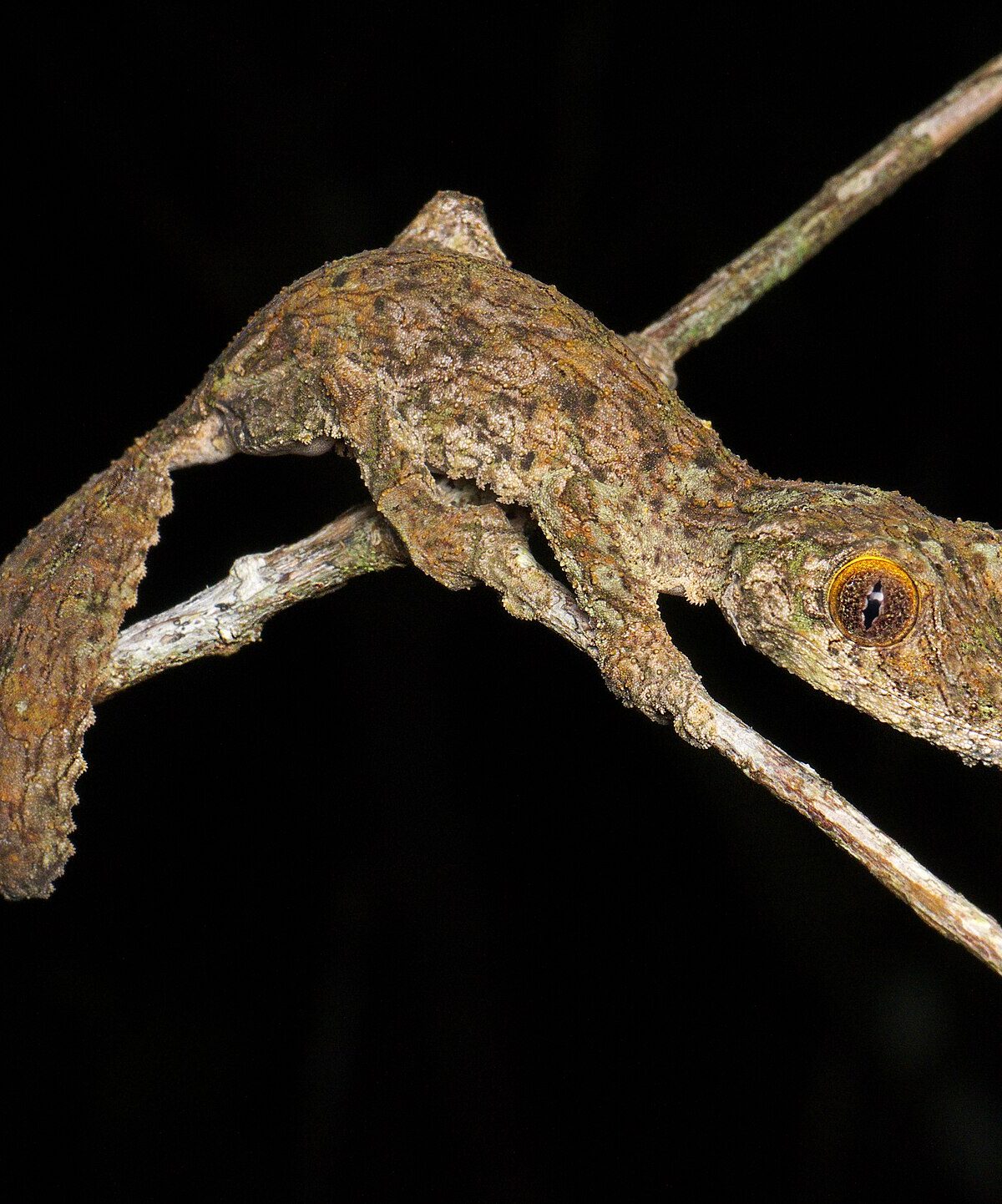
LICHENOSE LEAF-TAILED GECKO
Uroplatus sikorae
DESCRIPTION
Lichenose Leaf-Tailed Gecko (Uroplatus sikorae) is also known as Sikora's Leaf-Tailed Gecko, recognized for its remarkable leaf-like appearance that provides excellent camouflage against the forest floor. This gecko exhibits a flattened body and a broad, leaf-shaped tail, which it uses to blend seamlessly into its surroundings, making it a master of disguise. Primarily nocturnal, it is known for its arboreal lifestyle, often found resting on tree trunks and branches during the day.
FUN FACTS
- Lichenose Leaf-Tailed Geckos are fascinating for their incredible ability to mimic the appearance of leaves, which not only helps them evade predators but also aids in ambushing prey
- Their unique tail can be dropped as a defense mechanism, allowing them to escape while the predator is distracted by the detached tail.| These geckos are also known for their vocalizations, which can include hissing and clicking sounds, particularly during mating season or when threatened, showcasing their complex communication methods
QUICK INFO
Lifespan5-10 years in the wild, up to 15 years in captivit
Average Length15-20 cm
Diet TypeInsectivore
Social Structuresolitary, with individuals maintaining their own territories
Activity PatternNocturnal
- Habitat
- This species inhabits humid tropical forests, often residing in the leaf litter or on tree trunks. It prefers areas with dense vegetation that provide ample cover and hunting opportunities.
- Biomes
- Tropical Rainforest
- Native Range
- Endemic to Madagascar, specifically found in the eastern rainforests of the island.
- Continent
- Africa
- Countries
- Madagascar
- Diet
- It primarily feeds on insects and other small invertebrates, using its keen eyesight to hunt at night.
- Diet Type
- Insectivore
- Favorite Food
- crickets, moths, and beetles
- Social Structure
- solitary, with individuals maintaining their own territories
- Activity Pattern
- Nocturnal
- Group Size
- 1
- Territorial
- 1
 VU
VU
 LC
LC
15-20 cm
Length
- Coloration
- The coloration is typically a mix of browns and greens, resembling the forest floor and lichen.
- Sexual Dimorphism
- Males are generally smaller and have more pronounced coloration than females.
- Lifespan
- 5-10 years in the wild, up to 15 years in captivit
- Offspring per Birth
- 1-2
- Sexual Maturity
- 1-2 years
LC
Least Concern
IUCN Red List Status
- Population Status
- The population is currently stable, but habitat loss poses a potential threat.
- Wild Population Estimate
- unknown
- Population Trend
- Stable
- Endangered
- 0
- Threats
- The main threats include habitat destruction due to deforestation and human encroachment. Additionally, climate change may impact their forest habitats.
- Predators
- Birds of prey, snakes, and larger reptiles are known to prey on this species.
- Defense Mechanisms
- Its primary defense mechanism is its ability to camouflage perfectly with its surroundings, making it nearly invisible to both predators and prey.
- Found in Zoos
- Uncommon