


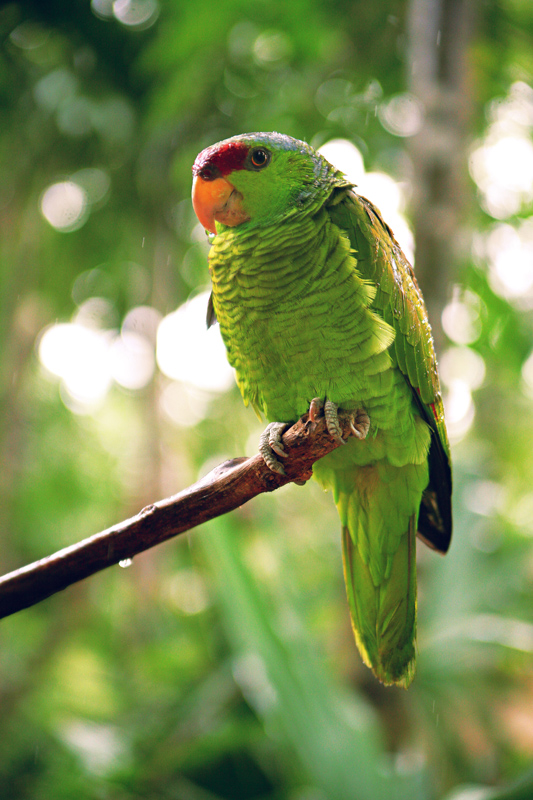
LILAC-CROWNED AMAZON
Amazona finschi
DESCRIPTION
Lilac-crowned Amazon (Amazona finschi) is a vibrant parrot known for its striking lilac crown and green plumage. This species exhibits a playful and social behavior, often seen in pairs or small groups, engaging in vocalizations and acrobatics. In the wild, they inhabit subtropical and tropical forests, where they play a crucial role in seed dispersal and maintaining the health of their ecosystem.
FUN FACTS
- Lilac-crowned Amazons are known for their exceptional vocal abilities, often mimicking human speech and other sounds they hear in their environment
- They are also highly social birds, forming strong bonds with their mates and engaging in playful behaviors that can include swinging from branches and playing with toys.| In the wild, these parrots play a vital role in their ecosystem by helping to disperse seeds through their diet, which contributes to the growth of various plant species
- Their intelligence and social nature make them popular among bird enthusiasts, but they require a lot of attention and stimulation to thrive in captivity
QUICK INFO
Lifespan20-30 years in the wild, up to 50 in captivity
Average Weight300-400 g
Average Length28-30 cm
Diet TypeHerbivore
Social StructureThey are typically found in pairs or small groups, showcasing a strong social structure.
Activity PatternDiurnal
Breeding SeasonSpring (March-May)
- Habitat
- Lilac-crowned Amazons thrive in subtropical and tropical forests, often near water sources. They prefer areas with abundant fruiting trees and dense foliage for nesting.
- Biomes
- Tropical Rainforest, Subtropical Forest
- Native Range
- This species is native to the western regions of Mexico, particularly in the states of Sonora and Sinaloa.
- Continent
- North America
- Countries
- Mexico
- Diet
- They primarily feed on fruits, seeds, and nuts, which they forage for in the canopy of trees. Their diet is essential for the regeneration of their habitat.
- Diet Type
- Herbivore
- Favorite Food
- fruits, seeds, nuts
- Social Structure
- They are typically found in pairs or small groups, showcasing a strong social structure.
- Activity Pattern
- Diurnal
- Group Size
- 2-10
- Territorial
- 1
300-400 g
Weight
28-30 cm
Length
- Coloration
- Predominantly green with a distinctive lilac crown and a yellow patch on the wing.
- Sexual Dimorphism
- Males and females are similar in appearance, making it difficult to distinguish between the sexes.
- Lifespan
- 20-30 years in the wild, up to 50 in captivity
- Offspring per Birth
- 2-4
- Sexual Maturity
- 3-4 years
- Breeding Season
- Spring (March-May)
LC
Least Concern
IUCN Red List Status
- Population Status
- The population is currently stable, but habitat loss poses a potential threat.
- Wild Population Estimate
- 10,000-20,000
- Population Trend
- Stable
- Endangered
- 0
- Threats
- Main threats include habitat destruction due to deforestation and illegal trapping for the pet trade. Conservation efforts are needed to protect their natural habitats.
- Predators
- Natural predators include hawks and larger birds of prey, as well as snakes that may target their nests.
- Defense Mechanisms
- They use loud vocalizations to warn of danger and can also fly away quickly to escape predators.
- Compatible Animals
- Other parrot species, small mammals
- Found in Zoos
- Uncommon