


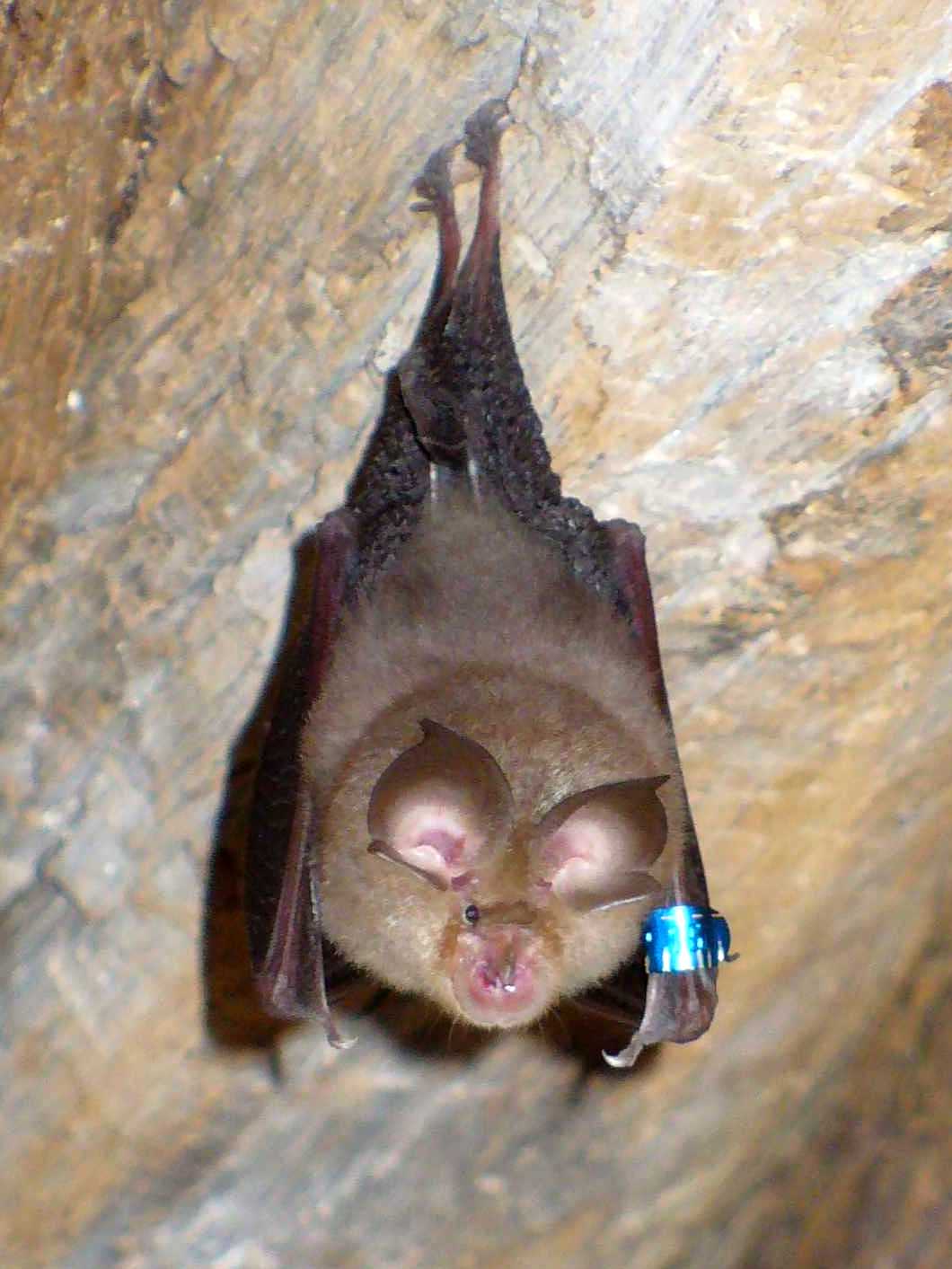
LITTLE HORSESHOE BAT
Rhinolophus hipposideros
DESCRIPTION
Little Horseshoe Bat (Rhinolophus hipposideros) is a small bat species characterized by its distinctive horseshoe-shaped noseleaf, which aids in echolocation. This bat has a wingspan of about 25-30 cm and a body length of approximately 4-5 cm, with fur that is typically brown or grayish. They are primarily nocturnal and are often found roosting in small groups in caves, old buildings, or tree hollows, where they can be seen hanging upside down during the day.
FUN FACTS
- Little Horseshoe Bats are remarkable for their echolocation abilities, which allow them to navigate and hunt in complete darkness
- They can emit high-frequency sounds that bounce off objects, helping them to detect prey and avoid obstacles
- | These bats play a crucial role in their ecosystems by controlling insect populations, making them important for agricultural health
- Their presence indicates a healthy environment, as they are sensitive to changes in habitat quality
QUICK INFO
Lifespan5-10 years in the wild
Average Weight5-10 g
Average Length4-5 cm
Diet TypeInsectivore
Social StructureThey are generally found in small groups, often consisting of a few individuals roosting together.
Activity PatternNocturnal
Breeding SeasonSpring (May-June)
- Habitat
- They prefer habitats such as forests, woodlands, and areas near water bodies where insect populations are abundant. Roosting sites often include caves and old structures that provide shelter.
- Biomes
- Temperate Forest, Mediterranean Forest
- Native Range
- Little Horseshoe Bats are found across Europe and parts of Asia, typically in regions with suitable roosting and foraging habitats.
- Continent
- Europe, Asia
- Countries
- United Kingdom, France, Germany, Italy, Spain, Poland, Romania
- Diet
- Little Horseshoe Bats primarily feed on small insects, particularly moths and beetles, which they catch in flight using echolocation.
- Diet Type
- Insectivore
- Favorite Food
- moths, beetles
- Social Structure
- They are generally found in small groups, often consisting of a few individuals roosting together.
- Activity Pattern
- Nocturnal
- Group Size
- 2-20
- Territorial
- 0
 CR
CR
5-10 g
Weight
4-5 cm
Length
- Coloration
- Fur is typically brown or grayish, with a lighter underside.
- Lifespan
- 5-10 years in the wild
- Gestation Period
- 45-50 days
- Offspring per Birth
- 1-2
- Sexual Maturity
- 1 year
- Breeding Season
- Spring (May-June)
LC
Least Concern
IUCN Red List Status
- Population Status
- The population of Little Horseshoe Bats is currently stable in many areas, although they face threats from habitat loss.
- Wild Population Estimate
- Unknown
- Population Trend
- Stable
- Endangered
- 0
- Threats
- Main threats include habitat destruction due to urbanization and agricultural practices, as well as disturbance at roosting sites. Pesticide use can also reduce their food supply.
- Predators
- Predators include birds of prey, such as owls and hawks, as well as larger mammals that may hunt bats.
- Defense Mechanisms
- They rely on their ability to fly quickly and maneuver through tight spaces to evade predators.
- Found in Zoos
- Rare