


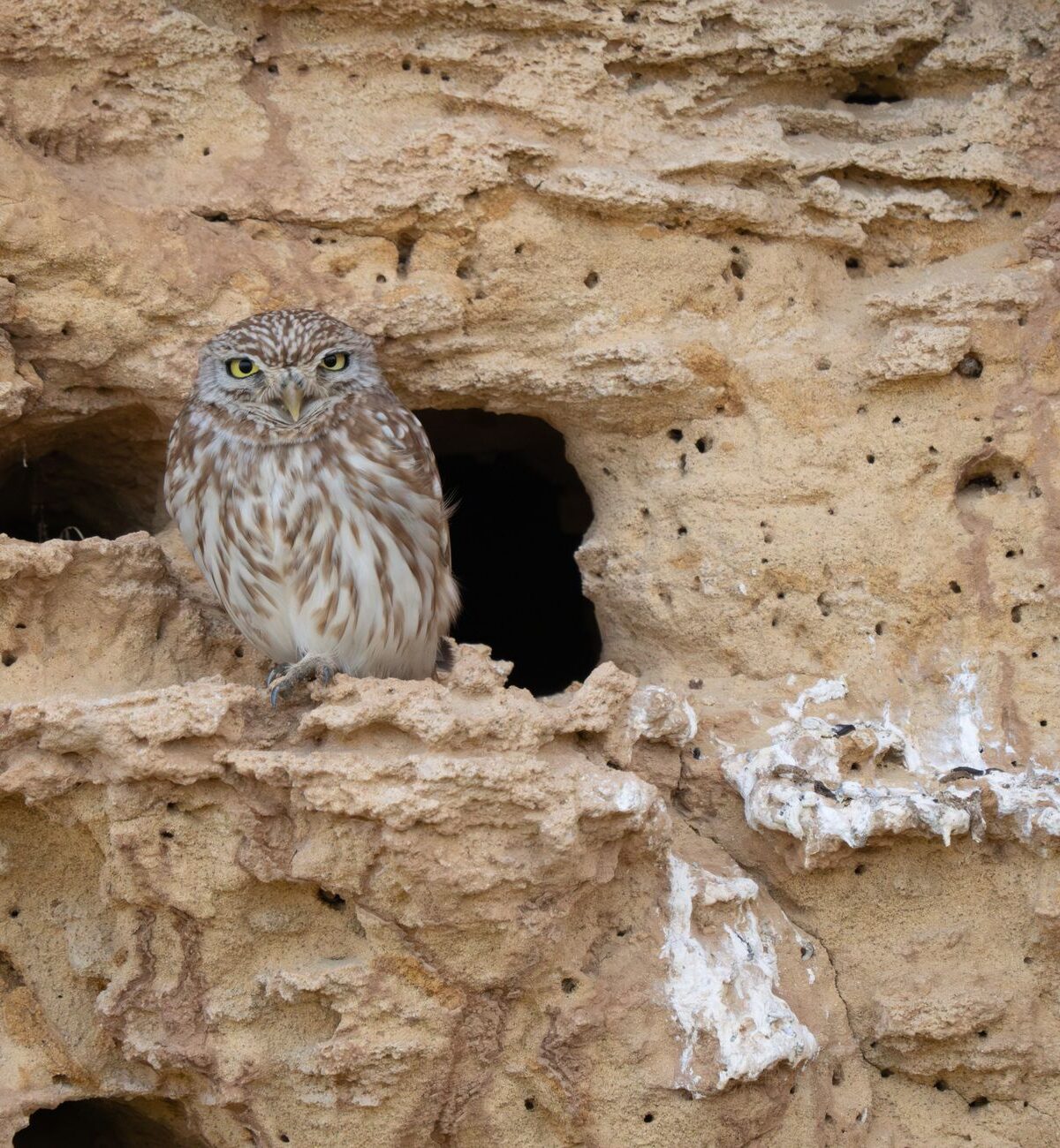
LITTLE OWL
Athene noctua
DESCRIPTION
Little Owl (Athene noctua) is a small owl species known for its distinctive appearance, featuring a rounded head, yellow eyes, and a mottled brown and white plumage. This owl is primarily nocturnal but can also be seen during the day, often perched on fence posts or buildings, where it surveys its surroundings for prey. Little Owls are highly adaptable and can thrive in various habitats, including farmland, open woodlands, and urban areas.
FUN FACTS
- Little Owls are known for their unique vocalizations, which include a series of hoots and whistles that can be heard during the night
- They have a fascinating hunting technique, often using a perch to spot prey from a distance before swooping down to catch it
QUICK INFO
Lifespan5-10 years in the wild, up to 15 years in captivit
Average Weight150-200 g
Average Length21-24 cm
Diet TypeCarnivore
Social Structurepair, often seen in monogamous pairs during the breeding season
Activity PatternCrepuscular
Breeding SeasonSpring (March-June)
- Habitat
- Little Owls prefer open habitats with scattered trees and shrubs, often found in agricultural landscapes. They are also commonly seen in urban areas where they can find suitable nesting sites.
- Biomes
- Temperate Forest, Grassland, Urban
- Native Range
- Little Owls are native to Europe, parts of Asia, and North Africa.
- Continent
- Europe, Asia, Africa
- Countries
- United Kingdom, France, Germany, Italy, Spain, Greece, Turkey
- Diet
- Little Owls primarily feed on insects, small mammals, and occasionally birds. They are skilled hunters, using their excellent vision and hearing to locate prey.
- Diet Type
- Carnivore
- Favorite Food
- insects, small mammals
- Social Structure
- pair, often seen in monogamous pairs during the breeding season
- Activity Pattern
- Crepuscular
- Group Size
- 1-2
- Territorial
- 1
 LC
LC

150-200 g
Weight
21-24 cm
Length
- Coloration
- mottled brown and white with a pale face and yellow eyes
- Sexual Dimorphism
- females are generally larger than males
- Lifespan
- 5-10 years in the wild, up to 15 years in captivit
- Offspring per Birth
- 3-5
- Sexual Maturity
- 1 year
- Breeding Season
- Spring (March-June)
LC
Least Concern
IUCN Red List Status
- Population Status
- The population of Little Owls is currently stable in many areas, although some local declines have been noted.
- Wild Population Estimate
- 100,000-1,000,000
- Population Trend
- Stable
- Endangered
- 0
- Threats
- Main threats to Little Owls include habitat loss due to agricultural intensification and urban development. Pesticide use can also reduce their prey availability.
- Predators
- larger birds of prey, domestic cats, foxes
- Defense Mechanisms
- Little Owls rely on their camouflage and can remain motionless to avoid detection by predators.
- Found in Zoos
- Uncommon