


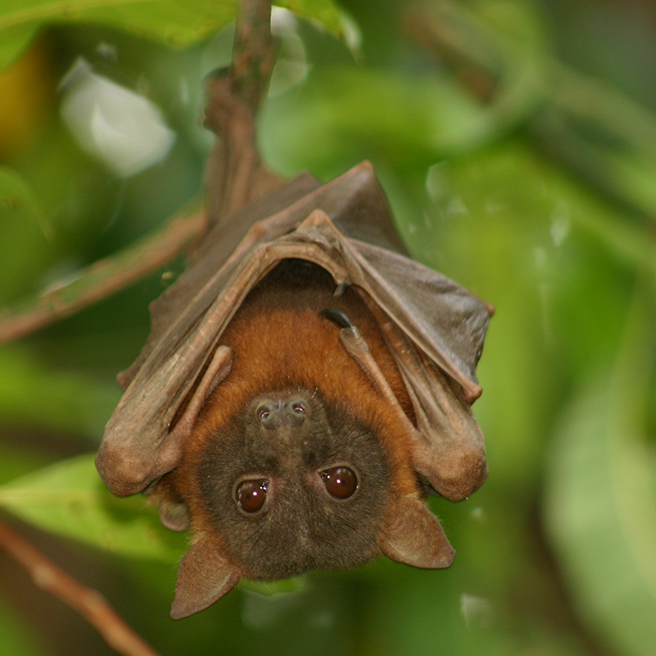
LITTLE RED FLYING FOX
Petaurus scapulatus
DESCRIPTION
Little Red Flying Fox (Petaurus scapulatus) is a large species of bat known for its striking reddish-brown fur and impressive wingspan. These bats are primarily nocturnal and are often seen gliding gracefully through the trees in search of food. They play a crucial role in their ecosystem as pollinators and seed dispersers, contributing to the health of their forest habitats.
FUN FACTS
- Little Red Flying Foxes can consume large quantities of nectar, sometimes up to their body weight in a single night, which helps in pollinating various plant species
- They have a unique social structure, often forming large colonies that can number in the thousands, providing safety in numbers and facilitating social interactions
QUICK INFO
Lifespan10-15 years in the wild, up to 20 years in captivi
Average Weight300-600 g
Average Length25-30 cm
Diet TypeHerbivore
Social StructureThey are typically found in groups, roosting together in large colonies.
Activity PatternNocturnal
Breeding SeasonLate spring to early summer
- Habitat
- Little Red Flying Foxes inhabit tropical and subtropical forests, often roosting in large colonies in tall trees. They prefer areas with abundant flowering plants to support their diet.
- Biomes
- Tropical Rainforest, Subtropical Forest
- Native Range
- They are native to Australia and parts of New Guinea.
- Continent
- Australia, Oceania
- Countries
- Australia, Papua New Guinea
- Diet
- They primarily feed on nectar, fruits, and flowers, which they obtain from a variety of trees. This diet makes them important for pollination and seed dispersal.
- Diet Type
- Herbivore
- Favorite Food
- nectar, fruits, flowers
- Social Structure
- They are typically found in groups, roosting together in large colonies.
- Activity Pattern
- Nocturnal
- Group Size
- 50-200
- Territorial
- 0
 VU
VU
 CR
CR
300-600 g
Weight
25-30 cm
Length
- Coloration
- reddish-brown fur with lighter underparts
- Sexual Dimorphism
- Males are generally larger than females.
- Lifespan
- 10-15 years in the wild, up to 20 years in captivi
- Gestation Period
- 60-70 days
- Offspring per Birth
- 1
- Sexual Maturity
- 1-2 years
- Breeding Season
- Late spring to early summer
LC
Least Concern
IUCN Red List Status
- Population Status
- The population is currently stable, but habitat loss poses a threat.
- Wild Population Estimate
- Unknown
- Population Trend
- Stable
- Endangered
- 0
- Threats
- Main threats include habitat destruction due to deforestation and urbanization. Additionally, they face risks from climate change affecting their food sources.
- Predators
- Birds of prey, such as eagles and hawks, as well as larger mammals like foxes and cats.
- Defense Mechanisms
- They rely on their ability to fly and glide to escape predators, often roosting high in trees for safety.
- Found in Zoos
- Uncommon