


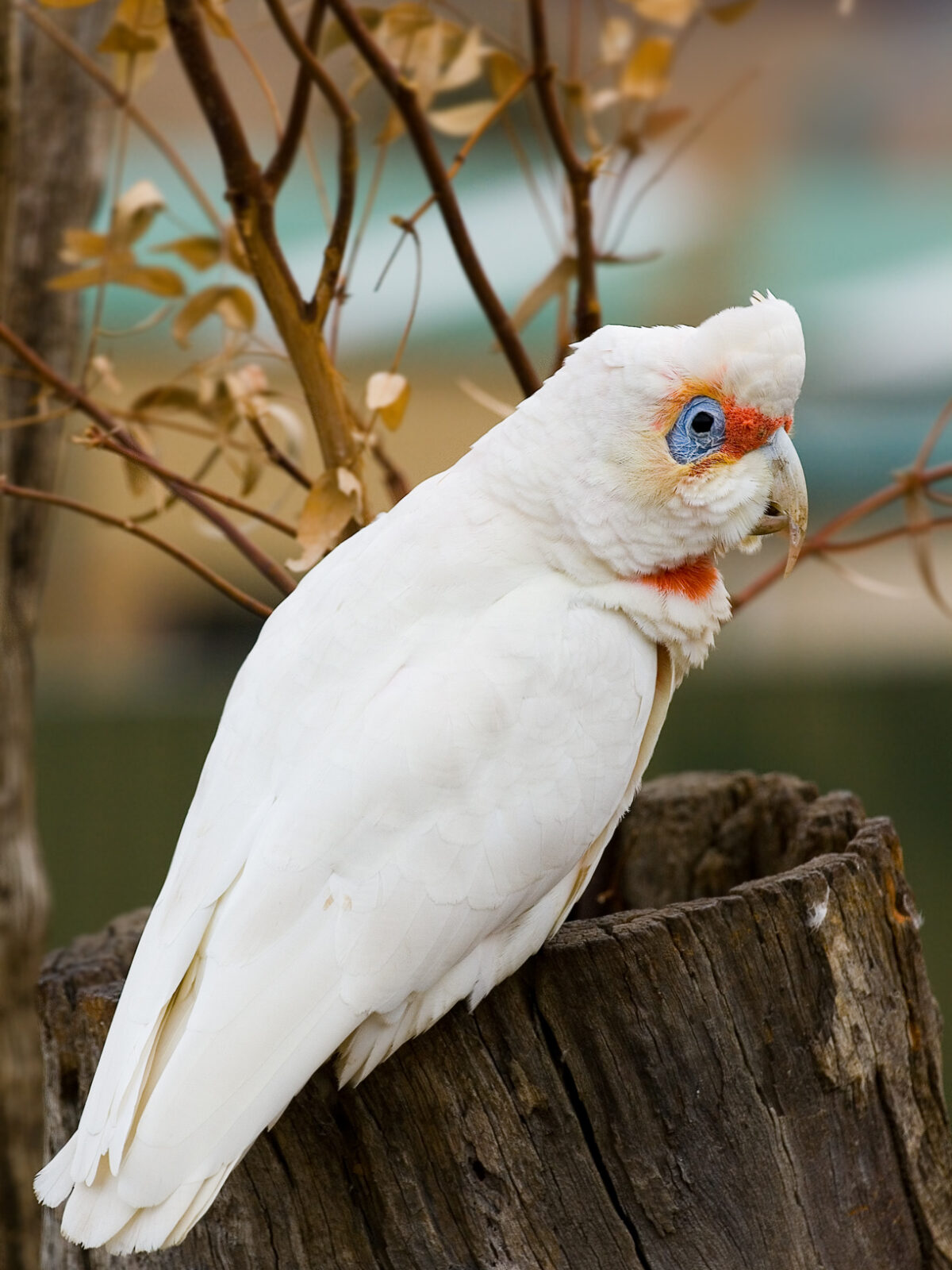
LONG-BILLED CORELLA
Cacatua tenuirostris
DESCRIPTION
Long-billed corella (Cacatua tenuirostris) is a striking parrot known for its long, slender bill and predominantly white plumage, accented by a pinkish hue on the face and underparts. This species exhibits a range of vocalizations, often engaging in loud calls and social interactions, which are characteristic of its intelligent and playful nature. In the wild, they are often seen foraging in flocks, displaying a strong social structure and a preference for open woodlands and grasslands.
FUN FACTS
- Long-billed corellas are known for their impressive vocal mimicry skills, often imitating sounds from their environment, including human speech and other bird calls
- They are also highly intelligent and can solve complex problems, making them popular in aviculture and as companion birds.|These birds have a unique social structure, often forming strong bonds within their flocks
- They engage in playful behaviors, such as swinging from branches and playing with objects, showcasing their playful and curious nature
QUICK INFO
Lifespan20-30 years in the wild, up to 40 in captivity
Average Weight300-400 g
Average Length35-40 cm
Diet TypeHerbivore
Social Structuregroup — they are highly social and often found in large flocks.
Activity PatternDiurnal
Breeding SeasonSpring to early summer (September to January)
- Habitat
- This species inhabits open forests, woodlands, and grasslands, often near water sources. They prefer areas with abundant food resources and suitable nesting sites in tree hollows.
- Biomes
- Temperate Forest, Grassland
- Native Range
- Long-billed corellas are native to southeastern Australia, particularly in regions such as Victoria, New South Wales, and South Australia.
- Continent
- Australia
- Countries
- Australia
- Diet
- Long-billed corellas primarily feed on seeds, fruits, and nuts, often foraging on the ground or in trees. They are known to be particularly fond of grass seeds and can sometimes be seen in agricultural areas.
- Diet Type
- Herbivore
- Favorite Food
- grass seeds, fruits, nuts
- Social Structure
- group — they are highly social and often found in large flocks.
- Activity Pattern
- Diurnal
- Group Size
- 20-100
- Territorial
- 0
 LC
LC
 VU
VU
300-400 g
Weight
35-40 cm
Length
- Coloration
- predominantly white with a pinkish face and underparts, and a distinctive long bill.
- Sexual Dimorphism
- males and females are similar in appearance, but males tend to have slightly larger bills.
- Lifespan
- 20-30 years in the wild, up to 40 in captivity
- Offspring per Birth
- 2-4
- Sexual Maturity
- 2-3 years
- Breeding Season
- Spring to early summer (September to January)
LC
Least Concern
IUCN Red List Status
- Population Status
- The population of Long-billed corellas is currently stable, although local declines have been noted in some areas due to habitat loss.
- Wild Population Estimate
- 50,000-100,000
- Population Trend
- Stable
- Endangered
- 0
- Threats
- Main threats include habitat destruction due to land clearing and agricultural expansion, as well as competition with other bird species for nesting sites. They can also be affected by changes in food availability due to environmental changes.
- Predators
- Natural predators include birds of prey such as hawks and eagles, as well as feral cats and foxes that may prey on eggs and young birds.
- Defense Mechanisms
- They often use loud vocalizations to warn of danger and can also engage in mobbing behavior to deter predators.
- Compatible Animals
- other cockatoos, parrots, and compatible bird species in aviaries
- Found in Zoos
- Common