


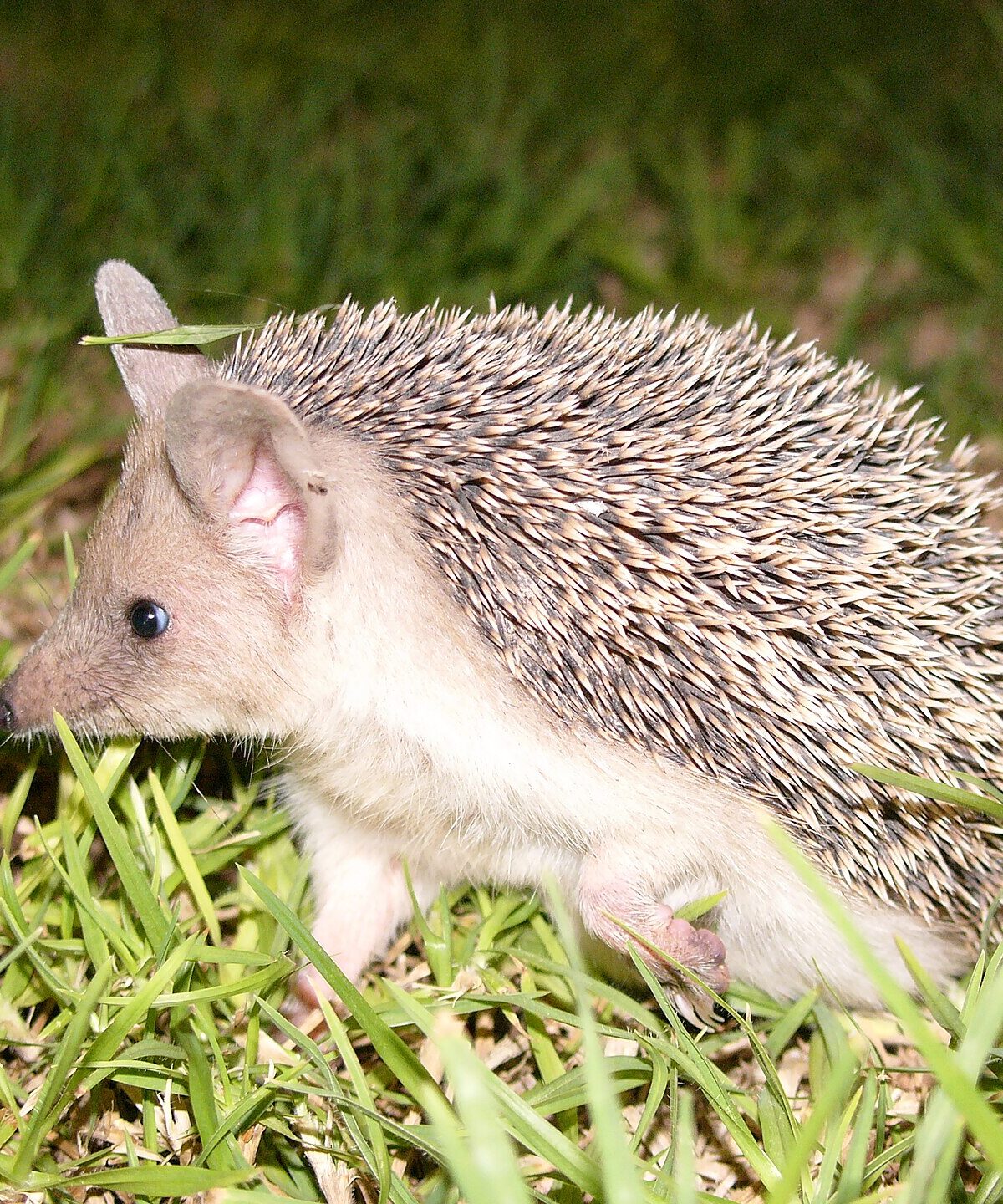
LONG-EARED HEDGEHOG
Hemiechinus auritus
DESCRIPTION
Long-eared Hedgehog (Hemiechinus auritus) is also known as the Desert Hedgehog, characterized by its distinctive long ears and spiny coat. This small mammal typically has a body covered in sharp spines, which serve as a defense mechanism against predators. It is primarily nocturnal, foraging for food at night and exhibiting a solitary lifestyle, often found in arid and semi-arid regions.
FUN FACTS
- Long-eared Hedgehogs have an impressive ability to adapt to their environment, allowing them to thrive in harsh desert conditions
- They can also enter a state of torpor to conserve energy during extreme temperatures
- | These hedgehogs are known for their unique vocalizations, which include snorts and grunts, used for communication with potential mates or during territorial disputes
QUICK INFO
Lifespan3-7 years in the wild, up to 10 years in captivity
Average Weight0.5-1 kg
Average Length20-30 cm
Diet TypeInsectivore
Social Structuresolitary, typically living alone except during mating season
Activity PatternNocturnal
Breeding SeasonSpring (March-May)
- Habitat
- They inhabit dry, open areas such as deserts and scrublands, often seeking shelter in burrows or under vegetation. Their habitat is characterized by sparse vegetation and sandy soils.
- Biomes
- Desert, Grassland
- Native Range
- Long-eared Hedgehogs are native to parts of North Africa and the Middle East.
- Continent
- Africa, Asia
- Countries
- Egypt, Libya, Israel, Jordan, Saudi Arabia
- Diet
- Long-eared Hedgehogs primarily feed on insects, but they also consume small vertebrates and plant matter. Their diet is diverse, allowing them to adapt to various environments.
- Diet Type
- Insectivore
- Favorite Food
- insects, small vertebrates
- Social Structure
- solitary, typically living alone except during mating season
- Activity Pattern
- Nocturnal
- Group Size
- 1
- Territorial
- 1

 VU
VU
 LC
LC
0.5-1 kg
Weight
20-30 cm
Length
- Coloration
- Their coloration typically includes a mix of brown and cream, with a spiny back and lighter underbelly.
- Lifespan
- 3-7 years in the wild, up to 10 years in captivity
- Gestation Period
- 35-40 days
- Offspring per Birth
- 2-6
- Sexual Maturity
- 1 year
- Breeding Season
- Spring (March-May)
LC
Least Concern
IUCN Red List Status
- Population Status
- The population is currently stable, but habitat loss poses a potential threat.
- Wild Population Estimate
- Unknown
- Population Trend
- Stable
- Endangered
- 0
- Threats
- Main threats include habitat destruction due to urbanization and agriculture, as well as predation by domestic animals. Climate change may also impact their habitat availability.
- Predators
- Foxes, birds of prey, domestic cats, and dogs.
- Defense Mechanisms
- They can curl into a tight ball, exposing only their spines to potential threats.
- Found in Zoos
- Uncommon