



LONG-EARED OWL
Asio otus
DESCRIPTION
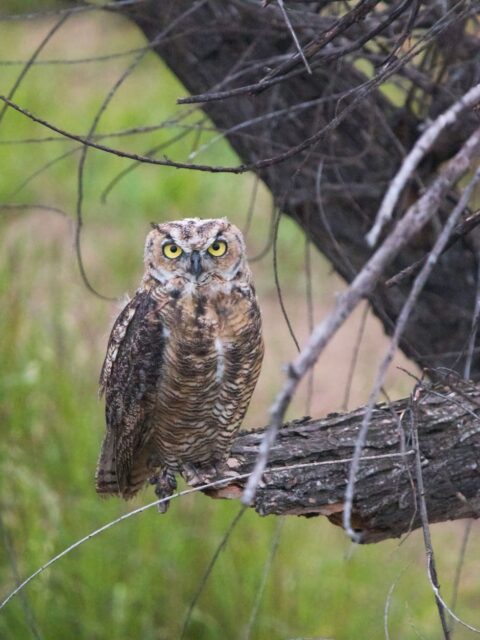
The Long-eared Owl (Asio otus) is a medium-sized owl known for its distinctive long ear tufts and large yellow eyes. It has a mottled brown and buff plumage that provides excellent camouflage in its woodland habitat.
FUN FACTS
- Long-eared Owls can rotate their heads almost 270 degrees | They have excellent hearing, allowing them to locate prey in complete darkness | Their ear tufts are not actually ears but are used for communication and camouflage
QUICK INFO
LifespanUp to 15 years in the wild, longer in captivity.
Average Weight300-400 g
Average Length33-40 cm
Diet TypeCarnivore
Social StructureSolitary, though they may be seen in pairs during the breeding season.
Activity PatternNocturnal
Breeding SeasonSpring (March-May)
- Habitat
- Long-eared Owls prefer dense woodlands, especially those with open areas for hunting. They are often found in areas with a mix of trees and shrubs.
- Biomes
- Temperate Forest, Taiga
- Native Range
- They are found across Europe, Asia, and North America.
- Continent
- Europe, Asia, North America
- Countries
- United States, Canada, United Kingdom, France, Germany, Russia
- Diet
- This owl primarily feeds on small mammals, particularly rodents, but will also consume birds and insects. It hunts at night, using its keen hearing to locate prey.
- Diet Type
- Carnivore
- Favorite Food
- Rodents
- Social Structure
- Solitary, though they may be seen in pairs during the breeding season.
- Activity Pattern
- Nocturnal
- Group Size
- 1-2
- Territorial
- 1
 LC
LC
300-400 g
Weight
33-40 cm
Length
- Coloration
- Mottled brown and buff with distinctive ear tufts.
- Sexual Dimorphism
- Females are generally larger than males.
- Lifespan
- Up to 15 years in the wild, longer in captivity.
- Offspring per Birth
- 2-6
- Sexual Maturity
- 1 year
- Breeding Season
- Spring (March-May)
LC
Least Concern
IUCN Red List Status
- Population Status
- The population is currently stable in many areas, but habitat loss poses a threat.
- Wild Population Estimate
- Unknown
- Population Trend
- Stable
- Endangered
- 0
- Threats
- Main threats include habitat destruction and human disturbance. They are also vulnerable to predation by larger birds and mammals.
- Predators
- Great Horned Owl, larger raptors
- Defense Mechanisms
- They rely on camouflage and silent flight to avoid detection.
- Found in Zoos
- Uncommon