


LONG-NOSED HORNED FROG
Ceratophrys ornata
DESCRIPTION
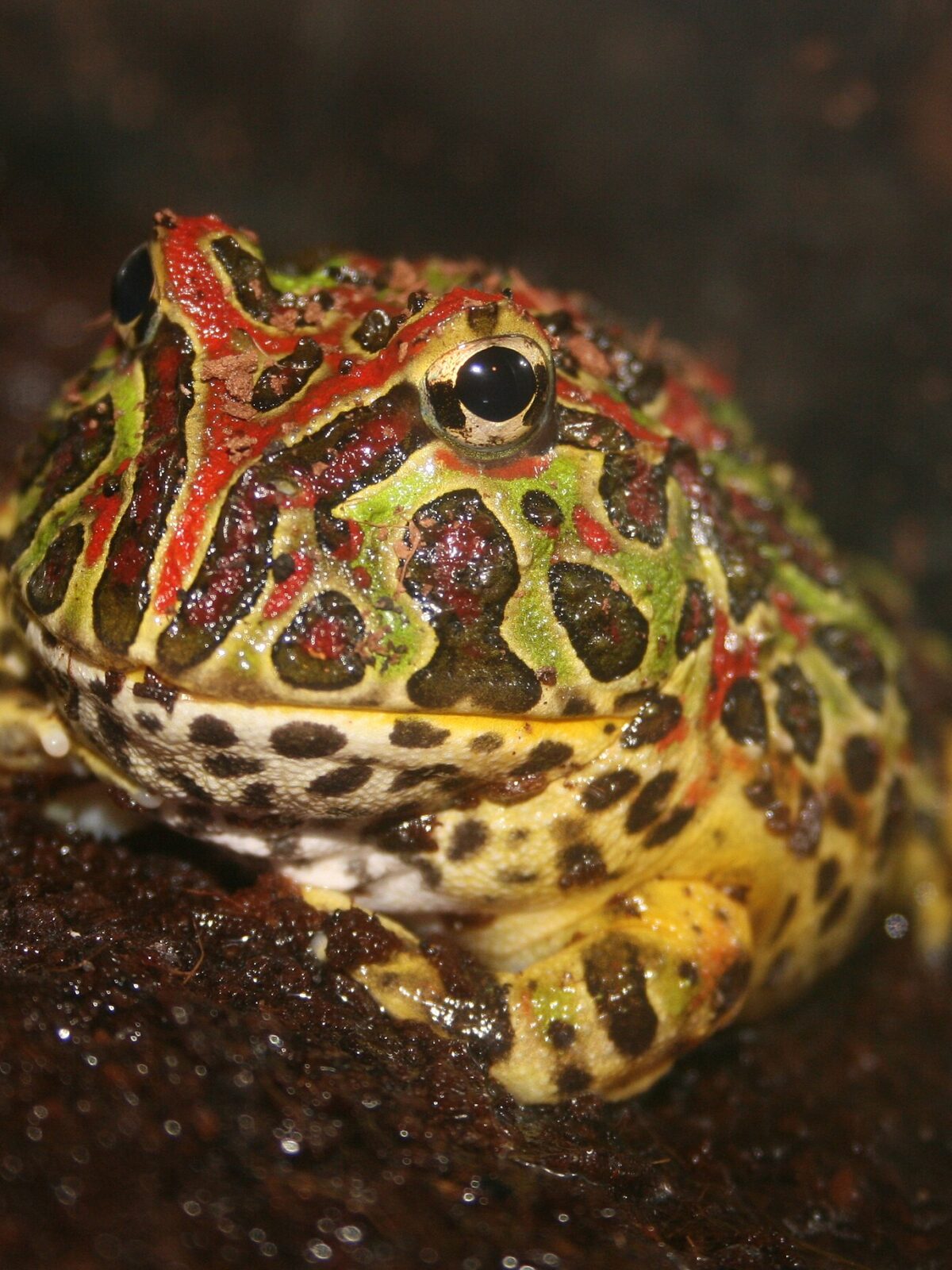
The Long-Nosed Horned Frog, or Ceratophrys ornata, is a robust amphibian known for its distinctive long, pointed snout and horn-like projections above its eyes. This species exhibits a range of colors, typically featuring a green or brown base with darker spots, which provides effective camouflage in its natural habitat. Behaviorally, these frogs are ambush predators, often remaining motionless for extended periods before striking at passing prey, showcasing their adaptability in various ecological niches.
FUN FACTS
- The Long-Nosed Horned Frog is known for its impressive ability to consume prey that is almost as large as itself, showcasing its powerful jaws and aggressive feeding strategy
- Additionally, these frogs can produce a variety of vocalizations, especially during the breeding season, which can be quite loud and are used to attract mates.| Interestingly, the Long-Nosed Horned Frog has a unique adaptation that allows it to survive in arid conditions by burrowing into the ground and entering a state of dormancy until the rains return, demonstrating its resilience in fluctuating environments
QUICK INFO
Lifespan5-10 years in the wild, up to 15 years in captivit
Average Weight100-200 g
Average Length10-15 cm
Diet TypeCarnivore
Social Structuresolitary, with occasional pairings during breeding
Activity PatternNocturnal
Breeding SeasonSpring to early summer
- Habitat
- This species is commonly found in grasslands, savannas, and areas with dense vegetation. They prefer moist environments where they can easily hide and ambush prey.
- Biomes
- Grassland, Savanna
- Native Range
- The Long-Nosed Horned Frog is native to parts of South America, particularly in Argentina, Paraguay, and Uruguay.
- Continent
- South America
- Countries
- Argentina, Paraguay, Uruguay
- Diet
- The Long-Nosed Horned Frog primarily feeds on insects, small mammals, and other amphibians. Its voracious appetite allows it to consume prey that is nearly the same size as its own body.
- Diet Type
- Carnivore
- Favorite Food
- insects, small mammals
- Social Structure
- solitary, with occasional pairings during breeding
- Activity Pattern
- Nocturnal
- Group Size
- 1-2
- Territorial
- 1
 VU
VU
 LC
LC
100-200 g
Weight
10-15 cm
Length
- Coloration
- Typically green or brown with darker spots for camouflage
- Sexual Dimorphism
- Males are generally smaller than females and have more pronounced vocal sacs.
- Lifespan
- 5-10 years in the wild, up to 15 years in captivit
- Offspring per Birth
- 100-200 eggs
- Sexual Maturity
- 1-2 years
- Breeding Season
- Spring to early summer
LC
Least Concern
IUCN Red List Status
- Population Status
- The population is currently stable, but habitat destruction poses a potential threat.
- Wild Population Estimate
- Unknown
- Population Trend
- Stable
- Endangered
- 0
- Threats
- Main threats include habitat loss due to agricultural expansion and urban development. Pollution and climate change also pose risks to their populations.
- Predators
- Birds, snakes, larger amphibians, and mammals such as raccoons.
- Defense Mechanisms
- They rely on camouflage to avoid detection and can also inflate their bodies to appear larger when threatened.
- Found in Zoos
- Uncommon