


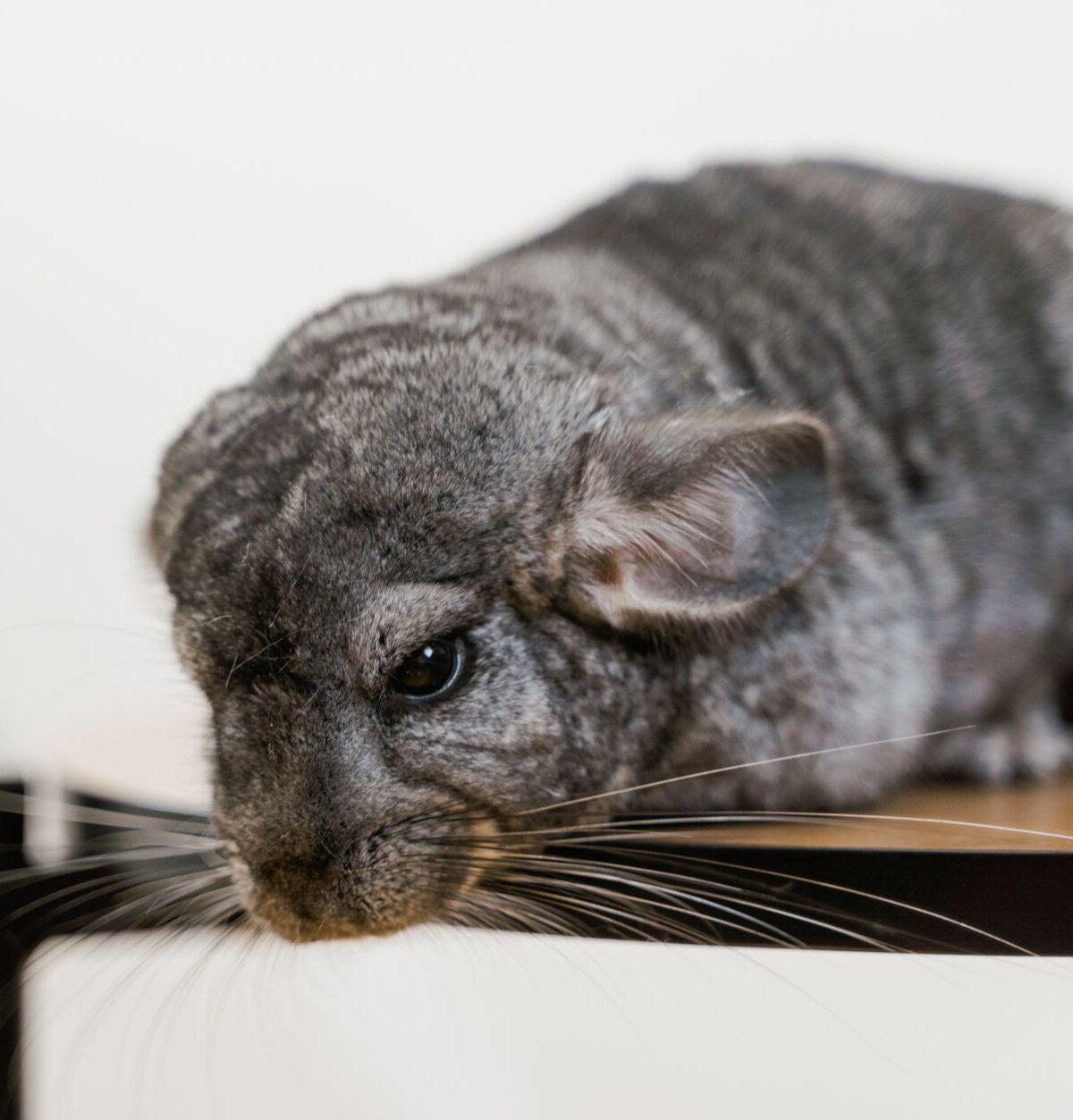
LONG-TAILED CHINCHILLA
Chinchilla lanigera
DESCRIPTION
Also called Chinchilla, the Long-Tailed Chinchilla is a small rodent known for its soft, dense fur and long, bushy tail. They have large ears and a compact body, which helps them adapt to their mountainous habitat. These animals are primarily nocturnal and are known for their social behavior, often living in groups in the wild.
FUN FACTS
- Long-Tailed Chinchillas are known for their incredibly soft fur, which is considered one of the softest in the animal kingdom
- This fur is so dense that chinchillas cannot get wet, as it would be difficult for them to dry off, leading to potential health issues
- | In the wild, Long-Tailed Chinchillas can leap up to six feet in the air, which helps them navigate their rocky habitats and escape from predators
- Their strong hind legs are specially adapted for jumping, making them agile and quick
QUICK INFO
Lifespan10-15 years in the wild, up to 20 years in captivi
Average Weight400-600 g
Average Length25-35 cm
Diet TypeHerbivore
Social Structuregroup — they often live in colonies for social interaction and protection.
Activity PatternNocturnal
Breeding SeasonYear-round, with peaks in spring and summer
- Habitat
- Long-Tailed Chinchillas inhabit rocky, mountainous areas where they can find shelter in crevices. They prefer cooler climates and are often found at high altitudes.
- Biomes
- Mountain, Grassland
- Native Range
- They are native to the Andes mountains in South America.
- Continent
- South America
- Countries
- Chile, Peru, Bolivia
- Diet
- Long-Tailed Chinchillas are herbivores, primarily feeding on grasses, seeds, and other plant materials. They require a high-fiber diet to maintain their digestive health.
- Diet Type
- Herbivore
- Favorite Food
- grasses, seeds
- Social Structure
- group — they often live in colonies for social interaction and protection.
- Activity Pattern
- Nocturnal
- Group Size
- 5-15
- Territorial
- 0
 LC
LC
 CR
CR
400-600 g
Weight
25-35 cm
Length
- Coloration
- They typically have a grayish-brown coloration with a lighter underbelly.
- Sexual Dimorphism
- Males are generally larger than females.
- Lifespan
- 10-15 years in the wild, up to 20 years in captivi
- Gestation Period
- 111 days
- Offspring per Birth
- 1-6
- Sexual Maturity
- 8-12 months
- Breeding Season
- Year-round, with peaks in spring and summer
EN
Endangered
IUCN Red List Status
- Population Status
- The population of Long-Tailed Chinchillas is currently declining due to habitat loss and hunting.
- Wild Population Estimate
- Unknown
- Population Trend
- Decreasing
- Endangered
- 1
- Threats
- Main threats include habitat destruction due to agriculture and urbanization, as well as hunting for their fur. These factors have led to significant declines in their populations.
- Conservation Program
- Various conservation programs are in place to protect their habitats and regulate hunting.
- Predators
- Eagles, hawks, and wild cats are known predators of Long-Tailed Chinchillas.
- Defense Mechanisms
- They use their agility to escape predators and can also make quick jumps to evade capture.
- Compatible Animals
- Rabbits, guinea pigs
- Found in Zoos
- Uncommon