


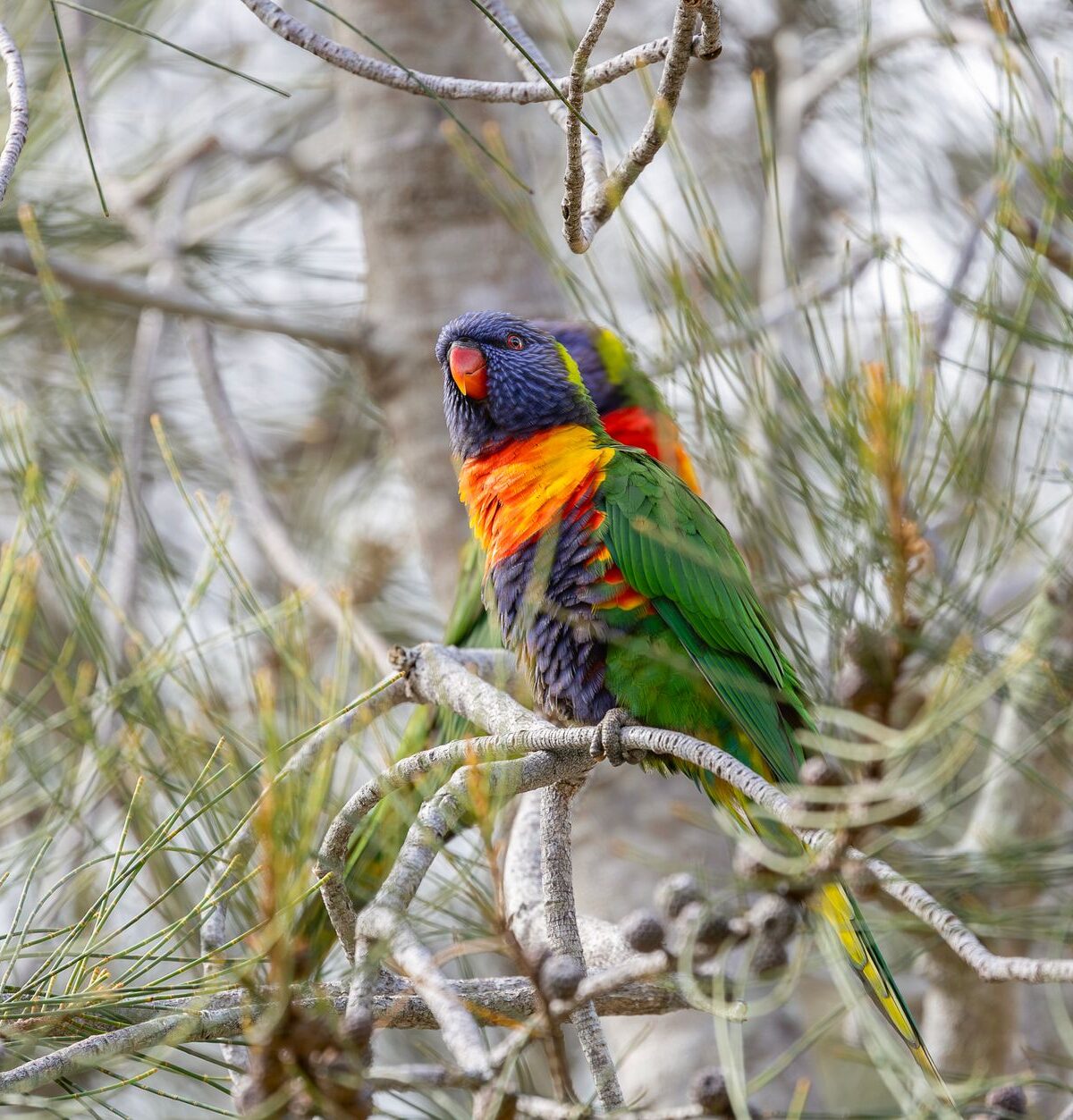
LORIKEET
DESCRIPTION
Also called the Rainbow Lorikeet, this vibrant bird is known for its striking plumage, which features a mix of bright green, blue, yellow, and orange colors. Lorikeets are highly social and often found in flocks, displaying playful behavior as they interact with one another. They primarily inhabit forested areas and are known for their unique feeding habits, using their specialized tongues to extract nectar from flowers.
FUN FACTS
- Rainbow Lorikeets are known for their incredible acrobatic skills, often seen hanging upside down while feeding on nectar
- They have a unique feeding behavior that involves using their specialized tongues to extract nectar from flowers, making them essential pollinators in their ecosystems
- | These birds are highly social and can often be found in large flocks, engaging in playful interactions and vocalizations
- Their vibrant colors and playful nature make them popular in aviculture, where they are often kept as pets
QUICK INFO
Lifespan15-20 years in the wild, up to 30 years in captivi
Average Weight100-200 g
Average Length25-30 cm
Diet TypeHerbivore
Social StructureLorikeets are typically found in pairs or small groups, often forming larger flocks during feeding.
Activity PatternDiurnal
Breeding SeasonSpring to early summer
- Habitat
- Lorikeets thrive in a range of habitats, including rainforests, woodlands, and coastal areas. They prefer areas with abundant flowering plants to support their nectar-based diet.
- Biomes
- Tropical Rainforest, Woodland
- Native Range
- Lorikeets are native to Australia, New Guinea, and surrounding islands.
- Continent
- Australia, Oceania
- Countries
- Australia, Papua New Guinea, Indonesia
- Diet
- Lorikeets primarily feed on nectar, fruits, and pollen, which they obtain from a variety of flowering plants. Their specialized brush-tipped tongues allow them to access nectar efficiently.
- Diet Type
- Herbivore
- Favorite Food
- nectar, fruits, pollen
- Social Structure
- Lorikeets are typically found in pairs or small groups, often forming larger flocks during feeding.
- Activity Pattern
- Diurnal
- Group Size
- 5-30
- Territorial
- 0
 VU
VU
 LC
LC
100-200 g
Weight
25-30 cm
Length
- Coloration
- bright green body with blue and orange markings
- Sexual Dimorphism
- males and females are similar in appearance, but males are generally larger
- Lifespan
- 15-20 years in the wild, up to 30 years in captivi
- Offspring per Birth
- 1-2
- Sexual Maturity
- 1-2 years
- Breeding Season
- Spring to early summer
LC
Least Concern
IUCN Red List Status
- Population Status
- The population of Lorikeets is currently stable, with no significant declines reported.
- Wild Population Estimate
- 100,000+
- Population Trend
- Stable
- Endangered
- 0
- Threats
- Main threats include habitat loss due to deforestation and urbanization. Additionally, they face competition for food and nesting sites from other bird species.
- Predators
- Birds of prey, snakes, and larger mammals can pose threats to Lorikeets, especially to their eggs and young.
- Defense Mechanisms
- Lorikeets often rely on their agility and speed to evade predators, as well as their ability to blend into foliage.
- Compatible Animals
- other parrot species, finches, small mammals
- Found in Zoos
- Common