


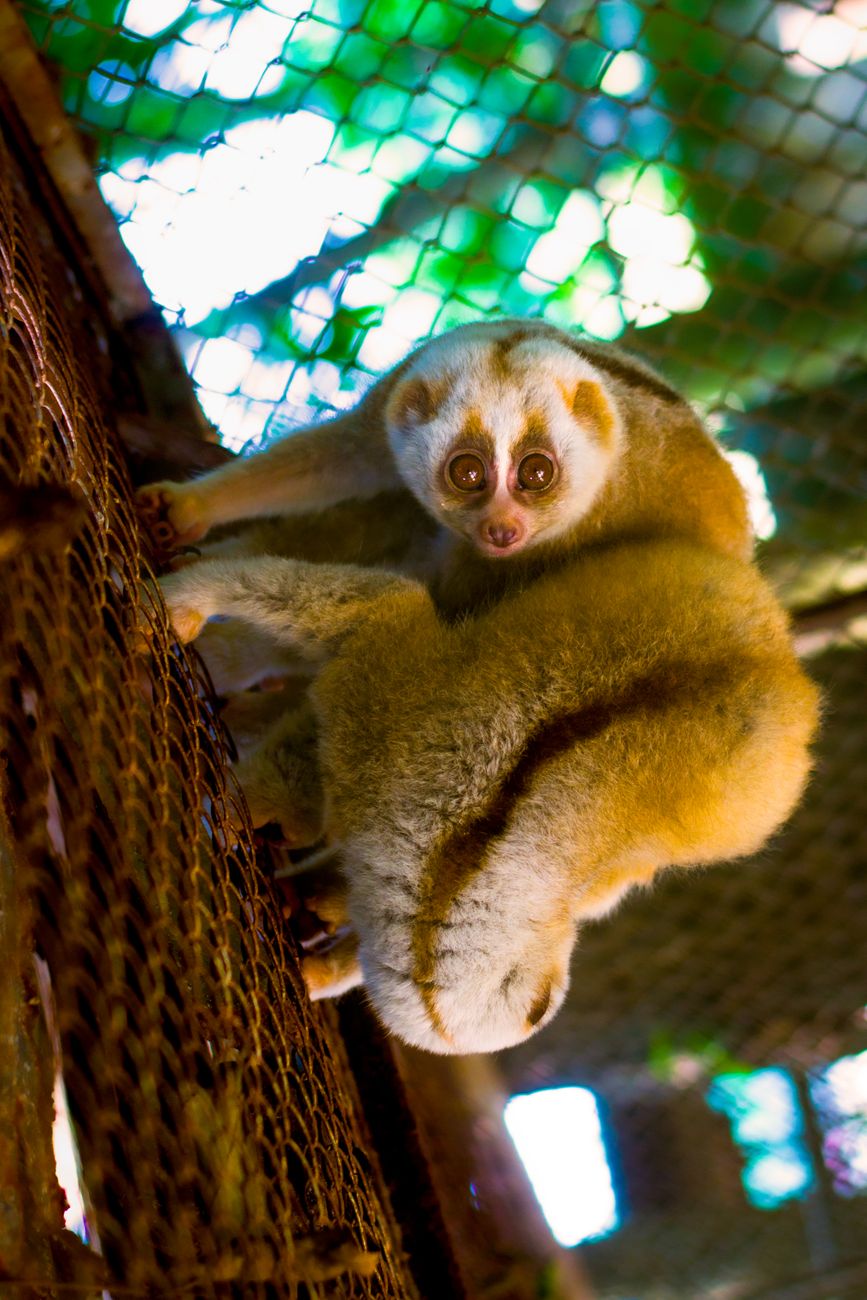
LORIS
DESCRIPTION
Loris is commonly known as the Slow Loris and Sloth Loris, which are small, nocturnal primates characterized by their large eyes and slow, deliberate movements. They have a distinctive appearance with a round face, short limbs, and a thick, furry body, often exhibiting a grayish or brownish coloration. These primates are known for their unique behavior, including a slow, stealthy locomotion that helps them avoid predators and their ability to produce a toxic secretion from their elbows, which they can apply to their fur for defense.
FUN FACTS
- Loris has a unique method of locomotion, moving slowly and deliberately to avoid detection by predators
- This slow movement is not just a behavioral trait but also a survival strategy, allowing them to blend into their surroundings and remain unnoticed
- | The Slow Loris is one of the few venomous mammals, as it can produce a toxin that can cause allergic reactions in humans
- This toxin is derived from their diet, which includes certain plants, and is used as a defense mechanism against potential threats
QUICK INFO
Lifespan10-20 years in the wild, up to 30 in captivity
Average Weight0.5-1.5 kg
Average Length25-38 cm
Diet TypeOmnivore
Social Structuresolitary, with occasional pairings for mating or rearing young
Activity PatternNocturnal
Breeding SeasonYear-round, with peaks depending on the region
- Habitat
- Loris typically inhabits tropical and subtropical forests, where they can find ample food sources and suitable nesting sites. They are often found in dense vegetation that provides cover from predators.
- Biomes
- Tropical Rainforest, Subtropical Forest
- Native Range
- Loris is native to Southeast Asia, including countries like India, Sri Lanka, and various regions of Southeast Asian islands.
- Continent
- Asia
- Countries
- India, Sri Lanka, Thailand, Vietnam, Indonesia
- Diet
- Loris primarily feeds on fruits, leaves, and insects, showcasing a preference for a varied diet that includes both plant and animal matter.
- Diet Type
- Omnivore
- Favorite Food
- Fruits, insects
- Social Structure
- solitary, with occasional pairings for mating or rearing young
- Activity Pattern
- Nocturnal
- Group Size
- 1-2
- Territorial
- 1
 VU
VU
 LC
LC
0.5-1.5 kg
Weight
25-38 cm
Length
- Coloration
- Grayish to brown fur with a lighter face and dark eye patches
- Sexual Dimorphism
- males are generally larger than females
- Lifespan
- 10-20 years in the wild, up to 30 in captivity
- Gestation Period
- 6 months
- Offspring per Birth
- 1-2
- Sexual Maturity
- 2-3 years
- Breeding Season
- Year-round, with peaks depending on the region
EN
Endangered
IUCN Red List Status
- Population Status
- The population of Loris is currently declining due to habitat loss and illegal wildlife trade.
- Wild Population Estimate
- Unknown, but declining
- Population Trend
- Decreasing
- Endangered
- 1
- Threats
- Main threats to Loris include habitat destruction due to deforestation and the illegal pet trade, which has significantly impacted their populations in the wild.
- Conservation Program
- Various local and international conservation efforts are in place to protect Loris habitats and combat illegal trade.
- Predators
- Birds of prey, snakes, and larger mammals may prey on Loris, although they have few natural predators due to their nocturnal and arboreal lifestyle.
- Defense Mechanisms
- Loris can secrete a toxin from their elbows, which they can lick and apply to their fur, making them unpalatable to predators.
- Found in Zoos
- Uncommon