


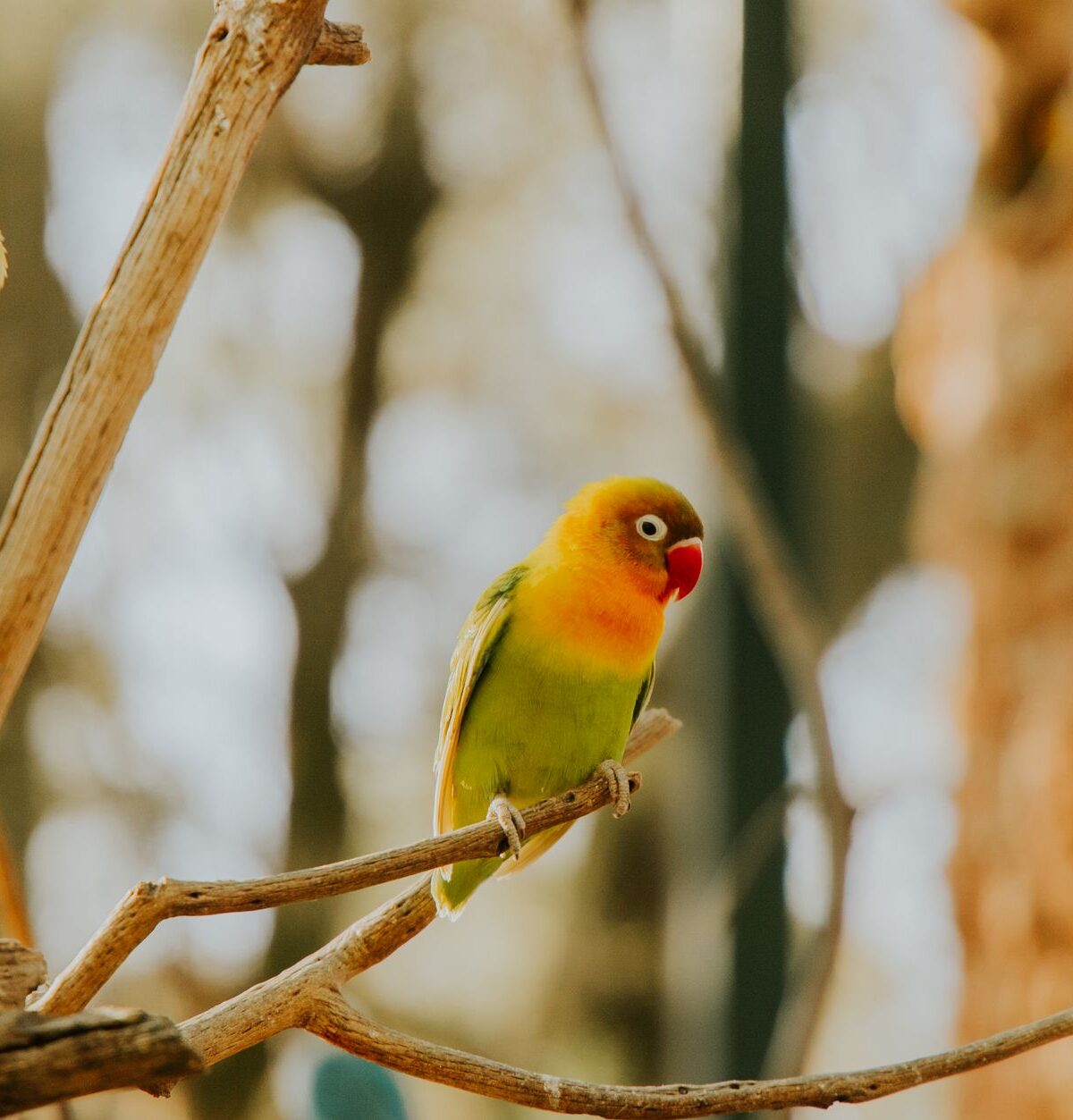
LOVEBIRD
Agapornis
DESCRIPTION
Lovebird (Agapornis) is a small, colorful parrot known for its affectionate nature and strong pair bonds. These birds typically exhibit vibrant plumage, with colors ranging from green to yellow, orange, and blue, depending on the species. Lovebirds are social creatures that thrive in flocks, displaying playful behavior and engaging in mutual grooming, which strengthens their social bonds.
FUN FACTS
- Lovebirds are known for their strong pair bonds, often seen cuddling and preening each other, which is a behavior that helps reinforce their relationship
- In captivity, they can be trained to perform tricks and can even learn to mimic human speech, making them popular pets
- | There are nine recognized species of Lovebirds, each with unique color variations and behaviors
- The Peach-faced Lovebird is one of the most popular species kept as pets due to its friendly nature and striking appearance
QUICK INFO
Lifespan10-15 years in the wild, up to 20 years in captivi
Average Weight40-60 g
Average Length13-17 cm
Diet TypeHerbivore
Social Structurepair, typically monogamous and form strong bonds with their mate
Activity PatternDiurnal
Breeding SeasonSpring to early summer
- Habitat
- Lovebirds inhabit a variety of environments, including savannas, woodlands, and scrublands. They prefer areas with abundant vegetation that provides both food and nesting sites.
- Biomes
- Savanna, Tropical Rainforest, Woodland
- Native Range
- Lovebirds are native to Africa, particularly in the regions of Madagascar and the mainland, including countries like Tanzania and Zambia.
- Continent
- Africa
- Countries
- Tanzania, Zambia, Madagascar, Angola
- Diet
- Lovebirds primarily feed on seeds, fruits, and vegetables, enjoying a varied diet that supports their energetic lifestyle. They are known to forage for food in their natural habitat, often seeking out seeds from grasses and fruits from trees.
- Diet Type
- Herbivore
- Favorite Food
- seeds, fruits, vegetables
- Social Structure
- pair, typically monogamous and form strong bonds with their mate
- Activity Pattern
- Diurnal
- Group Size
- 2-10
- Territorial
- 0
 CR
CR
 LC
LC
40-60 g
Weight
13-17 cm
Length
- Coloration
- vibrant green with variations in other colors depending on the species
- Sexual Dimorphism
- males and females are similar in appearance, but males may have slightly brighter colors
- Lifespan
- 10-15 years in the wild, up to 20 years in captivi
- Offspring per Birth
- 3-6
- Sexual Maturity
- 6 months to 1 year
- Breeding Season
- Spring to early summer
LC
Least Concern
IUCN Red List Status
- Population Status
- Lovebirds are generally common in their native range, but some species may face habitat loss.
- Wild Population Estimate
- unknown
- Population Trend
- Stable
- Endangered
- 0
- Threats
- The main threats to Lovebirds include habitat destruction due to agriculture and urbanization. Additionally, trapping for the pet trade poses a risk to some populations.
- Predators
- hawks, snakes, and larger birds of prey
- Defense Mechanisms
- Lovebirds often rely on their agility and speed to evade predators, as well as their ability to hide in dense foliage.
- Compatible Animals
- other small parrots, finches, canaries
- Found in Zoos
- Common