


LOWLAND NYALA
DESCRIPTION
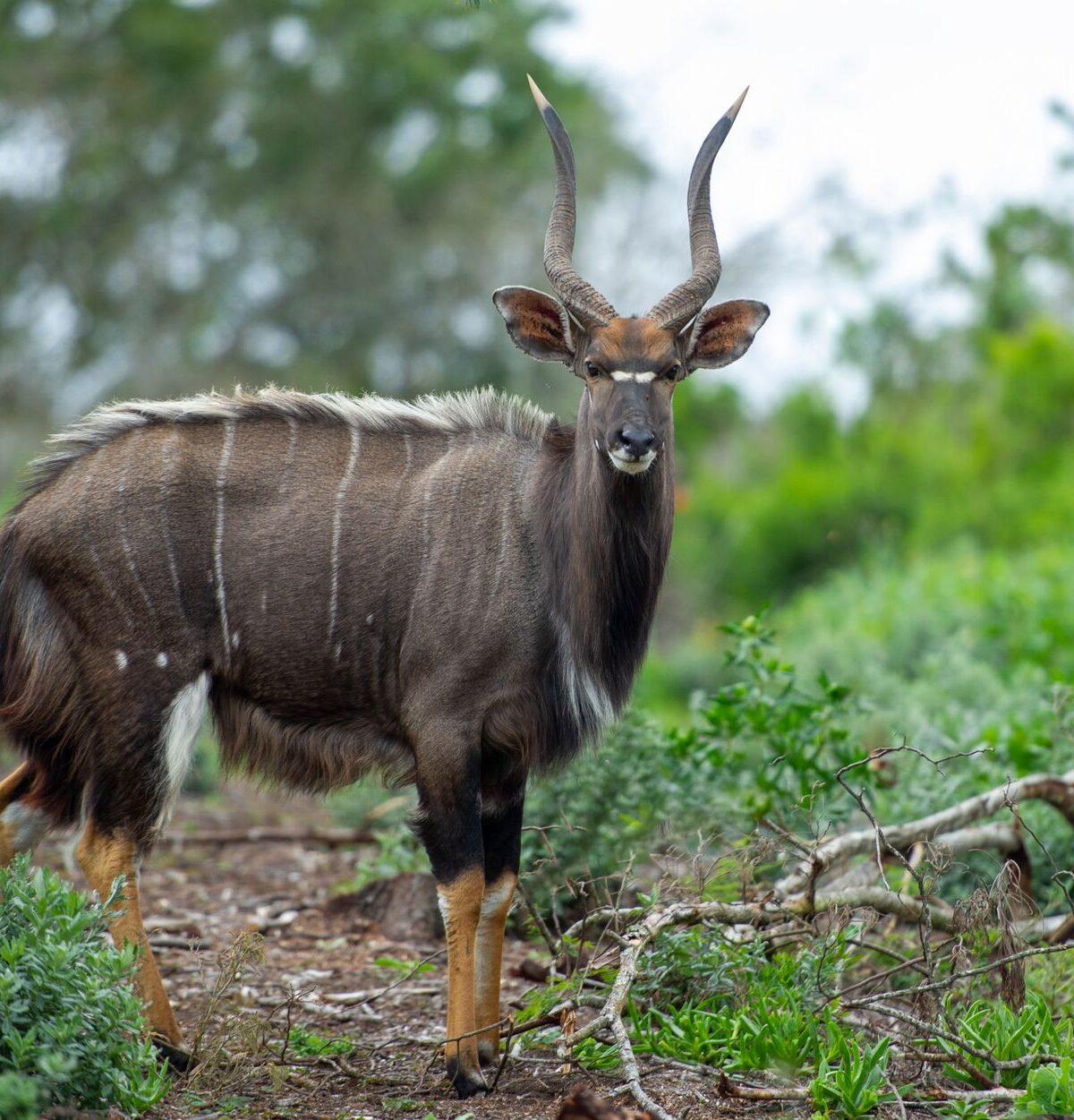
Also called Nyala, Lowland Nyala is a medium-sized antelope native to the woodlands and savannas of southern Africa. Males are characterized by their spiral horns, which can reach lengths of up to 90 cm, and their striking dark brown coloration with white stripes and spots. Females are smaller, have a lighter brown coat, and lack horns, showcasing a more delicate appearance, while both sexes exhibit a shy and elusive behavior, often hiding in dense vegetation.
FUN FACTS
- Lowland Nyala are known for their unique social behavior, where males often engage in ritualistic displays to establish dominance and attract females
- These displays can include vocalizations and posturing, showcasing their impressive horns
- | Interestingly, Lowland Nyala have a unique adaptation to their environment; they are able to thrive in both dense bush and open savanna, allowing them to exploit a variety of food sources and evade predators effectively
QUICK INFO
Lifespan10-15 years in the wild, up to 20 years in captivi
Average Weight50-125 kg
Average Length1.5-2.0 m
Diet TypeHerbivore
Social StructureLowland Nyala exhibit a social structure that is typically solitary or in small groups. Males are often solitary, while females and their young may form small family groups.
Activity PatternCrepuscular
Breeding SeasonYear-round, with peaks depending on local conditions
- Habitat
- Lowland Nyala inhabit dense bush and woodland areas, often near water sources. They prefer habitats with ample cover to hide from predators and to find food.
- Biomes
- Savanna, Tropical Rainforest
- Native Range
- Lowland Nyala is found in the southeastern regions of Africa, particularly in Mozambique, Zimbabwe, and parts of South Africa.
- Continent
- Africa
- Countries
- Mozambique, Zimbabwe, South Africa
- Diet
- Lowland Nyala primarily feeds on leaves, fruits, and grasses, favoring tender shoots and foliage. They are known to browse on a variety of plant species, adapting their diet based on seasonal availability.
- Diet Type
- Herbivore
- Favorite Food
- leaves, fruits, grasses
- Social Structure
- Lowland Nyala exhibit a social structure that is typically solitary or in small groups. Males are often solitary, while females and their young may form small family groups.
- Activity Pattern
- Crepuscular
- Group Size
- 1-5
- Territorial
- 0
 LC
LC
 VU
VU
 LC
LC
50-125 kg
Weight
1.5-2.0 m
Length
1.0 m at shoulder
Height (Shoulder)
- Coloration
- Males are dark brown with white stripes and spots, while females are lighter brown with similar markings.
- Sexual Dimorphism
- Males are larger and have spiral horns, while females are smaller and hornless.
- Lifespan
- 10-15 years in the wild, up to 20 years in captivi
- Gestation Period
- 210 days
- Offspring per Birth
- 1
- Sexual Maturity
- 1-2 years
- Breeding Season
- Year-round, with peaks depending on local conditions
LC
Least Concern
IUCN Red List Status
- Population Status
- The population of Lowland Nyala is currently stable, but habitat loss poses a threat to their numbers.
- Wild Population Estimate
- 20,000-30,000
- Population Trend
- Stable
- Endangered
- 0
- Threats
- Main threats include habitat destruction due to agriculture and human encroachment, as well as poaching. These factors can lead to localized declines in their populations.
- Predators
- Lions, leopards, hyenas, and crocodiles are known predators of Lowland Nyala, particularly when they venture near water sources.
- Defense Mechanisms
- Lowland Nyala rely on their excellent camouflage and agility to evade predators, often freezing in place to avoid detection.
- Found in Zoos
- Uncommon