


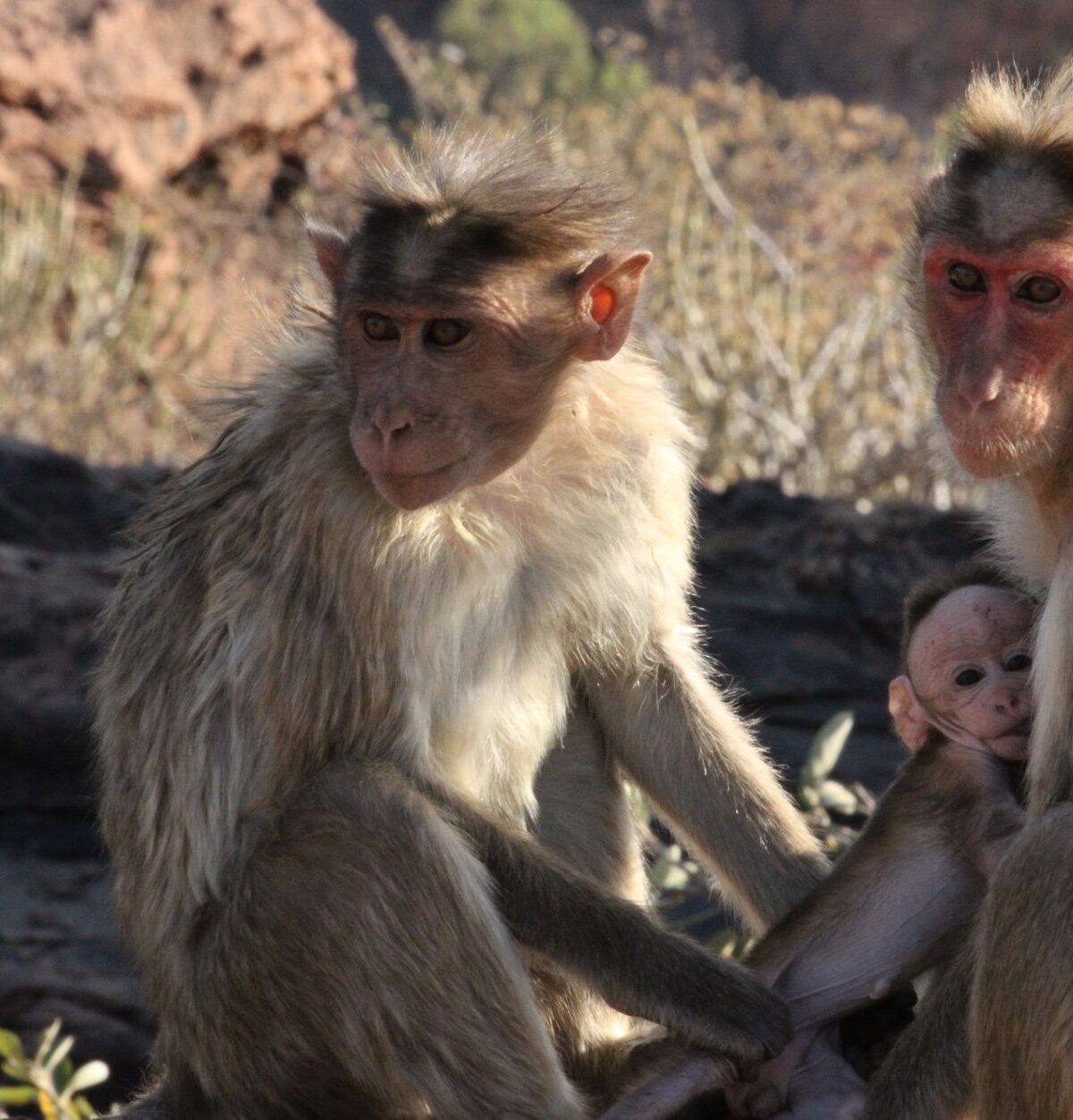
MACAQUE
DESCRIPTION
Macaques are a diverse group of primates known for their adaptability and social behavior. They typically have a robust body, long limbs, and a short tail, with fur that can vary in color from brown to gray. These monkeys are highly social animals, often found in troops that exhibit complex social structures and behaviors, including grooming and vocal communication.
FUN FACTS
- Macaques are known for their intelligence and have been observed using tools, such as using stones to crack open nuts
- They also have a unique social structure, where grooming plays a crucial role in maintaining relationships and social bonds within their troops.|The Japanese Macaque, also known as the snow monkey, is famous for its habit of bathing in hot springs during the winter months
- This behavior not only helps them stay warm but also serves as a social activity, showcasing their adaptability to harsh environments
QUICK INFO
Lifespan15-20 years in the wild, up to 30 in captivity
Average Weight5-40 kg
Average Length40-70 cm
Diet TypeOmnivore
Social StructureMacaques typically live in groups, which can range from a few individuals to over a hundred. These groups are often matriarchal, with females forming the core of the social structure.
Activity PatternDiurnal
Breeding SeasonYear-round, with peaks depending on the species
- Habitat
- Macaques inhabit a range of environments, including forests, grasslands, and urban areas. They are highly adaptable and can thrive in both tropical and temperate climates.
- Biomes
- Tropical Rainforest, Temperate Forest, Grassland
- Native Range
- Macaques are native to Asia, with some species found in North Africa and Europe.
- Continent
- Asia, Africa, Europe
- Countries
- India, Japan, Morocco, China, Thailand
- Diet
- Macaques are omnivorous, feeding on a variety of foods including fruits, seeds, leaves, and small invertebrates. Their diet can vary significantly based on their habitat and the availability of food sources.
- Diet Type
- Omnivore
- Favorite Food
- Fruits, seeds, leaves
- Social Structure
- Macaques typically live in groups, which can range from a few individuals to over a hundred. These groups are often matriarchal, with females forming the core of the social structure.
- Activity Pattern
- Diurnal
- Group Size
- 20-100
- Territorial
- 1
 VU
VU
 VU
VU
5-40 kg
Weight
40-70 cm
Length
- Coloration
- Fur color varies from brown to gray, often with lighter underparts.
- Sexual Dimorphism
- Males are generally larger than females.
- Lifespan
- 15-20 years in the wild, up to 30 in captivity
- Gestation Period
- 165 days
- Offspring per Birth
- 1
- Sexual Maturity
- 3-4 years
- Breeding Season
- Year-round, with peaks depending on the species
LC
Least Concern
IUCN Red List Status
- Population Status
- Macaque populations vary widely by species, with some being abundant while others are threatened.
- Wild Population Estimate
- 1,000,000+ (varies by species)
- Population Trend
- Stable
- Endangered
- 0
- Threats
- Habitat loss due to deforestation and human encroachment are significant threats to macaque populations. Additionally, they face hunting and capture for the pet trade in some regions.
- Predators
- Large birds of prey, leopards, and humans are known predators of macaques.
- Defense Mechanisms
- Macaques use vocalizations, aggressive displays, and group cohesion to defend against predators.
- Compatible Animals
- Other primates, certain birds, and small mammals in zoo settings
- Found in Zoos
- Common