


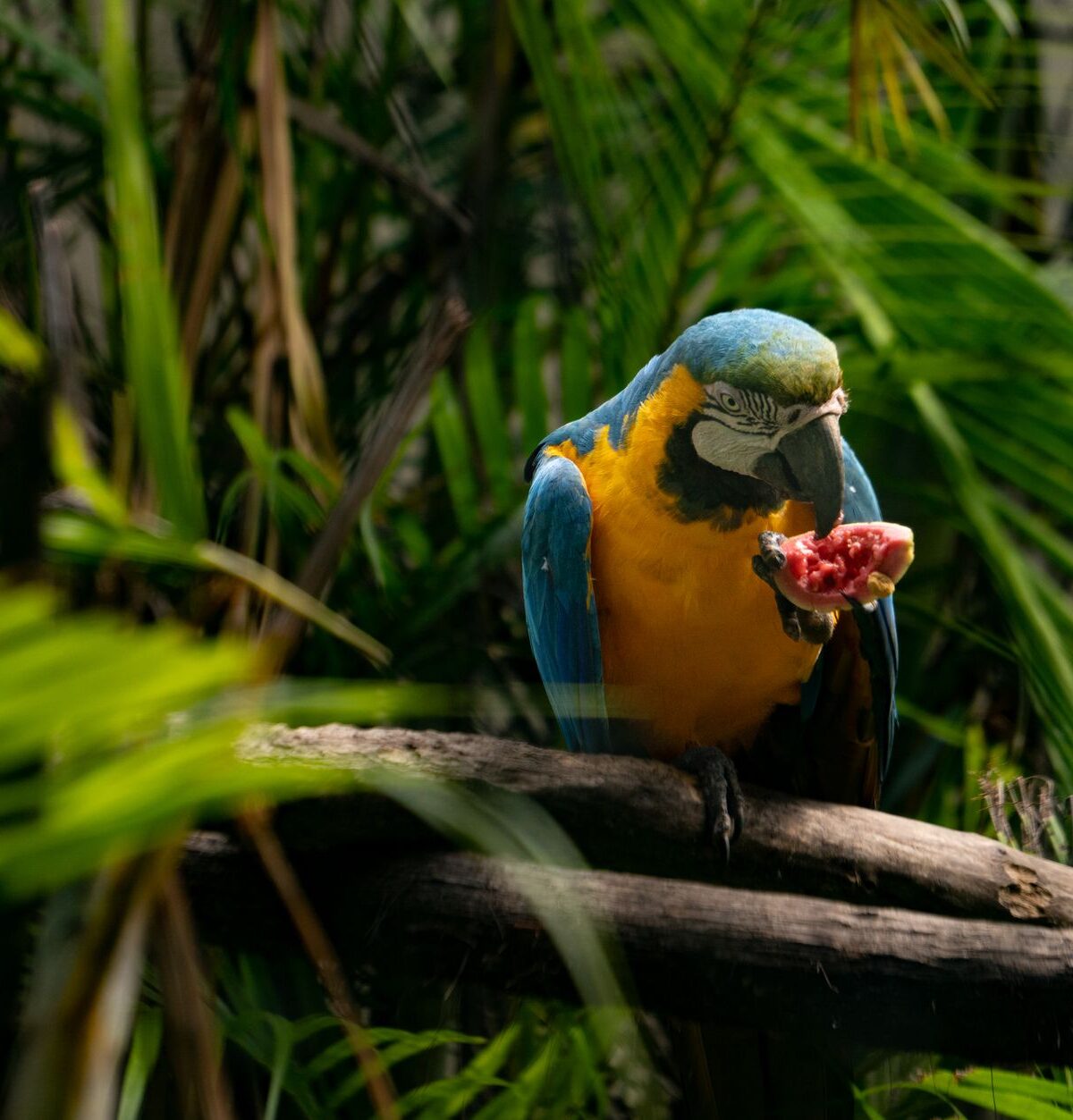
MACAW
DESCRIPTION
Macaws are large, colorful parrots known for their striking plumage and long tails. They are highly social birds, often found in pairs or small groups, and are known for their intelligence and ability to mimic sounds. In the wild, they inhabit tropical rainforests and are often seen flying in search of food or nesting sites.
FUN FACTS
- Macaws are known for their incredible vocal abilities, capable of mimicking human speech and other sounds with remarkable accuracy
- They have a unique social structure, often forming lifelong bonds with their mates, and can be seen engaging in elaborate courtship displays that include dancing and vocal duets.|The Blue-and-yellow Macaw is particularly famous for its vibrant coloration and is often featured in movies and media
- These birds are also known for their intelligence, often solving complex puzzles and engaging in play that showcases their cognitive abilities
QUICK INFO
Lifespan30-50 years in the wild, up to 80 years in captivi
Average Weight0.9-1.5 kg
Average Length0.76-1 m
Diet TypeHerbivore
Social StructureMacaws are typically found in pairs or small groups, often forming strong bonds with their mates.
Activity PatternDiurnal
Breeding SeasonSpring (March-June)
- Habitat
- Macaws thrive in tropical and subtropical forests, often near rivers and wetlands. They prefer areas with abundant food sources and nesting sites in tree cavities.
- Biomes
- Tropical Rainforest, Subtropical Forest
- Native Range
- Macaws are native to Central and South America, ranging from Mexico to Brazil.
- Continent
- North America, South America
- Countries
- Mexico, Brazil, Colombia, Peru, Ecuador
- Diet
- Macaws primarily eat seeds, nuts, fruits, and flowers. They have strong beaks that allow them to crack open hard shells to access the nutritious contents inside.
- Diet Type
- Herbivore
- Favorite Food
- Nuts, seeds, fruits
- Social Structure
- Macaws are typically found in pairs or small groups, often forming strong bonds with their mates.
- Activity Pattern
- Diurnal
- Group Size
- 2-30
- Territorial
- 1
 VU
VU
 LC
LC
0.9-1.5 kg
Weight
0.76-1 m
Length
- Coloration
- Brightly colored feathers, often featuring blue, yellow, red, and green.
- Sexual Dimorphism
- Males and females are similar in appearance, but males are generally larger.
- Lifespan
- 30-50 years in the wild, up to 80 years in captivi
- Offspring per Birth
- 1-3
- Sexual Maturity
- 3-5 years
- Breeding Season
- Spring (March-June)
EN
Endangered
IUCN Red List Status
- Population Status
- Some species of macaws are declining due to habitat loss and illegal trapping, while others are stable.
- Wild Population Estimate
- 20,000-50,000
- Population Trend
- Decreasing
- Endangered
- 1
- Threats
- Main threats to macaws include habitat destruction due to deforestation and illegal trapping for the pet trade. These factors have significantly impacted their populations in the wild.
- Conservation Program
- Various conservation programs are in place to protect macaw habitats and reduce illegal trapping.
- Predators
- Large birds of prey, snakes, and mammals such as jaguars may prey on macaws, especially juveniles.
- Defense Mechanisms
- Macaws use their strong beaks and loud vocalizations to deter predators and communicate with each other.
- Compatible Animals
- Other parrots, certain small mammals, null
- Found in Zoos
- Common