


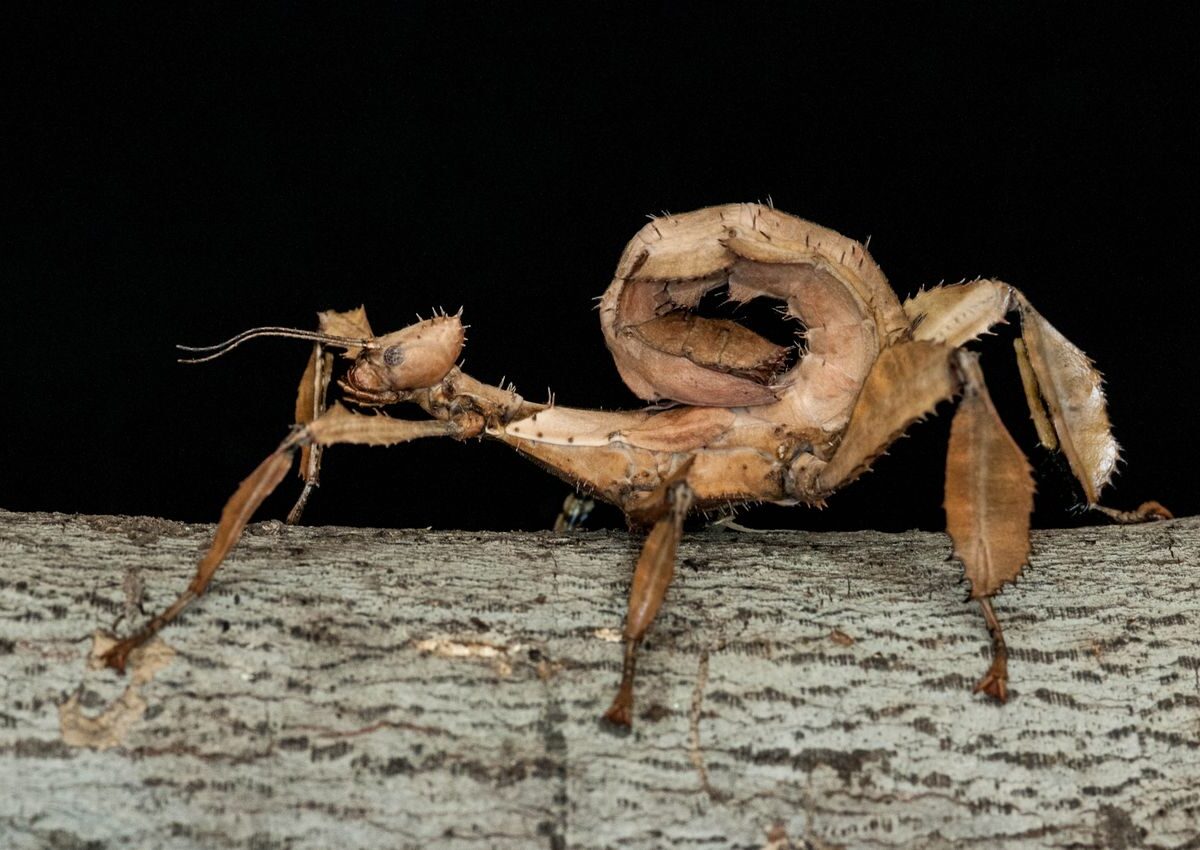
MACLEAY'S SPECTRE
DESCRIPTION
Macleay's Spectre is a large stick insect native to Australia, known for its remarkable ability to blend into its surroundings. Its elongated body and limbs resemble twigs, providing excellent camouflage against predators. This species is primarily nocturnal, feeding on leaves and exhibiting a slow, deliberate movement to avoid detection.
FUN FACTS
- Macleay's Spectre can regenerate lost limbs, a fascinating ability that helps them survive predation
- Additionally, they can produce a defensive spray that may deter some predators, although this is not their primary means of defense
QUICK INFO
Lifespanup to 1 year in the wild
Average Length10-15 cm
Diet TypeHerbivore
Social Structuresolitary, occasionally found in small groups
Activity PatternNocturnal
Breeding SeasonSpring to Summer
- Habitat
- This species inhabits forests and woodlands, where it can easily blend into the foliage. They prefer areas with abundant vegetation to provide both food and cover from predators.
- Biomes
- Temperate Forest, Tropical Rainforest
- Native Range
- Macleay's Spectre is found in eastern Australia, particularly in New South Wales and Queensland.
- Continent
- Australia
- Countries
- Australia
- Diet
- Macleay's Spectre primarily feeds on a variety of leaves, particularly those of eucalyptus and other native plants. They are herbivorous and rely on their host plants for sustenance.
- Diet Type
- Herbivore
- Favorite Food
- eucalyptus leaves
- Social Structure
- solitary, occasionally found in small groups
- Activity Pattern
- Nocturnal
- Group Size
- 1-5
- Territorial
- 0
 VU
VU

10-15 cm
Length
- Coloration
- brown to green, resembling twigs or leaves
- Sexual Dimorphism
- females are generally larger than males
- Lifespan
- up to 1 year in the wild
- Offspring per Birth
- 10-20
- Sexual Maturity
- 4-6 months
- Breeding Season
- Spring to Summer
LC
Least Concern
IUCN Red List Status
- Population Status
- The population status is currently stable, but habitat loss poses a potential threat.
- Population Trend
- Stable
- Endangered
- 0
- Threats
- Main threats include habitat destruction due to urban development and agriculture. Climate change may also impact their habitat and food sources.
- Predators
- birds, small mammals, and reptiles
- Defense Mechanisms
- Macleay's Spectre relies on camouflage as its primary defense mechanism, blending seamlessly into its environment to avoid predation.
- Found in Zoos
- Uncommon