


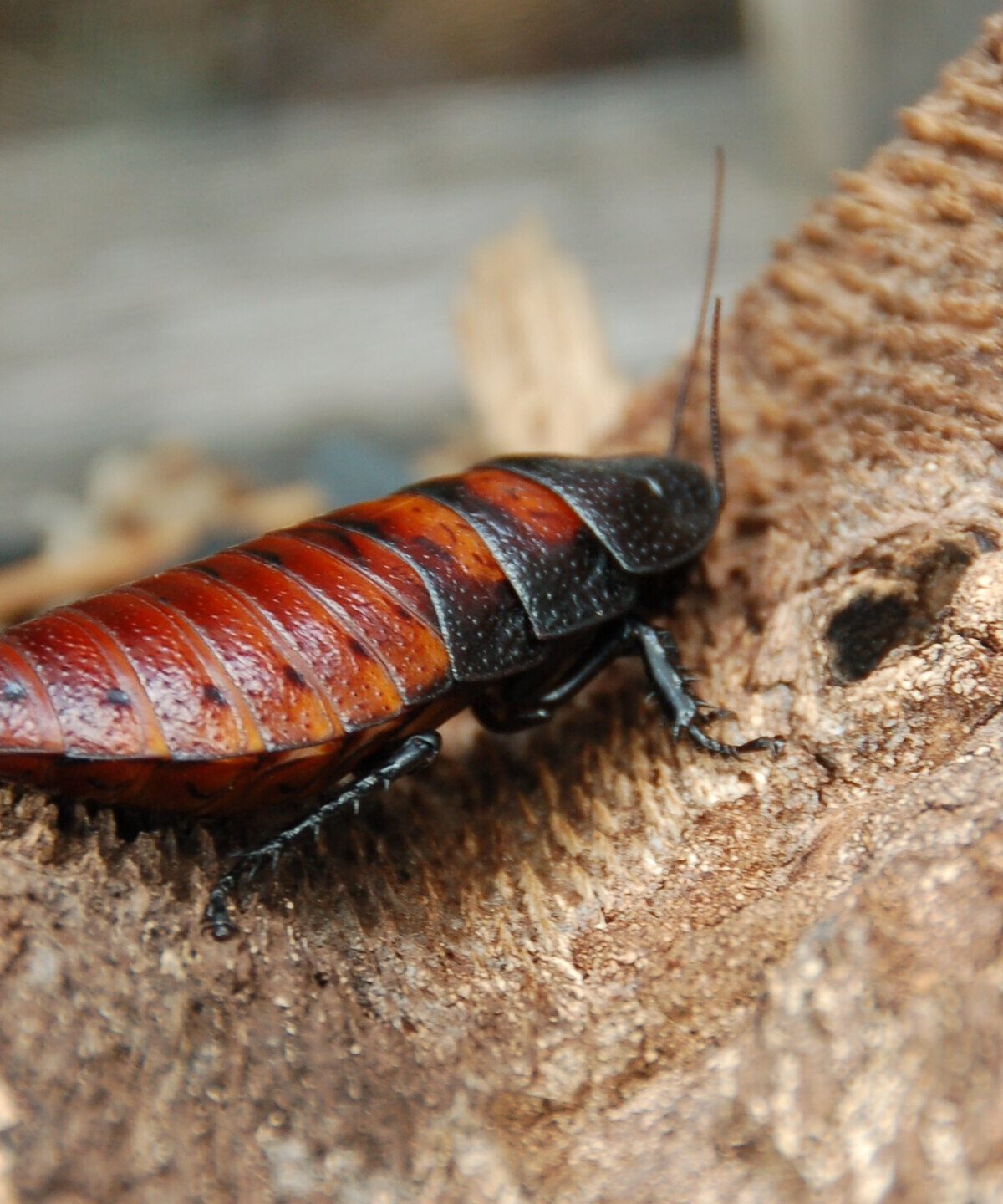
MADAGASCAN HISSING COCKROACH
DESCRIPTION
Also called the Giant Hissing Cockroach, the Madagascan Hissing Cockroach is one of the largest cockroach species, reaching lengths of up to 4 inches. They have a robust, dark brown to black exoskeleton and are known for their distinctive hissing sound, which they produce by forcing air through tiny openings in their abdomen. These cockroaches are primarily nocturnal and are often found in leaf litter and decaying wood in their native habitats.
FUN FACTS
- Madagascan Hissing Cockroaches are known for their unique hissing sound, which is produced by forcing air through their spiracles, creating a sound similar to a whistle
- This hissing serves multiple purposes, including communication with other cockroaches and as a warning to potential predators
- | These cockroaches are often kept as pets due to their docile nature and low maintenance needs
- They can live for several years in captivity and are sometimes used in educational programs to teach about insect biology and ecology
QUICK INFO
Lifespan5 years in the wild, up to 10 years in captivity
Average Weight30-50 g
Average Length10-12 cm
Diet TypeHerbivore
Social StructureThey are social insects that often live in groups, providing safety in numbers.
Activity PatternNocturnal
Breeding SeasonYear-round
- Habitat
- They inhabit tropical rainforests and other humid environments, often found in leaf litter and under logs. Their habitat provides ample food sources and shelter from predators.
- Biomes
- Tropical Rainforest
- Native Range
- Endemic to Madagascar, primarily found in the eastern rainforests of the island.
- Continent
- Africa
- Countries
- Madagascar
- Diet
- Madagascan Hissing Cockroaches are detritivores, primarily feeding on decaying plant matter, leaves, and wood. They play a crucial role in their ecosystem by helping to decompose organic material.
- Diet Type
- Herbivore
- Favorite Food
- decaying leaves, wood
- Social Structure
- They are social insects that often live in groups, providing safety in numbers.
- Activity Pattern
- Nocturnal
- Group Size
- 5-50
- Territorial
- 0
 VU
VU

30-50 g
Weight
10-12 cm
Length
- Coloration
- Dark brown to black exoskeleton with a shiny appearance.
- Sexual Dimorphism
- Males are typically larger and have more pronounced horns on their heads compared to females.
- Lifespan
- 5 years in the wild, up to 10 years in captivity
- Gestation Period
- 60-90 days
- Offspring per Birth
- 30-40
- Sexual Maturity
- 6 months
- Breeding Season
- Year-round
LC
Least Concern
IUCN Red List Status
- Population Status
- The population is currently stable, with no significant threats to their survival.
- Wild Population Estimate
- Unknown
- Population Trend
- Stable
- Endangered
- 0
- Threats
- Habitat loss due to deforestation and human encroachment poses a threat to their populations. However, they are not currently considered endangered.
- Predators
- Birds, reptiles, and small mammals are known to prey on Madagascan Hissing Cockroaches.
- Defense Mechanisms
- They can produce a hissing sound as a form of communication and to deter predators.
- Found in Zoos
- Common