


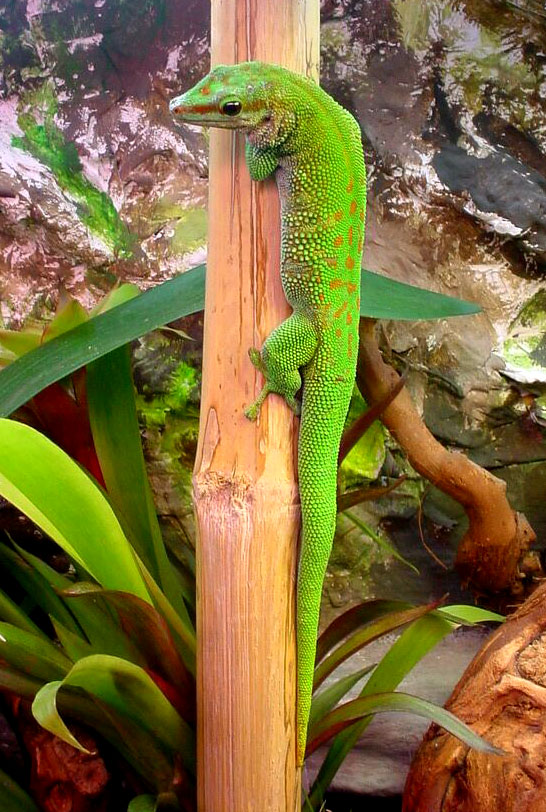
MADAGASCAR COMMON GECKO
DESCRIPTION
Also called Madagascar Gecko and Madagascar House Gecko, Madagascar Common Gecko is a small to medium-sized lizard known for its distinctive appearance and adaptability. It typically features a mottled pattern of browns and greens, which provides excellent camouflage against the forest floor. This species is primarily nocturnal, exhibiting active foraging behavior at night, and is often found in close proximity to human habitation, where it hunts insects and other small invertebrates.
FUN FACTS
- Madagascar Common Geckos have a unique ability to climb smooth surfaces due to the microscopic setae on their toes, which create adhesive forces
- | They are also known for their vocalizations, which can include chirps and clicks, used for communication during mating and territorial disputes
QUICK INFO
Lifespan5-10 years in the wild, up to 15 years in captivit
Average Length10-15 cm
Diet TypeInsectivore
Social Structuresolitary, occasionally seen in pairs during breeding
Activity PatternNocturnal
Breeding SeasonYear-round, with peaks during warmer months
- Habitat
- This gecko thrives in a variety of habitats, including tropical forests, scrublands, and urban areas. It is often found on trees, rocks, and buildings, where it can easily hunt for food.
- Biomes
- Tropical Rainforest, Urban
- Native Range
- Endemic to Madagascar, found throughout the island.
- Continent
- Africa
- Countries
- Madagascar
- Diet
- Madagascar Common Gecko primarily feeds on insects and other small invertebrates, making it an effective pest controller in its habitat.
- Diet Type
- Insectivore
- Favorite Food
- crickets, moths, and beetles
- Social Structure
- solitary, occasionally seen in pairs during breeding
- Activity Pattern
- Nocturnal
- Group Size
- 1-2
- Territorial
- 0
 VU
VU
 LC
LC
10-15 cm
Length
- Coloration
- mottled brown and green with a rough texture
- Sexual Dimorphism
- males tend to be slightly larger than females
- Lifespan
- 5-10 years in the wild, up to 15 years in captivit
- Offspring per Birth
- 2-4 eggs
- Sexual Maturity
- 6-12 months
- Breeding Season
- Year-round, with peaks during warmer months
LC
Least Concern
IUCN Red List Status
- Population Status
- The population is currently stable, but habitat loss poses a potential threat.
- Wild Population Estimate
- unknown
- Population Trend
- Stable
- Endangered
- 0
- Threats
- Main threats include habitat destruction due to deforestation and urbanization. Additionally, invasive species may compete for resources.
- Predators
- birds, snakes, and larger reptiles
- Defense Mechanisms
- Madagascar Common Geckos can drop their tails when threatened, allowing them to escape predators.
- Found in Zoos
- Common