


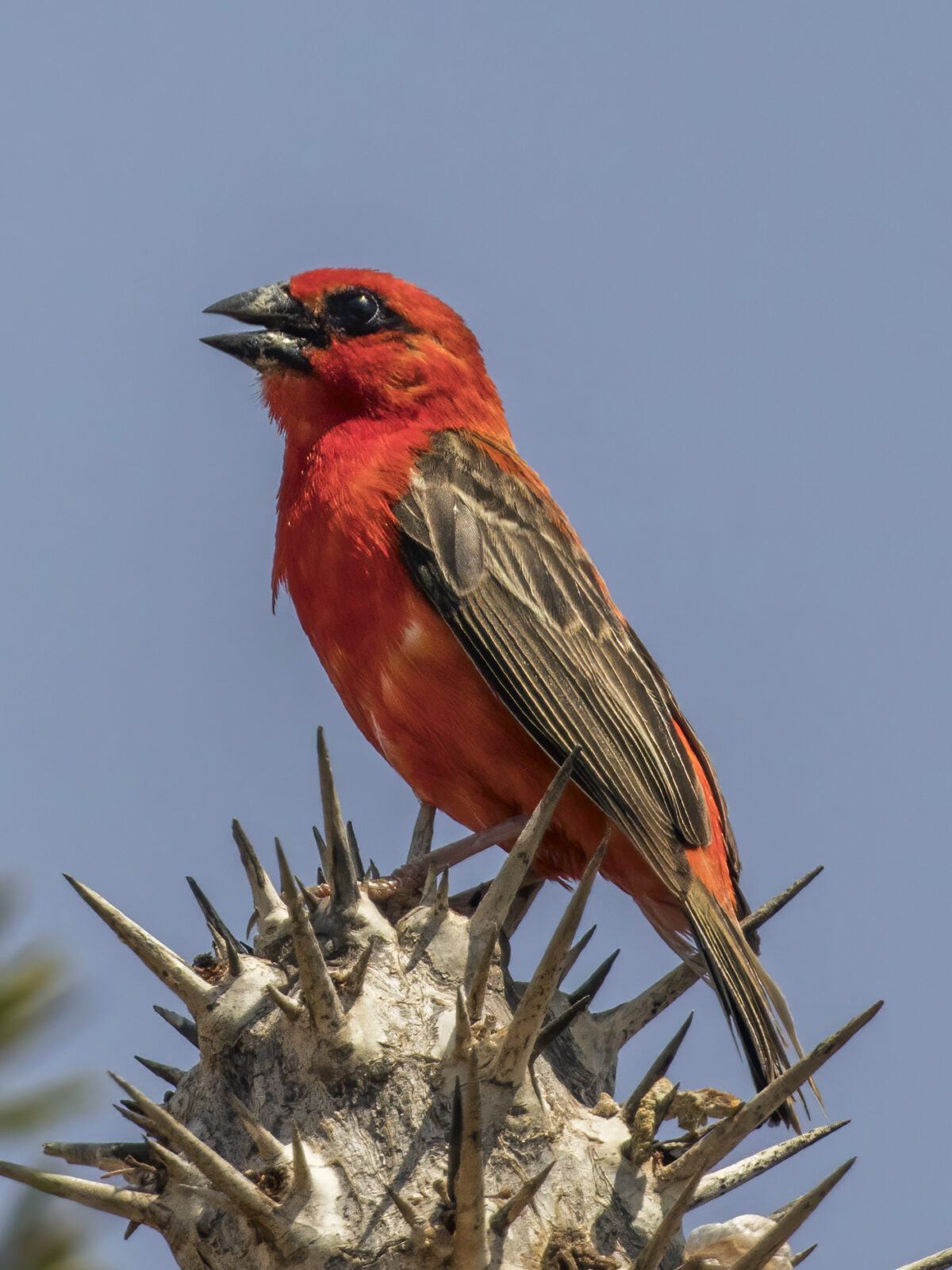
MADAGASCAR FODY
Foudia madagascariensis
DESCRIPTION
Madagascar fody (Foudia madagascariensis) is commonly known as the Madagascar weaver. This small bird exhibits sexual dimorphism, with males showcasing bright yellow plumage and a black face during the breeding season, while females are more subdued in color, featuring brown and yellow tones. They are social birds often found in pairs or small groups, engaging in intricate courtship displays and building elaborate nests in trees or shrubs.
FUN FACTS
- Madagascar fodies are known for their impressive nest-building skills, weaving intricate structures that can hang from tree branches
- These nests are often built in colonies, showcasing their social nature and cooperative behavior
- | The male Madagascar fody performs elaborate courtship displays, which include singing and showing off their vibrant plumage to attract females
- This display is crucial for successful mating and is a fascinating aspect of their breeding behavior
QUICK INFO
Lifespan5-10 years in the wild.
Average Weight15-20 g
Average Length14-15 cm
Diet TypeOmnivore
Social StructureThey are often found in pairs or small groups, especially during the breeding season.
Activity PatternDiurnal
Breeding SeasonSpring to early summer.
- Habitat
- These birds inhabit a variety of environments, including forests, scrublands, and agricultural areas. They prefer areas with dense vegetation for nesting and foraging.
- Biomes
- Tropical Rainforest, Savanna, Grassland
- Native Range
- Endemic to Madagascar, found throughout the island.
- Continent
- Africa
- Countries
- Madagascar
- Diet
- Madagascar fodies primarily feed on seeds, fruits, and insects. They are known to forage on the ground and in vegetation for their food.
- Diet Type
- Omnivore
- Favorite Food
- seeds, fruits, insects
- Social Structure
- They are often found in pairs or small groups, especially during the breeding season.
- Activity Pattern
- Diurnal
- Group Size
- 2-10
- Territorial
- 1

 LC
LC
15-20 g
Weight
14-15 cm
Length
- Coloration
- Males are bright yellow with a black face; females are brown and yellow.
- Sexual Dimorphism
- Males are more brightly colored than females.
- Lifespan
- 5-10 years in the wild.
- Offspring per Birth
- 2-4
- Sexual Maturity
- 6-12 months
- Breeding Season
- Spring to early summer.
LC
Least Concern
IUCN Red List Status
- Population Status
- The population is currently stable, but habitat loss poses a potential threat.
- Wild Population Estimate
- Unknown
- Population Trend
- Stable
- Endangered
- 0
- Threats
- Habitat destruction due to deforestation and agricultural expansion is the main threat to Madagascar fody populations. Additionally, invasive species may compete for resources.
- Predators
- Cats, rats, and various birds of prey.
- Defense Mechanisms
- They often use their agility and speed to evade predators.
- Found in Zoos
- Uncommon