


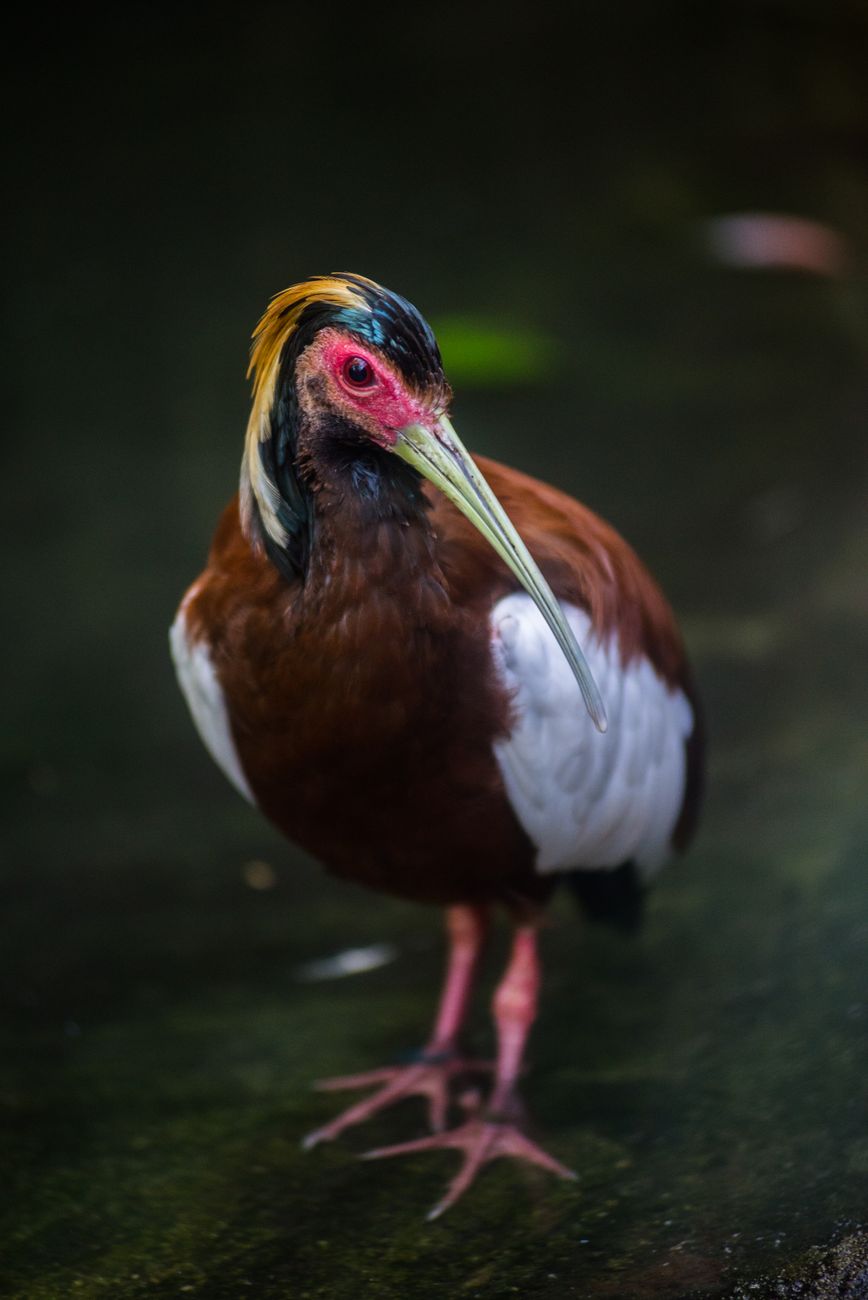
MADAGASCAR IBIS
Threskiornis bernieri
DESCRIPTION
Madagascar Ibis (Threskiornis bernieri), also known as Bernier's Ibis, is a large wading bird characterized by its long, curved bill and striking plumage. This species exhibits a predominantly white body with black wing tips and a distinctive black face, which sets it apart from other ibises. They are typically found in wetlands and marshes, where they forage for food and engage in social behaviors, often seen in small groups or pairs.
FUN FACTS
- Madagascar Ibis is known for its unique foraging behavior, often seen probing into the mud with its long bill to uncover hidden food sources
- This adaptation allows it to thrive in its wetland habitat, where food can be scarce during dry periods
- | The species is named after the French naturalist Alfred Bernier, who studied Madagascar's unique wildlife
- Their striking appearance and social behavior make them a favorite among birdwatchers and conservationists alike
QUICK INFO
Lifespan10-15 years in the wild, up to 20 years in captivi
Average Weight1.5-2.5 kg
Average Length65-75 cm
Diet TypeOmnivore
Social StructureThey are typically found in pairs or small groups, often foraging together in suitable habitats.
Activity PatternDiurnal
Breeding SeasonWet season (November-April)
- Habitat
- This species inhabits freshwater wetlands, marshes, and rice paddies, where they can find ample food sources. They prefer areas with shallow water and abundant vegetation.
- Biomes
- Wetlands, Freshwater Marshes
- Native Range
- Endemic to Madagascar, primarily found in the western and central regions of the island.
- Continent
- Africa
- Countries
- Madagascar
- Diet
- Madagascar Ibis primarily feeds on invertebrates, small fish, and plant material found in their wetland habitats. They use their long bills to probe into mud and shallow water to find food.
- Diet Type
- Omnivore
- Favorite Food
- invertebrates, small fish
- Social Structure
- They are typically found in pairs or small groups, often foraging together in suitable habitats.
- Activity Pattern
- Diurnal
- Group Size
- 2-10
- Territorial
- 0
 VU
VU
 CR
CR
1.5-2.5 kg
Weight
65-75 cm
Length
- Coloration
- Predominantly white with black wing tips and a black face.
- Lifespan
- 10-15 years in the wild, up to 20 years in captivi
- Offspring per Birth
- 2-4
- Sexual Maturity
- 2-3 years
- Breeding Season
- Wet season (November-April)
EN
Endangered
IUCN Red List Status
- Population Status
- The population of Madagascar Ibis is currently declining due to habitat loss and degradation.
- Wild Population Estimate
- 1,000-2,500
- Population Trend
- Decreasing
- Endangered
- 1
- Threats
- The main threats to Madagascar Ibis include habitat destruction due to agricultural expansion and wetland drainage. Additionally, hunting and disturbance from human activities pose significant risks to their population.
- Conservation Program
- Conservation efforts are underway to protect wetland habitats and raise awareness about the species.
- Predators
- Birds of prey, such as eagles and hawks, as well as larger mammals that may prey on their eggs or young.
- Defense Mechanisms
- They rely on their ability to blend into their surroundings and may use flight to escape from predators.
- Found in Zoos
- Uncommon