


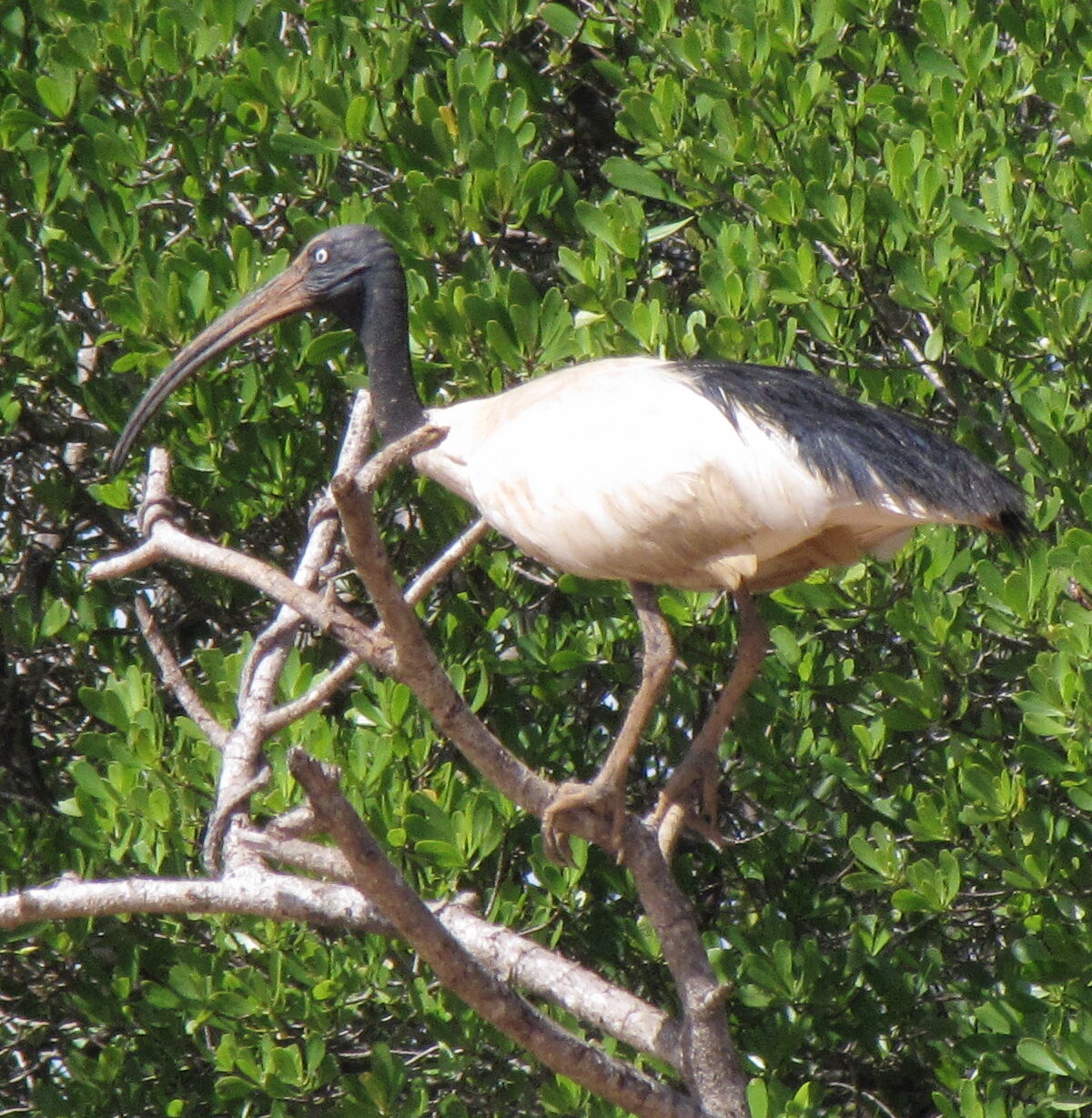
MADAGASCAR SACRED IBIS
DESCRIPTION
Also called Madagascar Ibis, the Madagascar Sacred Ibis is a striking bird known for its long, curved bill and predominantly white plumage, accented by black wing tips and a distinctive black head. This species is often found in wetlands and marshes, where it forages for food in shallow waters. Socially, it is known to form small groups, often seen wading together in search of food, showcasing a unique blend of grace and adaptability in its behavior.
FUN FACTS
- The Madagascar Sacred Ibis is often associated with ancient Egyptian culture, where it was revered and mummified as a sacred bird
- This connection highlights the species' historical significance and its role in various mythologies
- | Interestingly, the Madagascar Sacred Ibis has a unique foraging technique where it uses its long bill to probe into the mud, showcasing its adaptability to different feeding environments
- This behavior not only helps it find food but also plays a role in the ecosystem by aerating the soil
QUICK INFO
Lifespan10-15 years in the wild, up to 20 years in captivi
Average Weight1.5-2.5 kg
Average Length65-75 cm
Diet TypeOmnivore
Social StructureTypically found in small groups, the Madagascar Sacred Ibis exhibits a social structure that allows for cooperative foraging and protection against predators.
Activity PatternDiurnal
Breeding SeasonSpring to early summer
- Habitat
- This species inhabits wetlands, marshes, and rice paddies, where it can find ample food sources. It prefers areas with shallow water and abundant vegetation.
- Biomes
- Wetlands, Grassland
- Native Range
- The Madagascar Sacred Ibis is native to Madagascar and the nearby Comoros Islands.
- Continent
- Africa
- Countries
- Madagascar, Comoros
- Diet
- The Madagascar Sacred Ibis primarily feeds on small fish, amphibians, and invertebrates, using its long bill to probe into mud and shallow water. It may also consume some plant material occasionally.
- Diet Type
- Omnivore
- Favorite Food
- small fish, amphibians, invertebrates
- Social Structure
- Typically found in small groups, the Madagascar Sacred Ibis exhibits a social structure that allows for cooperative foraging and protection against predators.
- Activity Pattern
- Diurnal
- Group Size
- 5-30
- Territorial
- 0
 VU
VU

1.5-2.5 kg
Weight
65-75 cm
Length
- Coloration
- Predominantly white with black wing tips and a black head.
- Lifespan
- 10-15 years in the wild, up to 20 years in captivi
- Offspring per Birth
- 2-4
- Sexual Maturity
- 2-3 years
- Breeding Season
- Spring to early summer
EN
Endangered
IUCN Red List Status
- Population Status
- The population of Madagascar Sacred Ibis is currently considered to be declining due to habitat loss.
- Wild Population Estimate
- Unknown
- Population Trend
- Decreasing
- Endangered
- 1
- Threats
- Main threats include habitat destruction due to agricultural expansion and wetland drainage. Additionally, hunting and disturbance from human activities pose significant risks to their populations.
- Predators
- Birds of prey, large mammals, and humans can pose threats to the Madagascar Sacred Ibis.
- Defense Mechanisms
- The Madagascar Sacred Ibis relies on its ability to fly away quickly to escape predators, as well as its social behavior to warn others of danger.
- Found in Zoos
- Uncommon