


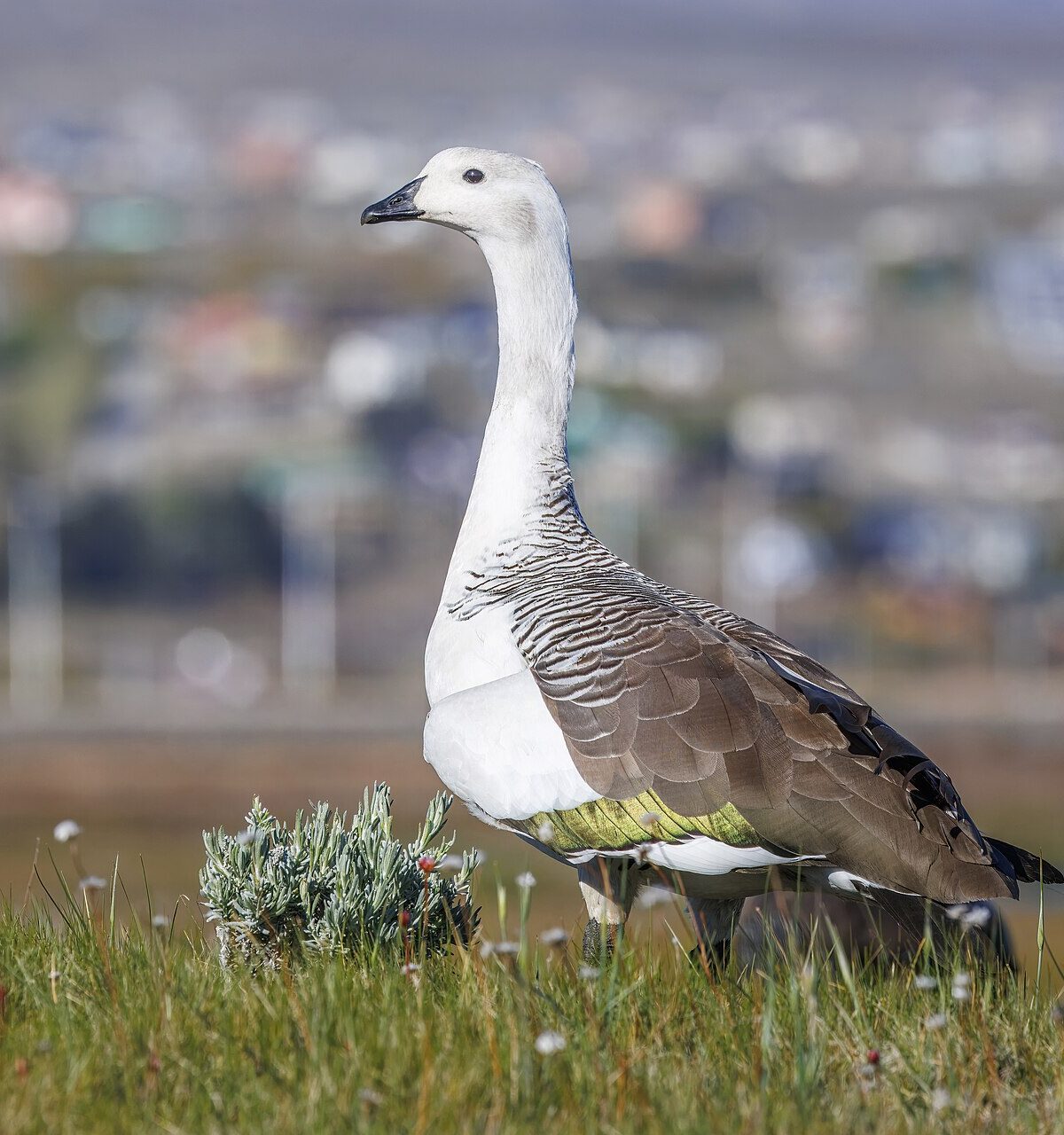
MAGELLANIC GOOSE
Chloephaga picta
DESCRIPTION
Magellanic Goose (Chloephaga picta) is a large, robust waterfowl native to South America, particularly found in the southern regions of Chile and Argentina. It has a distinctive appearance with a dark head, white face, and a brownish body, which helps it blend into its natural habitat of grasslands and wetlands. Known for its strong pair bonds, this species exhibits social behaviors, often seen grazing in small groups or pairs, and is known to be quite vocal, especially during the breeding season.
FUN FACTS
- Magellanic Geese are known for their unique courtship displays, which include head bobbing and vocalizations that strengthen pair bonds
- They are also quite adaptable, often seen in both wild and semi-urban environments, showcasing their ability to thrive in various habitats.|These geese are excellent foragers and can cover large distances in search of food, often grazing in open fields during the day
- Their strong social structure and family bonds make them fascinating to observe, especially during the breeding season when they are most active
QUICK INFO
Lifespan10-15 years in the wild
Average Weight3-4 kg
Average Length65-75 cm
Diet TypeHerbivore
Social Structurepair, often seen in small groups during non-breeding seasons
Activity PatternDiurnal
Breeding SeasonSpring (September-November)
- Habitat
- These geese inhabit a variety of environments, including grasslands, wetlands, and coastal areas. They prefer open spaces where they can easily graze and find food.
- Biomes
- Grassland, Wetland
- Native Range
- The native range of the Magellanic Goose includes the southern parts of South America, particularly in Argentina and Chile.
- Continent
- South America
- Countries
- Argentina, Chile
- Diet
- Magellanic Geese primarily feed on grasses, seeds, and other vegetation, making them herbivorous grazers. They are often seen foraging in open fields and wetlands.
- Diet Type
- Herbivore
- Favorite Food
- grasses, seeds
- Social Structure
- pair, often seen in small groups during non-breeding seasons
- Activity Pattern
- Diurnal
- Group Size
- 2-10
- Territorial
- 1

 LC
LC
 VU
VU
3-4 kg
Weight
65-75 cm
Length
- Coloration
- dark head, white face, brownish body
- Sexual Dimorphism
- males are generally larger than females
- Lifespan
- 10-15 years in the wild
- Offspring per Birth
- 4-6
- Sexual Maturity
- 2-3 years
- Breeding Season
- Spring (September-November)
LC
Least Concern
IUCN Red List Status
- Population Status
- The population of Magellanic Geese is currently stable, although habitat loss poses a potential threat.
- Wild Population Estimate
- 50,000-100,000
- Population Trend
- Stable
- Endangered
- 0
- Threats
- Main threats include habitat destruction due to agriculture and urban development. Additionally, hunting in some areas poses a risk to their populations.
- Predators
- foxes, eagles, and large birds of prey
- Defense Mechanisms
- They often rely on their strong flight capabilities to escape predators and can be quite aggressive when defending their nests.
- Found in Zoos
- Uncommon