


MAGNIFICENT TREE FROG
Litoria splendida
DESCRIPTION
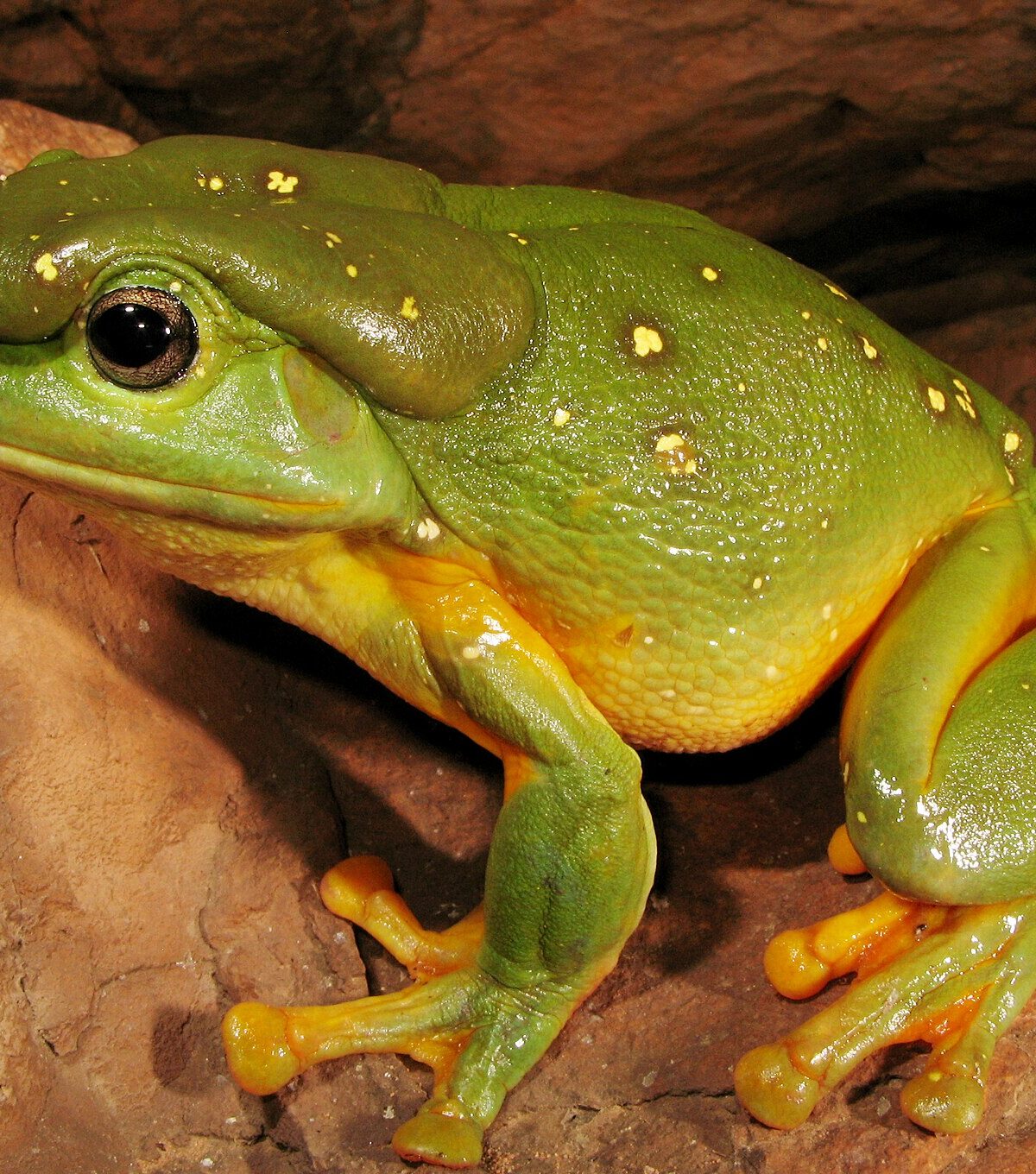
Magnificent Tree Frog (Litoria splendida), also known as the Splendid Tree Frog, is a striking amphibian native to Australia. This species is characterized by its vibrant green coloration, often adorned with bright yellow or blue markings, making it one of the most visually appealing frogs in its habitat. They are primarily arboreal, spending much of their time in trees and shrubs, and are known for their loud, distinctive calls during the breeding season, which attract mates and establish territory.
FUN FACTS
- The Magnificent Tree Frog is known for its impressive vocal abilities, with males producing a range of calls that can be heard from a distance
- These calls not only serve to attract females but also to establish territory against other males
- | This species has a unique adaptation that allows it to thrive in its arboreal habitat; its toe pads are specially designed to provide excellent grip on smooth surfaces, enabling it to navigate trees with ease
QUICK INFO
Lifespan5-10 years in the wild, up to 15 years in captivit
Average Weight30-50 g
Average Length7-10 cm
Diet TypeInsectivore
Social Structuresolitary, typically found alone except during breeding
Activity PatternNocturnal
Breeding SeasonSpring to early summer (September to December)
- Habitat
- These frogs inhabit tropical and subtropical rainforests, often found near water sources such as streams and ponds. They thrive in humid environments that provide ample vegetation for cover and hunting.
- Biomes
- Tropical Rainforest
- Native Range
- The native range of the Magnificent Tree Frog includes the eastern coast of Australia, particularly in Queensland.
- Continent
- Australia
- Countries
- Australia
- Diet
- Magnificent Tree Frogs are insectivorous, primarily feeding on a variety of insects and other small invertebrates. They are known to actively hunt their prey using their long, sticky tongues.
- Diet Type
- Insectivore
- Favorite Food
- insects
- Social Structure
- solitary, typically found alone except during breeding
- Activity Pattern
- Nocturnal
- Group Size
- 1-5
- Territorial
- 1
 LC
LC
 VU
VU
30-50 g
Weight
7-10 cm
Length
- Coloration
- vibrant green with yellow or blue markings
- Sexual Dimorphism
- males are generally smaller and have more pronounced vocal sacs than females
- Lifespan
- 5-10 years in the wild, up to 15 years in captivit
- Offspring per Birth
- 100-200 eggs
- Sexual Maturity
- 1-2 years
- Breeding Season
- Spring to early summer (September to December)
LC
Least Concern
IUCN Red List Status
- Population Status
- The population of Magnificent Tree Frogs is currently stable, but they are affected by habitat loss.
- Wild Population Estimate
- unknown
- Population Trend
- Stable
- Endangered
- 0
- Threats
- Main threats include habitat destruction due to logging and land development, as well as climate change impacting their rainforest habitats. Additionally, pollution in water sources can affect their breeding success.
- Predators
- snakes, birds, and larger amphibians
- Defense Mechanisms
- They can use their bright coloration as a warning to potential predators, and some may exhibit evasive jumping behavior when threatened.
- Found in Zoos
- Uncommon