


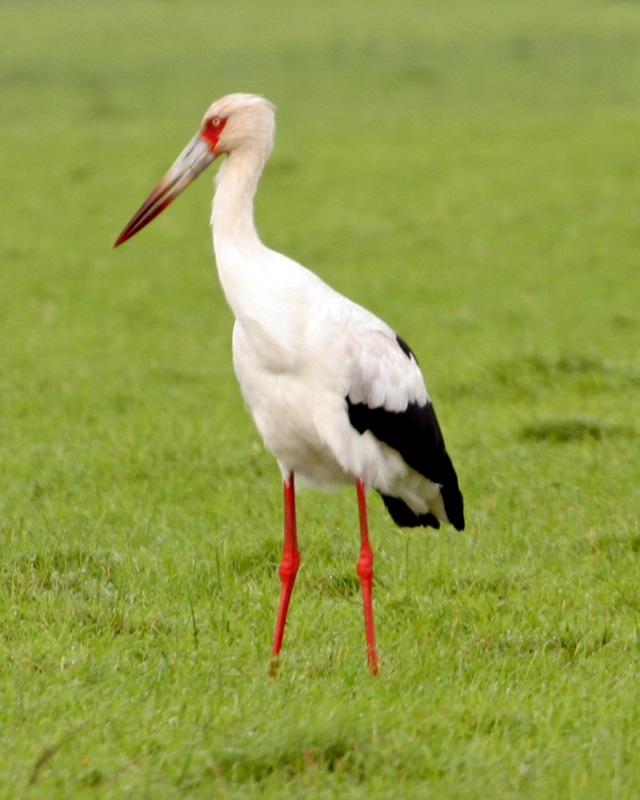
MAGUARI STORK
Ciconia maguari
DESCRIPTION
The Maguari Stork is a large wading bird characterized by its long legs, long neck, and a distinctive long bill. It has predominantly white plumage with black wing tips and a striking red facial skin. This species is known for its graceful flight and can often be seen foraging in wetlands and grasslands, where it uses its bill to probe for food.
FUN FACTS
- Maguari Storks are known for their impressive wingspan, which can reach up to 2 meters, allowing them to soar gracefully over wetlands
- They are also highly adaptable birds, capable of thriving in various wetland environments, from freshwater lakes to brackish marshes
QUICK INFO
Lifespan15-20 years in the wild
Average Weight3-4 kg
Average Length1.0-1.2 m
Diet TypePiscivore
Social Structuresolitary or small groups, often seen alone or in pairs
Activity PatternDiurnal
Breeding SeasonSpring (September-November)
- Habitat
- Maguari Storks inhabit wetlands, marshes, and flooded grasslands. They prefer areas with shallow water where they can easily find food.
- Biomes
- Wetlands, Grasslands
- Native Range
- The native range of the Maguari Stork extends across South America, particularly in the Amazon Basin and the Pantanal region.
- Continent
- South America
- Countries
- Brazil, Argentina, Paraguay, Bolivia
- Diet
- The Maguari Stork primarily feeds on fish, amphibians, and invertebrates. It forages in shallow waters, using its long bill to catch prey.
- Diet Type
- Piscivore
- Favorite Food
- fish, amphibians
- Social Structure
- solitary or small groups, often seen alone or in pairs
- Activity Pattern
- Diurnal
- Group Size
- 1-5
- Territorial
- 0
 VU
VU
 CR
CR
3-4 kg
Weight
1.0-1.2 m
Length
- Coloration
- predominantly white with black wing tips and red facial skin
- Lifespan
- 15-20 years in the wild
- Offspring per Birth
- 2-4
- Sexual Maturity
- 3-4 years
- Breeding Season
- Spring (September-November)
LC
Least Concern
IUCN Red List Status
- Population Status
- The population of Maguari Storks is currently stable, but they face habitat loss.
- Wild Population Estimate
- 50,000-100,000
- Population Trend
- Stable
- Endangered
- 0
- Threats
- Main threats include habitat destruction due to agriculture and urban development. Pollution and climate change also pose risks to their wetland habitats.
- Predators
- Large birds of prey, such as eagles and hawks, may pose a threat to young storks. Additionally, humans can be a threat through habitat destruction.
- Defense Mechanisms
- Maguari Storks rely on their size and flight ability to evade predators.
- Found in Zoos
- Uncommon