


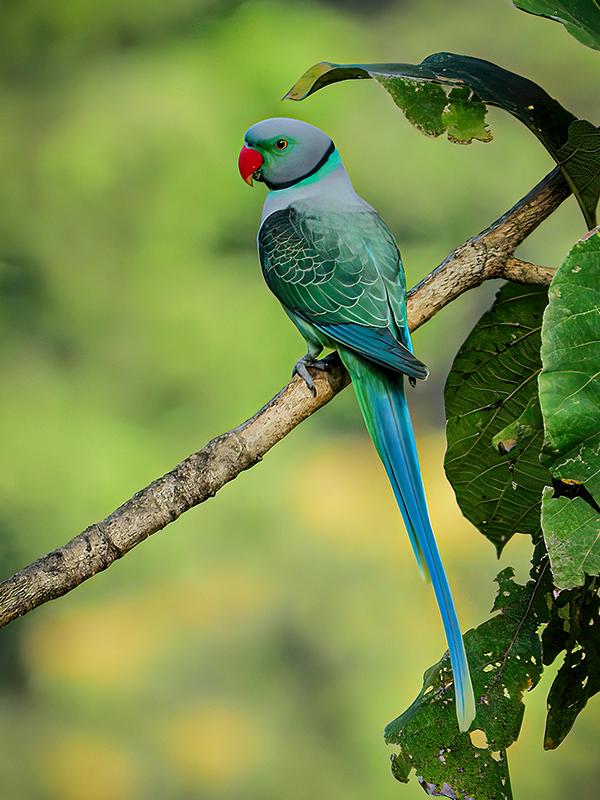
MALABAR PARAKEET
Psittacula columboides
DESCRIPTION
Malabar Parakeet (Psittacula columboides) is a vibrant green parakeet native to the Western Ghats of India. It features a distinctive long tail and a unique blue patch on its wings, making it easily recognizable among other parakeets. This species is known for its social behavior, often seen in pairs or small groups, and it inhabits dense forests where it plays a crucial role in seed dispersal.
FUN FACTS
- Malabar Parakeets are known for their intelligence and ability to mimic sounds, including human speech, which makes them popular among bird enthusiasts
- | These parakeets play a vital role in their ecosystem by helping to disperse seeds, contributing to the growth of various plant species in their native habitats
QUICK INFO
Lifespan15-20 years in the wild, up to 30 years in captivi
Average Weight120-150 g
Average Length30-35 cm
Diet TypeHerbivore
Social StructureThey are typically found in pairs or small groups, often forming loose flocks during foraging.
Activity PatternDiurnal
Breeding SeasonSpring (March-May)
- Habitat
- These parakeets thrive in subtropical and tropical moist forests, often found in hilly and mountainous regions. They prefer areas with abundant fruiting trees and dense foliage for nesting.
- Biomes
- Tropical Rainforest, Subtropical Forest
- Native Range
- The Malabar Parakeet is endemic to the Western Ghats mountain range in India.
- Continent
- Asia
- Countries
- India
- Diet
- Malabar Parakeets primarily feed on fruits, seeds, and nuts, which they forage from trees. They are known to be particularly fond of berries and other fleshy fruits.
- Diet Type
- Herbivore
- Favorite Food
- fruits, seeds, nuts
- Social Structure
- They are typically found in pairs or small groups, often forming loose flocks during foraging.
- Activity Pattern
- Diurnal
- Group Size
- 2-10
- Territorial
- 0
 LC
LC
120-150 g
Weight
30-35 cm
Length
- Coloration
- Bright green body with a blue wing patch and a long tail.
- Sexual Dimorphism
- Males have a more pronounced coloration and longer tail feathers compared to females.
- Lifespan
- 15-20 years in the wild, up to 30 years in captivi
- Offspring per Birth
- 2-4
- Sexual Maturity
- 2-3 years
- Breeding Season
- Spring (March-May)
LC
Least Concern
IUCN Red List Status
- Population Status
- The population of Malabar Parakeets is currently stable, but they face habitat loss.
- Wild Population Estimate
- 10,000-20,000
- Population Trend
- Stable
- Endangered
- 0
- Threats
- The main threats to Malabar Parakeets include habitat destruction due to deforestation and urbanization. Additionally, they are sometimes captured for the pet trade.
- Predators
- Common predators include birds of prey, snakes, and larger mammals that may raid nests.
- Defense Mechanisms
- They often rely on their agility and ability to fly quickly to evade predators.
- Found in Zoos
- Uncommon