


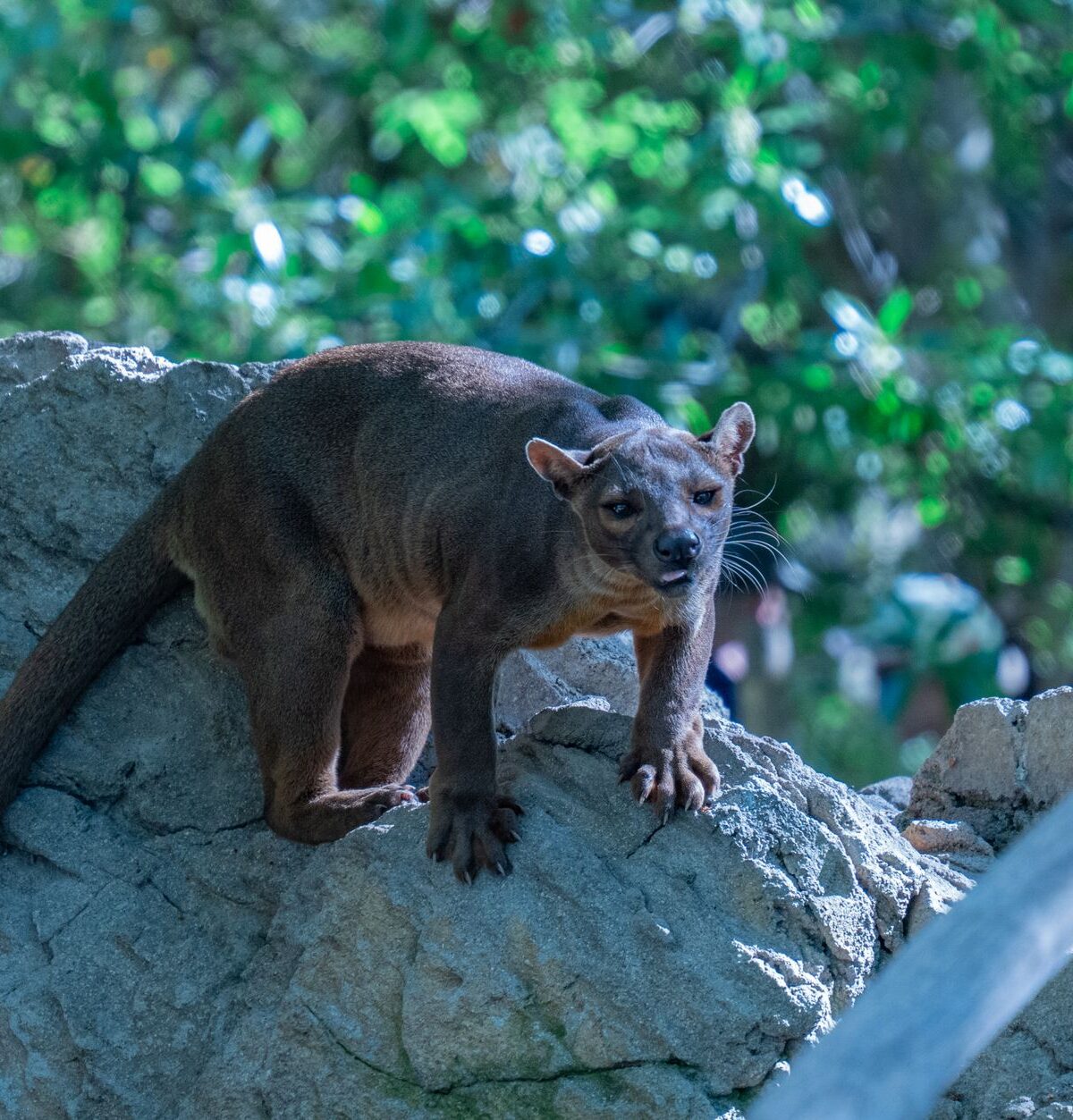
MALAGASY CIVET
Fossa fossana
DESCRIPTION
Malagasy Civet (Fossa fossana) is a small carnivorous mammal native to Madagascar, resembling a cross between a cat and a civet. It has a slender body, a long tail, and a coat that is typically brownish with darker spots, which helps it blend into its forest habitat. This species is primarily arboreal, spending much of its time in trees, and is known for its agility and ability to leap between branches.
FUN FACTS
- Malagasy Civets are known for their unique grooming behavior, which involves using their claws to clean their fur meticulously
- This not only helps maintain their coat but also plays a role in scent marking their territory
- | Despite their name, Malagasy Civets are not true civets; they belong to a unique family of carnivorous mammals endemic to Madagascar, showcasing the island's rich biodiversity and evolutionary history
QUICK INFO
Lifespan10-15 years in the wild, up to 20 years in captivi
Average Weight3-5 kg
Average Length50-70 cm
Diet TypeOmnivore
Social Structuresolitary, occasionally seen in pairs during mating season
Activity PatternNocturnal
Breeding SeasonSpring (September-November)
- Habitat
- Malagasy Civets inhabit tropical rainforests, dry deciduous forests, and sometimes secondary forests. They prefer areas with dense vegetation that provide ample cover and food sources.
- Biomes
- Tropical Rainforest, Dry Forest
- Native Range
- Endemic to Madagascar, found throughout the island in various forested regions.
- Continent
- Africa
- Countries
- Madagascar
- Diet
- The Malagasy Civet primarily feeds on fruits, small mammals, and birds, showcasing a varied diet that reflects its adaptability. It plays a crucial role in seed dispersal within its ecosystem.
- Diet Type
- Omnivore
- Favorite Food
- fruits, small mammals, birds
- Social Structure
- solitary, occasionally seen in pairs during mating season
- Activity Pattern
- Nocturnal
- Group Size
- 1-2
- Territorial
- 1
 EN
EN
 LC
LC
3-5 kg
Weight
50-70 cm
Length
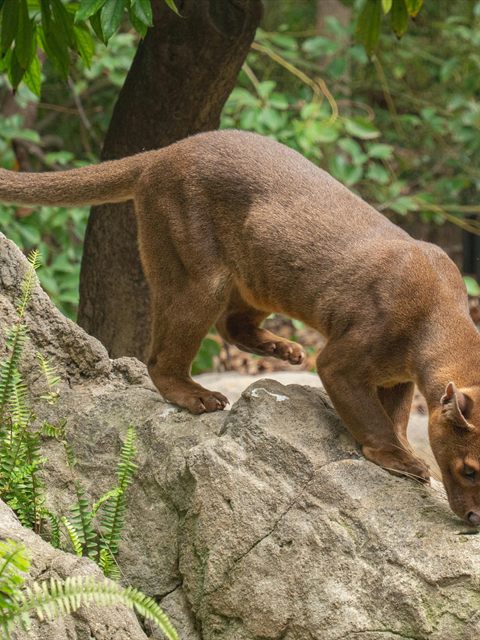
- Coloration
- brownish coat with darker spots
- Lifespan
- 10-15 years in the wild, up to 20 years in captivi
- Gestation Period
- 60-70 days
- Offspring per Birth
- 1-4
- Sexual Maturity
- 1-2 years
- Breeding Season
- Spring (September-November)
VU
Vulnerable
IUCN Red List Status
- Population Status
- The population of Malagasy Civets is currently considered to be decreasing due to habitat loss and hunting.
- Wild Population Estimate
- unknown
- Population Trend
- Decreasing
- Endangered
- 1
- Threats
- The main threats to Malagasy Civets include habitat destruction due to deforestation and hunting for bushmeat. These pressures have led to a decline in their population across Madagascar.
- Predators
- Madagascar harrier hawk, fossa, domestic dogs
- Defense Mechanisms
- Malagasy Civets can emit a strong-smelling secretion from their anal glands as a defense mechanism against predators.
- Found in Zoos
- Uncommon