


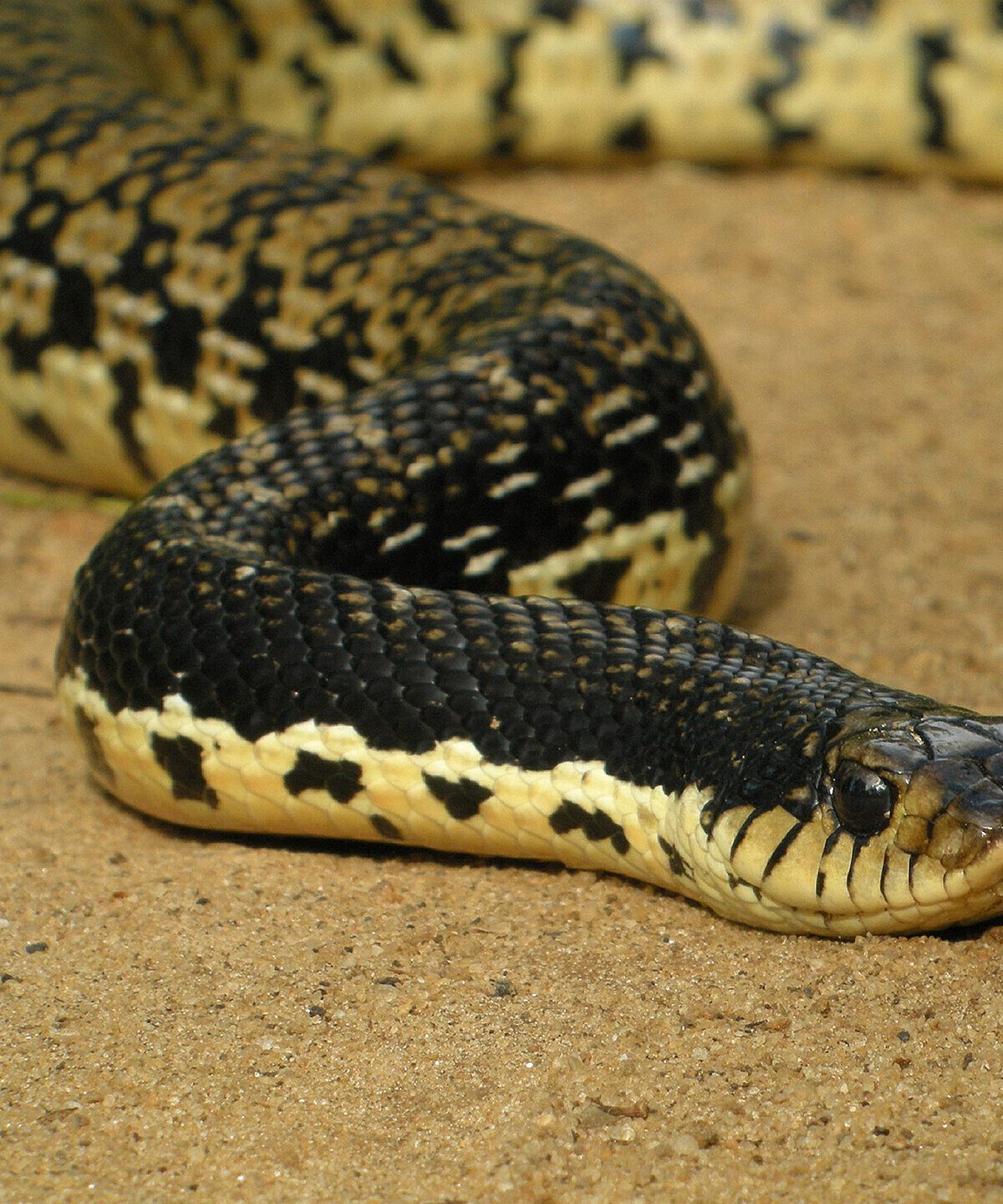
MALAGASY GIANT HOGNOSE SNAKE
Leioheterodon madagascariensis
DESCRIPTION
Also called Madagascar Hognose Snake, the Malagasy Giant Hognose Snake (Leioheterodon madagascariensis) is a large, non-venomous snake native to Madagascar. It is characterized by its distinctive hognose shape, which features a flattened, upturned snout that aids in burrowing and foraging. This species exhibits a variety of color patterns, often including shades of brown, gray, and yellow, which help it blend into its natural habitat of leaf litter and forest floors.
FUN FACTS
- The Malagasy Giant Hognose Snake is known for its unique hognose shape, which not only aids in burrowing but also gives it a distinctive appearance among snakes
- This species has a fascinating behavior of playing dead when threatened, rolling onto its back and remaining motionless to avoid predation.| Unlike many other snakes, the Malagasy Giant Hognose Snake has a relatively high tolerance for certain toxins, allowing it to consume toxic amphibians without adverse effects
QUICK INFO
Lifespan10-15 years in the wild, up to 20 years in captivi
Average Weight1-2 kg
Average Length1.2-1.8 m
Diet TypeCarnivore
Social Structuresolitary, typically found alone except during mating
Activity PatternNocturnal
Breeding SeasonSpring (September-November)
- Habitat
- This species inhabits a range of environments, including tropical forests, grasslands, and scrublands. It prefers areas with ample cover, such as leaf litter and dense vegetation, which provide both hunting grounds and protection from predators.
- Biomes
- Tropical Rainforest, Grassland
- Native Range
- The Malagasy Giant Hognose Snake is endemic to Madagascar, found throughout various regions of the island.
- Continent
- Africa
- Countries
- Madagascar
- Diet
- The Malagasy Giant Hognose Snake primarily feeds on amphibians, small mammals, and other reptiles. It is known for its ability to consume prey that is larger than its head due to its flexible jaw structure.
- Diet Type
- Carnivore
- Favorite Food
- frogs, small mammals
- Social Structure
- solitary, typically found alone except during mating
- Activity Pattern
- Nocturnal
- Group Size
- 1
- Territorial
- 0
 VU
VU
1-2 kg
Weight
1.2-1.8 m
Length
- Coloration
- Typically brown or gray with darker bands or spots, providing camouflage in its natural habitat.
- Sexual Dimorphism
- Males are generally smaller than females.
- Lifespan
- 10-15 years in the wild, up to 20 years in captivi
- Gestation Period
- 60-90 days
- Offspring per Birth
- 5-15
- Sexual Maturity
- 2-3 years
- Breeding Season
- Spring (September-November)
LC
Least Concern
IUCN Red List Status
- Population Status
- The population is currently stable, but habitat loss poses a potential threat.
- Wild Population Estimate
- Unknown
- Population Trend
- Stable
- Endangered
- 0
- Threats
- Main threats include habitat destruction due to deforestation and agricultural expansion. Additionally, they may be affected by the illegal pet trade.
- Predators
- Birds of prey, larger snakes, and mammals such as mongooses.
- Defense Mechanisms
- When threatened, the Malagasy Giant Hognose Snake may flatten its body and hiss loudly to deter predators.
- Found in Zoos
- Uncommon