


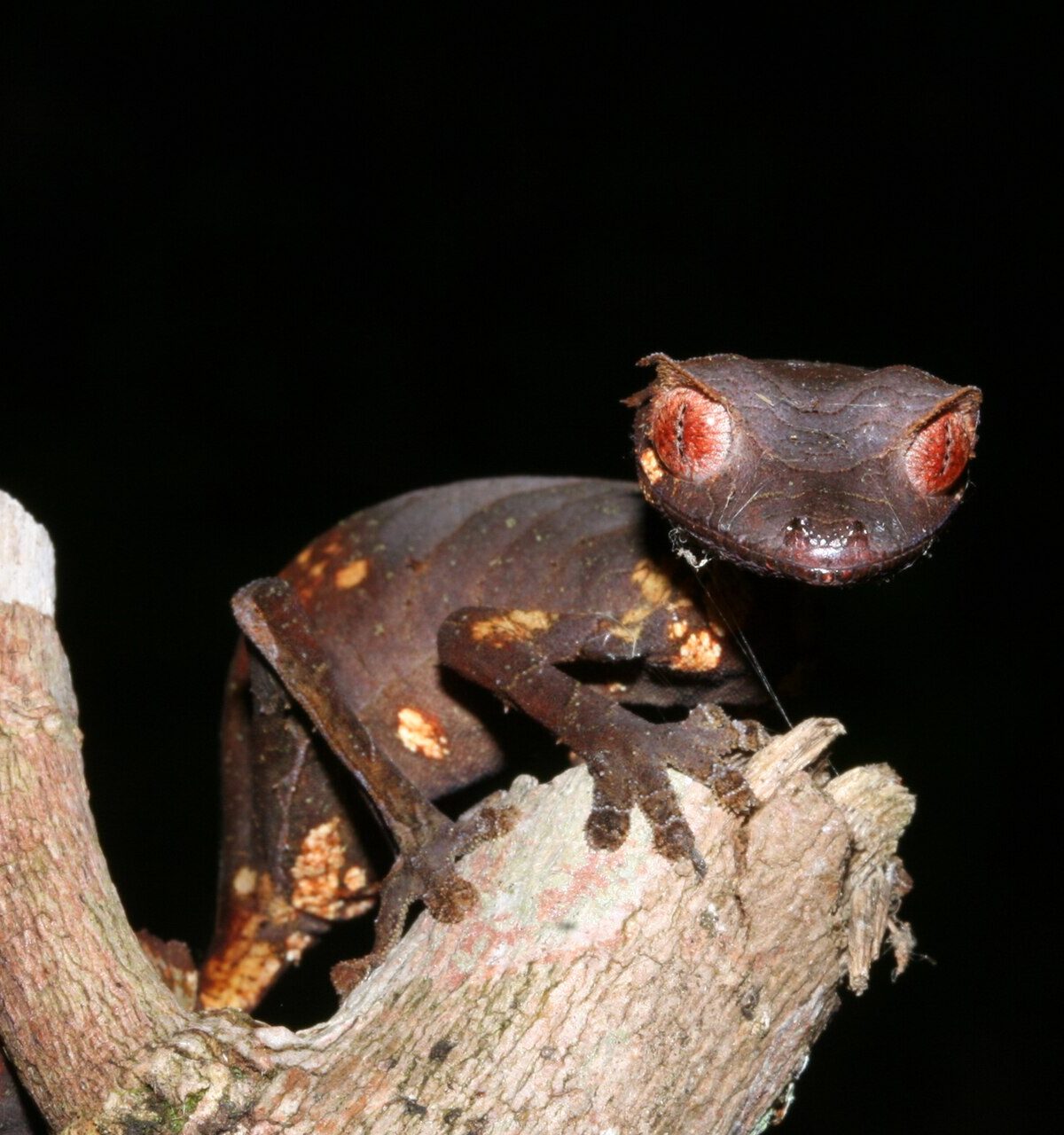
MALAGASY LEAF-TAILED GECKO
Uroplatus phantasticus
DESCRIPTION
Malagasy Leaf-Tailed Gecko (Uroplatus phantasticus) is a remarkable reptile known for its extraordinary leaf-like appearance, which provides excellent camouflage against the forest floor. This species exhibits a range of colors, primarily browns and greens, allowing it to blend seamlessly into its surroundings. Behaviorally, it is primarily nocturnal, spending its days resting motionless on tree trunks or leaves, and is known for its unique ability to flatten its body to enhance its disguise.
FUN FACTS
- The Malagasy Leaf-Tailed Gecko is often referred to as the 'Satanic Leaf-Tailed Gecko' due to its unique and somewhat eerie appearance, which resembles a dead leaf
- This adaptation not only helps it evade predators but also makes it an intriguing subject for researchers studying camouflage in reptiles.| These geckos are known for their unique mating displays, where males will perform elaborate courtship rituals to attract females, showcasing their vibrant colors and patterns
- This behavior highlights the importance of visual signals in their reproductive strategies
QUICK INFO
Lifespan5-10 years in the wild, up to 15 years in captivit
Average Length15-20 cm
Diet TypeInsectivore
Social Structuresolitary, typically found alone except during breeding
Activity PatternNocturnal
Breeding SeasonSpring (October-December)
- Habitat
- This gecko inhabits humid tropical forests, often found on trees and shrubs where it can easily camouflage. It prefers areas with dense foliage that provide ample hiding spots from predators.
- Biomes
- Tropical Rainforest
- Native Range
- Endemic to Madagascar, specifically found in the eastern rainforests of the island.
- Continent
- Africa
- Countries
- Madagascar
- Diet
- It primarily feeds on insects and other small invertebrates, using its keen eyesight to hunt at night.
- Diet Type
- Insectivore
- Favorite Food
- crickets, moths
- Social Structure
- solitary, typically found alone except during breeding
- Activity Pattern
- Nocturnal
- Group Size
- 1
- Territorial
- 0
 VU
VU
 LC
LC
15-20 cm
Length
- Coloration
- primarily brown and green with patterns resembling leaves
- Sexual Dimorphism
- males tend to be slightly larger than females
- Lifespan
- 5-10 years in the wild, up to 15 years in captivit
- Offspring per Birth
- 2-3 eggs
- Sexual Maturity
- 1-2 years
- Breeding Season
- Spring (October-December)
LC
Least Concern
IUCN Red List Status
- Population Status
- The population is currently stable, but habitat loss poses a potential threat.
- Wild Population Estimate
- unknown
- Population Trend
- Stable
- Endangered
- 0
- Threats
- Main threats include habitat destruction due to deforestation and agricultural expansion. Additionally, the pet trade poses a risk to local populations.
- Predators
- birds of prey, snakes, and larger reptiles
- Defense Mechanisms
- Its primary defense mechanism is its exceptional camouflage, allowing it to blend into its environment and avoid detection.
- Found in Zoos
- Uncommon