


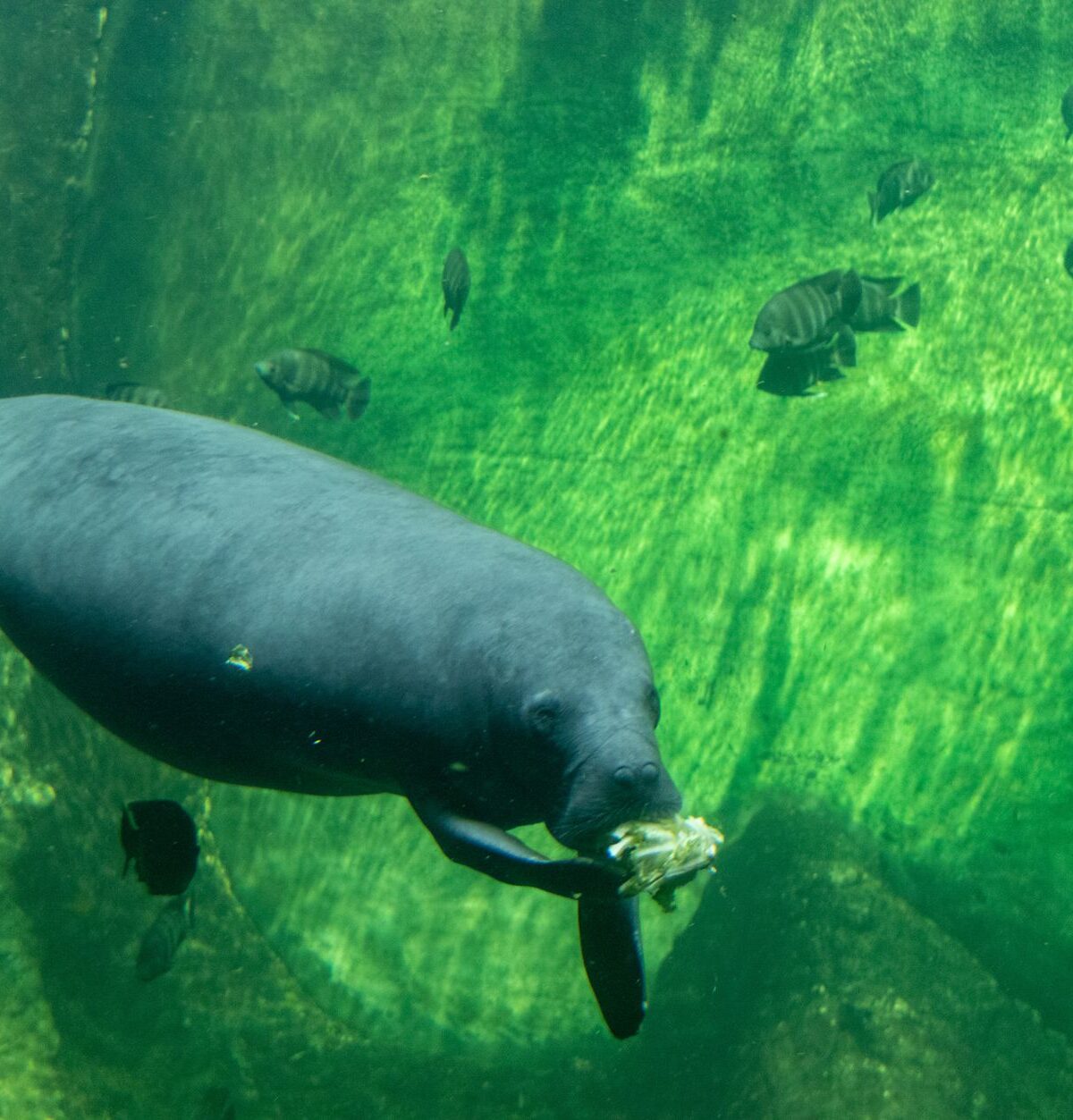
MANATEE
Trichechus spp.
DESCRIPTION
Manatee (Trichechus spp.) is commonly known as the sea cow due to its large, rounded body and gentle demeanor. These aquatic mammals are characterized by their paddle-like flippers, which they use for steering and maneuvering in the water, and their large, flat tails that help propel them. Manatees are herbivorous and spend a significant amount of time grazing on aquatic vegetation, playing a crucial role in maintaining the health of their ecosystems.
FUN FACTS
- Manatees are known for their slow-moving nature, often gliding through the water at a leisurely pace of 3-5 miles per hour
- Despite their size, they are gentle giants and have been observed engaging in playful behaviors, such as rolling and surfacing for air in a playful manner
- | Manatees have a unique adaptation in their digestive system that allows them to process large amounts of plant material efficiently
- They have a slow metabolism, which helps them survive in nutrient-poor waters, and can go for long periods without food, especially during colder months
QUICK INFO
Lifespan50-65 years in the wild
Average Weight400-590 kg
Average Length2.5-4 m
Diet TypeHerbivore
Social Structuresolitary or small groups, often seen alone or in pairs, especially mothers with calves.
Activity PatternDiurnal
Breeding SeasonYear-round, with peaks in spring and summer
- Habitat
- Manatees inhabit warm, shallow waters such as rivers, estuaries, and coastal areas. They prefer areas with abundant vegetation and are often found in freshwater and brackish environments.
- Biomes
- Freshwater, Coastal
- Native Range
- Manatees are native to the warm waters of the Caribbean Sea, the Gulf of Mexico, and the southeastern United States.
- Continent
- North America, South America
- Countries
- United States, Mexico, Belize, Brazil, Colombia
- Diet
- Manatees primarily consume a variety of aquatic plants, including seagrasses and algae. They are known to eat up to 10% of their body weight in vegetation daily.
- Diet Type
- Herbivore
- Favorite Food
- seagrasses, algae
- Social Structure
- solitary or small groups, often seen alone or in pairs, especially mothers with calves.
- Activity Pattern
- Diurnal
- Group Size
- 1-3
- Territorial
- 0

400-590 kg
Weight
2.5-4 m
Length
- Coloration
- grayish-brown with a wrinkled skin texture
- Sexual Dimorphism
- males are generally larger than females
- Lifespan
- 50-65 years in the wild
- Gestation Period
- 12 months
- Offspring per Birth
- 1
- Sexual Maturity
- 3-5 years
- Breeding Season
- Year-round, with peaks in spring and summer
VU
Vulnerable
IUCN Red List Status
- Population Status
- The population of manatees has been recovering due to conservation efforts, but they remain vulnerable.
- Wild Population Estimate
- around 13,000
- Population Trend
- Increasing
- Endangered
- 1
- Threats
- Main threats to manatees include habitat loss, boat strikes, and entanglement in fishing gear. Climate change also poses a risk to their warm-water habitats.
- Conservation Program
- The U.S. Fish and Wildlife Service has implemented various conservation programs, including protection under the Marine Mammal Protection Act.
- Predators
- Humans are the primary threat, but young manatees may be vulnerable to large sharks and alligators.
- Found in Zoos
- Common