


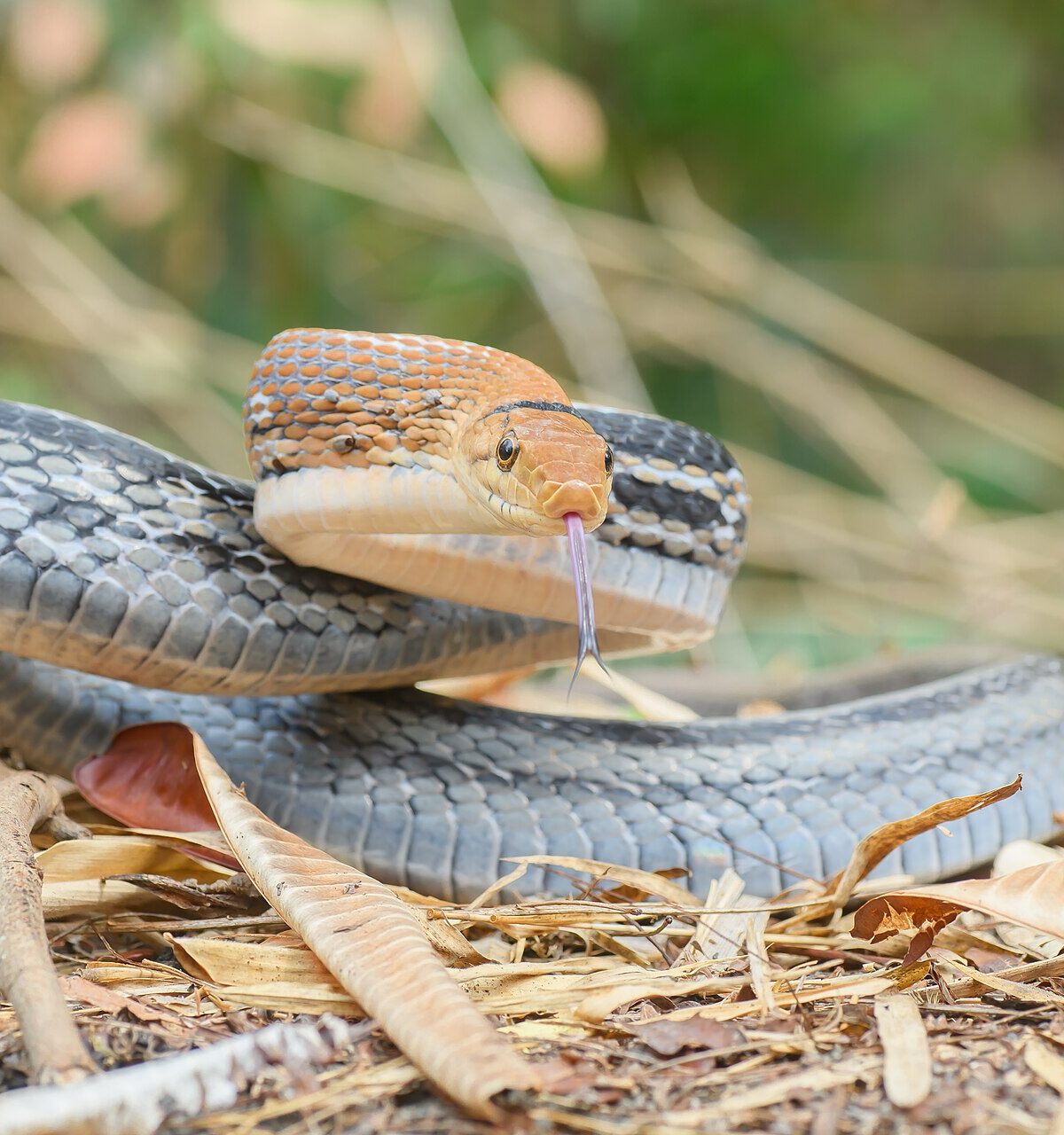
MANDARIN TRINKET SNAKE
Coelognathus radiatus
DESCRIPTION
Mandarin Trinket Snake (Coelognathus radiatus) is also known as the Radiated Trinket Snake, characterized by its striking coloration and intricate patterns. This species exhibits a slender body with a vibrant mix of yellow, black, and orange hues, making it visually appealing. Primarily found in forested areas, it is known for its arboreal habits and is often seen climbing trees or resting on branches.
FUN FACTS
- The Mandarin Trinket Snake is known for its remarkable climbing abilities, often seen navigating through the trees with ease
- Additionally, its vibrant coloration serves as both a warning to potential predators and a means of camouflage among the foliage
QUICK INFO
Lifespan10-15 years in the wild, up to 20 in captivity
Average Length1.2-1.5 m
Diet TypeCarnivore
Social Structuresolitary
Activity PatternDiurnal
Breeding SeasonSpring (March-May)
- Habitat
- This species thrives in tropical and subtropical forests, often preferring areas with dense vegetation. It is also found in agricultural landscapes where it can find shelter and food.
- Biomes
- Tropical Rainforest, Subtropical Forest
- Native Range
- The Mandarin Trinket Snake is native to Southeast Asia, particularly found in regions of Thailand, Malaysia, and Indonesia.
- Continent
- Asia
- Countries
- Thailand, Malaysia, Indonesia
- Diet
- The Mandarin Trinket Snake primarily feeds on small mammals, birds, and lizards. It is an opportunistic feeder, using its agility to capture prey.
- Diet Type
- Carnivore
- Favorite Food
- small mammals, birds, lizards
- Social Structure
- solitary
- Activity Pattern
- Diurnal
- Group Size
- 1
- Territorial
- 0
 VU
VU
1.2-1.5 m
Length
- Coloration
- vibrant yellow and black with orange accents
- Sexual Dimorphism
- males are typically smaller than females
- Lifespan
- 10-15 years in the wild, up to 20 in captivity
- Offspring per Birth
- 5-15
- Sexual Maturity
- 2-3 years
- Breeding Season
- Spring (March-May)
LC
Least Concern
IUCN Red List Status
- Population Status
- The population status of the Mandarin Trinket Snake is currently stable, but habitat loss poses a potential threat.
- Wild Population Estimate
- unknown
- Population Trend
- Stable
- Endangered
- 0
- Threats
- Main threats include habitat destruction due to deforestation and agricultural expansion. Additionally, they may be targeted for the pet trade.
- Predators
- Birds of prey, larger snakes, and mammals such as mongooses.
- Defense Mechanisms
- When threatened, the Mandarin Trinket Snake may exhibit defensive behaviors such as coiling and hissing, or it may attempt to escape quickly.
- Found in Zoos
- Uncommon